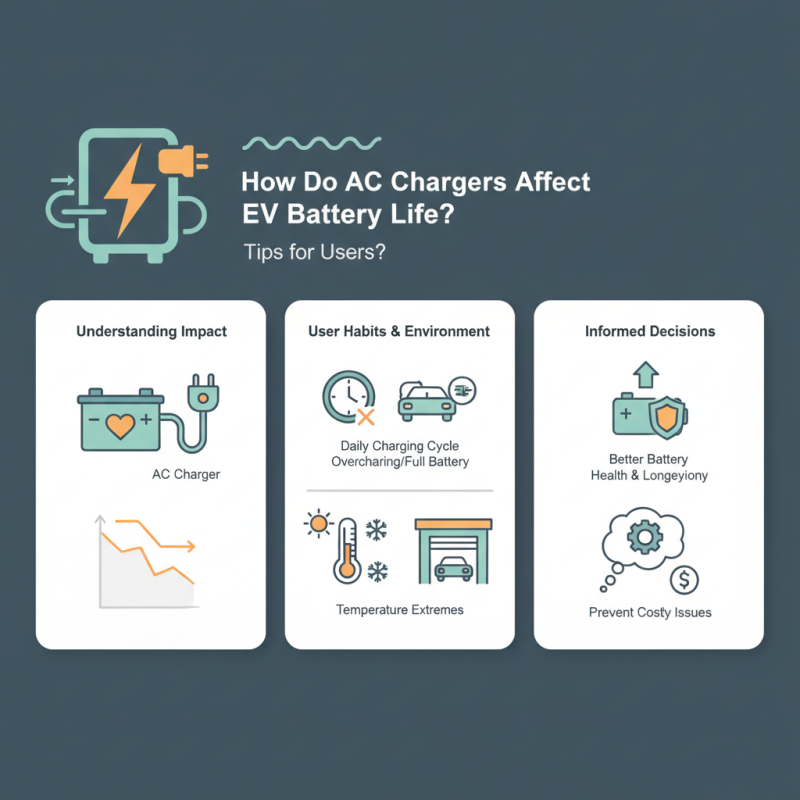
Understanding how AC chargers impact EV battery life is crucial for electric vehicle owners. Many users overlook the long-term effects of charging methods. AC chargers are common, but their influence on battery health remains a topic of concern.
Using an AC charger is convenient. However, frequent use can lead to battery degradation. Some owners may find themselves charging their vehicles daily. This can create a cycle that shortens battery lifespan. It’s essential to consider charging habits. Overcharging or keeping the battery at full for extended periods can be harmful.
Moreover, environmental factors play a role. Temperature extremes can affect how AC chargers work. Users often need to reflect on their surroundings. Awareness of charging practices is vital. By understanding how AC chargers impact EV battery life, users can make informed decisions. This can lead to better battery health and longevity. A little thoughtfulness now can prevent costly issues in the future.
When considering the longevity of electric vehicle (EV) batteries, understanding the charging method is crucial. Research shows that
AC chargers, commonly used for home charging, can impact battery health differently than
DC fast chargers. A study conducted by the U.S. Department of Energy highlighted that frequent use of
DC charging can lead to faster battery degradation. Conversely, AC charging, while slower, can help maintain battery stability.
Temperature also plays a significant role in battery longevity. Charging an EV in extreme heat or cold can reduce battery performance. According to a report from the
International Energy Agency, optimal charging occurs between 20°C to 25°C. Users should be aware of this when choosing charging locations.
Ensuring a moderate environment helps preserve battery life, often overlooked by users.
Battery management systems (BMS) are essential for monitoring health and performance. A well-designed BMS can mitigate some adverse effects from
charging practices. However, some users may not fully understand how to adapt their habits. Regularly charging to 80% instead of 100% can extend battery cycle life significantly.
Simple changes can lead to longer-lasting batteries, but awareness is key.
When it comes to charging electric vehicles (EVs), AC chargers play a significant role. There are different types of AC chargers, such as Level 1 and Level 2, each influencing battery health in distinct ways. Level 1 chargers are convenient for home use, connecting to standard outlets. However, they deliver slower charging rates. This can lead to prolonged charging times, which may not be ideal for daily use.
On the other hand, Level 2 chargers are more efficient. They provide a faster charging option and, when used correctly, can help maintain battery health. Charging at moderate rates can reduce stress on the battery. However, frequent use of high-capacity Level 2 chargers may cause overheating. Users must consider their charging patterns to optimize battery longevity.
Monitoring the battery temperature during charging is crucial. High temperatures can have a negative impact. It’s essential to charge in well-ventilated areas to prevent overheating. Users may neglect this aspect, thinking it's not significant. Adopting mindful charging practices can enhance battery life significantly. Being aware of the charger type and adjusting usage can ensure better health for EV batteries.
Charging habits play a critical role in extending the lifespan of electric vehicle (EV) batteries. Studies indicate that optimal charging practices can increase battery longevity significantly. For instance, the US Department of Energy reports that maintaining battery charge levels between 20% and 80% can prevent unnecessary degradation. Fully charging or completely depleting the battery can lead to a reduction in overall capacity over time.
When using AC chargers, it's essential to avoid frequent fast charging. A report by the Electric Power Research Institute highlights that fast charging can accelerate battery wear. Instead, regular use of standard AC chargers can minimize thermal stress on the battery. The ideal temperature for charging is between 20°C to 25°C. As temperatures rise, there can be a detrimental impact on battery health. It's worth noting that many owners overlook these details, leading to potential long-term issues.
It's also beneficial to charge the vehicle overnight when rates are lower and temperatures are cooler. This practice can align with smart energy use and sustainability efforts. However, some users mistakenly think that constant high-state-of-charge is good. In reality, keeping the battery within moderate levels promotes better health and performance. Technical insights emphasize the importance of balanced approach to charging. Users should assess their habits regularly to ensure optimal battery care.
Temperature plays a crucial role in the efficiency and longevity of electric vehicle (EV) battery charging. In cooler climates, charging may take longer, potentially affecting battery health. In contrast, high temperatures can cause overheating, which damages battery cells. Understanding how temperature affects charging can help users optimize their charging practices.
When charging in extreme temperatures, consider your EV's environment. If it’s very hot, park in shaded areas to keep the battery cool. Conversely, in cold weather, use garage charging when possible to maintain a stable temperature. This can enhance charging performance and battery longevity.
For tips, always monitor the battery's temperature during charging. Avoid charging to 100% in extremely hot conditions. Instead, aim for 80-90% to minimize stress on the cells. Additionally, consider using time-of-use rates for charging during off-peak hours when temperatures are lower. Small adjustments can make a significant difference in the overall health of your EV battery.
AC chargers are convenient for electric vehicle (EV) users, but their impact on battery life deserves attention. Understanding how to maintain your battery is essential for enhancing its longevity.
Regularly monitoring your battery's state of charge can prevent unnecessary strain. Charging to 100% isn't always necessary. Aim for a charge level between 20% and 80% during daily use. This range helps maintain battery health and prolongs its lifespan.
Also, consider temperature effects. Extreme heat or cold can reduce battery efficiency and life. If possible, park your EV in shaded or temperature-controlled areas. Using AC chargers during moderate temperatures can help avoid unnecessary battery wear.
Lastly, keep an eye on charging habits. Frequent, rapid charging can lead to degradation over time. Opt for slower, more consistent charging sessions whenever possible. This balance encourages optimal battery health while ensuring your vehicle is ready when you need it.
: Temperature significantly influences charging efficiency. Cooler weather can slow down charging, while high temperatures may cause battery overheating.
In hot conditions, park in shaded areas to keep the battery cool. This helps avoid overheating and damage.
It’s beneficial to use garage charging in cold climates. This maintains a stable temperature for better charging performance.
Aim for a charge level between 20% and 80%. This range helps maintain battery health and prolongs lifespan.
Charging to 100% isn’t always necessary. It can create stress on the battery cells, particularly in extreme temperatures.
Regularly check the battery's state of charge. This prevents unnecessary strain and helps manage overall battery health.
Frequent, rapid charging can lead to battery degradation over time. Slower charging sessions can promote better battery health.
Using time-of-use rates, charge your EV during off-peak hours, when temperatures are lower, enhancing battery performance.
Extreme temperatures can reduce battery efficiency and life. Make small adjustments to charging habits to mitigate these effects.
Yes, parking in shaded or temperature-controlled areas is crucial. It helps avoid unnecessary wear on the battery due to temperature extremes.
In the article "How Do AC Chargers Affect EV Battery Life Tips for Users?", the discussion revolves around the fundamental principles of electric vehicle (EV) batteries and the various factors influencing their longevity. It highlights how AC chargers, by differing in power output and charging speed, can significantly impact battery health. Users are encouraged to adopt best charging practices to maximize battery lifespan, such as avoiding frequent full charges and discharges.
Additionally, environmental factors like temperature play a critical role in battery performance during charging. By maintaining optimal charging conditions and adhering to maintenance tips, users can effectively enhance their EV battery life. Ultimately, understanding how AC chargers impact EV battery life is essential for users aiming to protect their investment and ensure reliable performance over time.

Walnut Charger