China’s growing electric-vehicle market includes homes, workplaces, apartment complexes, and commercial depots with different charging needs. AC charging is common in these settings, but the charger itself does not usually convert grid power into battery-ready DC. Instead, it supplies AC power, and the vehicle’s onboard charger performs that conversion. The charging rate depends on both the charger and the vehicle. A cable may look simple. The system behind it is not.
How AC EV chargers interact with energy storage systems depends on how a site connects its equipment. A battery system can store energy from the grid or, where installed, rooftop solar panels. An inverter manages the flow between the battery and the site’s AC electrical supply. An energy-management system can then adjust charging times or power levels, helping reduce demand during busy periods. The exact setup varies. Not every charger can communicate directly with a battery system, and not every site uses the same controls. That distinction matters.
For example, a depot might charge vehicles overnight while drawing stored energy during a daytime demand peak. The vehicle still receives AC, while its onboard charger converts that power for the battery. Safe, dependable operation also relies on correctly sized equipment, electrical protection, and qualified installation. Local grid requirements and system design can affect what is practical. A neat diagram rarely shows every delay, control setting, or installation constraint. Those details deserve attention. This article explains the main components, energy flows, and design choices behind China’s AC charging and storage setups, without assuming that one configuration fits every site.
How Do China AC EV Chargers Work With Energy Storage?
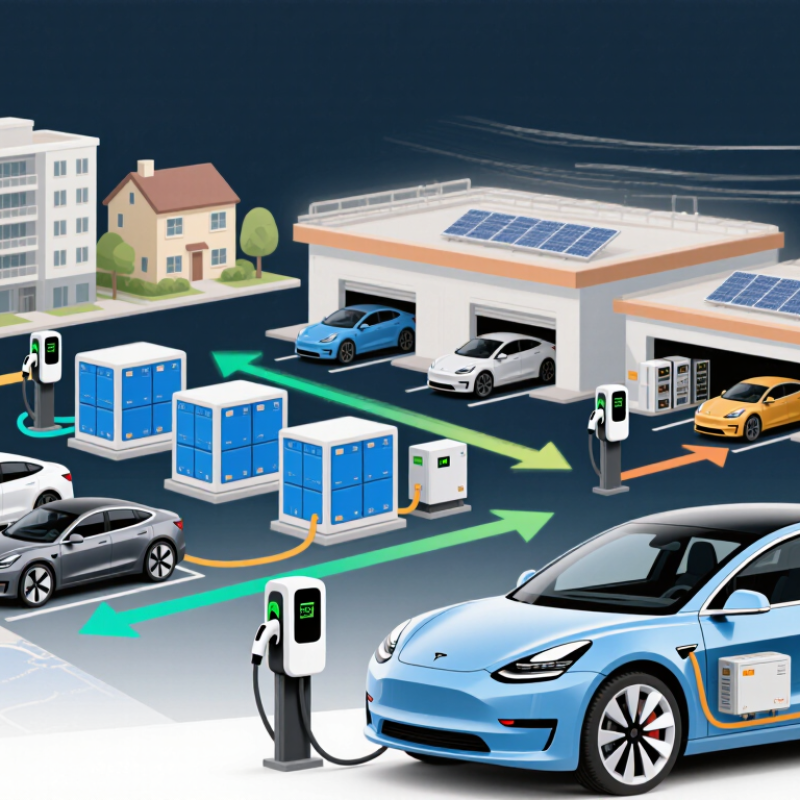
A China AC EV charging and energy storage system links several practical components. The AC charger supplies alternating current to the vehicle. The vehicle’s onboard charger converts it into direct current for the battery. A stationary battery stores energy, while a bidirectional inverter manages power between the battery, building, and grid. A site energy management system coordinates charging schedules and power limits. Protection devices, meters, and temperature sensors help monitor operation. Small details matter.
During a busy evening, the system can draw from stored energy instead of pulling its full demand from the grid. Later, it can recharge the stationary battery when site demand is lower. The exact setup depends on whether storage connects on the AC or DC side, and on the charger’s rated output. The International Energy Agency reported that China had over 2.7 million public charging points in 2023, more than 70% of the global total. That scale makes careful load management important, though each site has different needs.
Battery sizing should use actual charging patterns, not just a headline capacity figure. BloombergNEF reported an average global lithium-ion battery pack price of 115 US dollars per kilowatt-hour in 2024; this is not the installed cost of a complete storage system. Designers must also account for inverter losses, cooling, usable battery capacity, and reserve power. The calculations can be imperfect at first. Site data helps refine them.
An AC EV charger draws power from the building’s electrical supply, while the vehicle converts that AC electricity into battery power. With energy storage, the supply path changes. Stored energy leaves the battery as direct current, then an inverter converts it into alternating current for the charger. The charger communicates with the vehicle and manages the connection; it does not normally charge the car battery directly from storage DC.
The energy management system monitors battery charge, building demand, and available power. If a car is plugged in during a peak period, the system can direct stored energy to the charger and limit output when other loads rise. A home battery may support modest charging, while larger storage can serve several parking spaces. Capacity matters. So does inverter output. A full storage battery cannot deliver more power than its inverter and wiring safely support.
In practice, installers check the charger rating, phase supply, cable capacity, and expected charging hours before setting controls. Conversion also causes energy losses, and cold weather or heavy building use can reduce what remains for the car. These estimates are not perfect; real demand changes through the day. A clear display showing storage level and charging power helps users understand where the electricity is coming from.
| Stage | What Happens | Illustrative Power or Energy | Key Detail |
|---|---|---|---|
| 1. Energy is stored | A battery stores electrical energy as direct current (DC). It may be charged from the grid, solar generation, or another permitted source. | Example: 10 kWh of nominal battery capacity | Nominal capacity is not necessarily the amount available for charging; reserve settings and operating limits can reduce usable energy. |
| 2. The inverter supplies AC power | A bidirectional inverter converts DC from the battery into alternating current (AC) suitable for the site’s electrical system. | Example: 5 kW maximum continuous AC output | The inverter’s continuous power rating, electrical supply, and configured limits constrain the power available to the charger. |
| 3. The AC EV charger manages the connection | The AC charging station, also called EVSE, provides a controlled and protected connection between the AC supply and the vehicle. | Example: a 7.4 kW EVSE connected to a supply limited to 5 kW | The EVSE can advertise a current limit, but it does not make extra power. In this example, charging is limited by the 5 kW supply. |
| 4. The vehicle converts AC to DC | The vehicle’s onboard charger converts the incoming AC into DC to charge the traction battery. | Charging power is limited by the lowest applicable EVSE, supply, and onboard-charger limit. | An AC EVSE is not the vehicle’s AC-to-DC converter; that conversion takes place inside the vehicle. |
| 5. Controls balance power | System controls can monitor battery state of charge, inverter output, site loads, and charging demand, then adjust the charging current. | For example, charging may be reduced when other site loads increase. | Dynamic power control helps keep total demand within equipment and site limits. Its behavior depends on the system configuration. |
| 6. Stored energy is used | The inverter supplies AC energy to the EVSE, and the vehicle’s onboard charger uses it to charge the vehicle battery. | Illustration: 10 kWh nominal × 90% usable × 90% inverter efficiency ≈ 8.1 kWh AC output | At a steady 5 kW output, 8.1 kWh corresponds to about 1.6 hours of AC supply. Actual vehicle battery energy will be lower because of vehicle charging losses and operating conditions. |
Example assumptions: The figures are illustrative, not universal specifications. Actual charging power and duration depend on battery settings, inverter and EVSE ratings, vehicle limits, electrical supply, temperature, and system losses.
When stored energy supports an AC EV charger, a battery system and inverter help supply alternating current to the charging point. The charger communicates with the vehicle before power flows. A control signal tells the car how much current is available, while contactors remain open until the connection is ready. You can hear a soft click as they close. The EV then receives AC through its charging cable.
Inside the vehicle, the onboard charger converts that AC into controlled direct current for the traction battery. It also adjusts charging current to suit the battery’s needs. Meanwhile, the site’s energy controller can limit charger output when storage is low or demand rises. That coordination matters. A storage system does not simply send its full capacity to every vehicle; inverter limits, cable ratings, and vehicle settings all shape delivery.
A neat diagram can make this look effortless, but real installations need careful commissioning. I would not assume every setup behaves identically. Temperature, voltage, and protective devices can affect operation, so qualified testing is important.
How Control Systems Balance Charging, Storage, and Grid Power
An AC charger does not usually draw directly from a battery’s DC cells. An inverter converts stored energy into AC power for the charging point, while a controller coordinates the system. It checks the site’s grid limit, building demand, battery charge level, and vehicles’ requested charging power. If several cars arrive together, the controller can lower individual charging rates instead of exceeding the site’s power limit. The experience is practical: a vehicle may charge more slowly during a busy evening, then speed up when other loads fall. That trade-off is not always intuitive.
Controls can also charge storage when demand is low, then discharge it during a peak. The International Energy Agency reported that global public charging points grew by more than 40% in 2023, while fast chargers grew by 55% (Global EV Outlook 2024). The agency also recorded 42 GW of battery storage additions that year, a 130% increase from 2022 (Batteries and Secure Energy Transitions, 2024). These figures show why coordination matters, though they do not guarantee savings at every site. A controller depends on accurate meters and sensible charging targets; poor forecasts can leave a battery depleted just when demand rises. Not perfectly. Operators should review real load data and adjust settings over time.
In an integrated system, stored electricity can supply an AC EV charger when grid power is costly or limited. The charger communicates with the vehicle, while the vehicle’s onboard unit converts AC power for its battery. A bidirectional or hybrid inverter manages energy flow between storage, the grid, and charging equipment. Small details matter. System capacity, cable sizing, and charging schedules should match the site’s actual demand.
Safety depends on correctly coordinated protection. Installers should provide suitable grounding, overcurrent protection, residual-current protection, and emergency isolation. The storage battery management system monitors temperature, voltage, and current, and should stop operation when readings exceed set limits. Keep equipment dry, ventilated, and accessible for inspection. In China, installation and grid connection should follow applicable local requirements and be checked by qualified professionals. Not every site needs backup.
Common applications include apartment parking areas, office lots, and fleet depots. Storage can help reduce peak demand or make better use of rooftop solar. Yet results vary with battery size, vehicle arrival times, and local tariffs. A system may look efficient on paper but still need careful adjustment after real-world use.
A stationary battery stores electricity. An inverter converts it into AC power for the charger. The vehicle’s onboard charger then converts AC into DC for its battery.
It monitors grid limits, building demand, battery charge, and vehicle requests. If several cars arrive together, it can reduce their charging rates. Not always intuitive.
It can recharge storage when site demand is low and discharge during busy periods. Accurate meters and sensible schedules matter. Poor forecasts can leave the battery depleted at the wrong time.
Use real charging patterns, peak demand, usable capacity, inverter losses, and reserve needs. A headline capacity figure is not enough. Early estimates may need revision after operators collect site data.
It may help lower peak demand or make better use of rooftop solar. Results depend on battery size, vehicle arrival times, and local tariffs. Savings are not guaranteed.
Suitable grounding, overcurrent protection, residual-current protection, and emergency isolation are important. Battery controls should monitor temperature, voltage, and current. Equipment also needs dry, ventilated, accessible surroundings.
Not necessarily. Some installations must stop charging, even when stored energy remains. Ask how the inverter and charger respond before selecting a system.
They can serve apartment parking areas, office lots, and fleet depots. Cable sizing and charging schedules should fit the site’s actual demand. Small details matter.
Review fault alerts, maintenance access, and actual load data. Adjust settings as vehicle use changes. A system can look efficient on paper, yet need careful tuning.
How AC EV chargers interact with energy storage systems depends on coordinated components such as an AC charger, a battery storage unit, a power conversion system, sensors, and a central controller. When stored energy is available, the conversion system helps make it usable by the charger, which then supplies alternating current to the vehicle. The vehicle’s onboard charger converts that AC power into the form needed to charge its battery.
The control system monitors energy demand, storage levels, and available grid power to decide when to draw from storage, use grid electricity, or combine both sources. This coordination can help manage charging loads and make better use of energy generated on-site. Protection features, including electrical monitoring and automatic shutdown functions, help guard against faults and unsafe operating conditions. Integrated systems can support homes, workplaces, and other locations where flexible EV charging and local energy storage are useful.

Walnut Charger