Choosing a dual-port AC charger for home requires more than comparing charging speeds. The right model should match your vehicle, electrical supply, parking space, and daily routine. This guide explains How to choose dual-port AC chargers for home with practical, safety-focused criteria. A charger rated at 22 kW may sound impressive, yet many homes cannot support that output without electrical upgrades. Check your vehicle’s onboard AC limit first. Then compare the charger’s maximum current with your home circuit capacity. A certified electrician should verify wiring, grounding, protection devices, and installation conditions. Small details matter. Cable length, plug storage, weather resistance, and screen visibility can affect every charging session.
Dual-port models can charge two vehicles together, but shared power management deserves close attention. Some units divide output evenly. Others prioritize one vehicle or adjust power automatically. Read the technical manual, not only the product page. Look for recognized safety certifications, reliable enclosure ratings, smart scheduling, load balancing, and clear warranty terms. Independent reviews and manufacturer documentation offer useful evidence. Real-world feedback can reveal heat buildup, app failures, or awkward cable handling. Still, online comments are not perfect proof. One owner’s experience may reflect unusual wiring or climate conditions. That limitation deserves honest consideration. A well-chosen charger should feel predictable at midnight, during winter rain, and when two cars arrive nearly empty. Convenience matters, but safe installation matters more. The best decision combines verified specifications, professional advice, and the habits of the people using the charger.
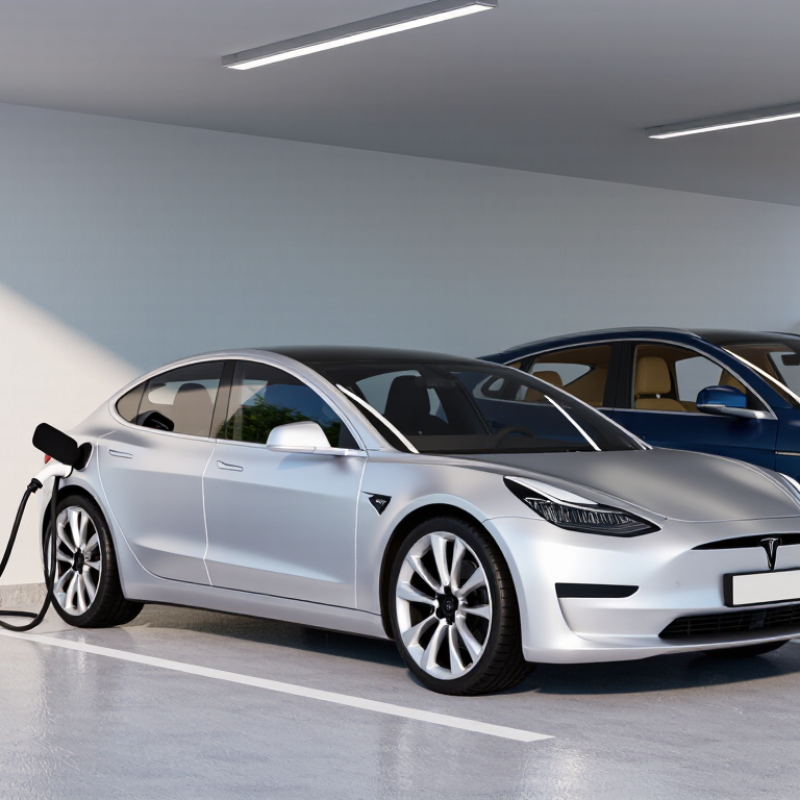
A dual port AC charger lets two electric vehicles share one home charging unit. Each port supplies AC power to the vehicle’s onboard charger, which converts it into usable battery energy. The charger does not always provide maximum power to both cars. Many models balance the load automatically, giving priority to one vehicle when household demand rises.
Check the rated output before buying. A 7.4 kW supply may charge one vehicle quickly, but two connected cars could receive less power. Look for dynamic load management, adjustable current settings, and clear status indicators. A qualified electrician should inspect the circuit, breaker capacity, grounding, and cable route. Home wiring varies more than product labels suggest.
Safety features deserve close attention. Choose protection against leakage current, overheating, voltage changes, and moisture. An outdoor unit needs suitable weather resistance, while a long cable can reduce parking stress. Small details matter. I once saw a charger installed near a driveway corner, where the cable repeatedly crossed a walking path. The equipment worked, but the layout was poor. A screen or mobile control can help, though connectivity may fail during a network outage. Manual controls still have value. Think about actual parking habits, future vehicle needs, and whether two cars will charge overnight.
Dual-port AC chargers divide available electrical capacity between two vehicles. The actual charging speed depends on the home's single-phase or three-phase supply, the charger's maximum output, vehicle acceptance rate, and dynamic load balancing. For reference, the estimated driving range uses an energy consumption assumption of 18 kWh per 100 km and represents approximate values rather than guaranteed results.
Choosing the best dual port AC charger begins with understanding your home’s electrical supply. Check the main panel rating, available circuit space, and the voltage delivered to the installation point. A qualified electrician should measure these conditions rather than relying on old paperwork.
I once underestimated how much power two vehicles could draw together. That assumption was wrong. A charger rated for two ports may reduce output when both vehicles charge simultaneously. Review the total amperage, charging schedules, and your home’s existing loads, such as ovens, heat pumps, and water heaters. Continuous charging can stress an undersized circuit. Local electrical codes may also require dedicated protection, suitable cable sizing, and residual-current protection.
Think about your daily routine. Do both cars charge overnight, or does one need a quick top-up after work? A load-managed charger may suit a modest supply better than a higher-rated unit.
Check cable length, mounting distance, ventilation, and weather exposure near the parking area. Small details matter. A long cable can create clutter and handling problems. Outdoor equipment needs proper ingress protection and secure installation.
Ask the electrician to document the circuit capacity and test the completed system. I would not choose the highest power automatically; sometimes it is unnecessary, and my own early preference for maximum output ignored the home’s actual demand.
A dual port AC charger should match your household circuit, not just advertise a higher output. The U.S. Department of Energy’s Alternative Fuels Data Center lists Level 2 charging at roughly 208–240 volts, with outputs commonly ranging from 3 to 19.2 kilowatts. In practice, two connected cars may share that power. A 9.6-kilowatt unit could deliver about 4.8 kilowatts per vehicle when both ports operate together. Charging speed changes.
Port compatibility deserves equal attention. Check whether your vehicles use Type 1 or Type 2 AC connectors, and confirm the cable length for your parking layout. A short cable can turn a capable charger into an everyday nuisance. The IEA’s Global EV Outlook 2024 reported nearly 14 million electric car sales worldwide in 2023, increasing the need for flexible home charging equipment. Yet compatibility standards still vary by region.
Safety systems should include ground-fault protection, overcurrent protection, thermal monitoring, and automatic power reduction. Look for equipment tested against recognized standards, such as IEC 61851 or applicable national certification requirements. A weather-resistant enclosure helps in a damp driveway, but it does not replace correct installation. Heat changes things. An electrician should verify breaker capacity, cable sizing, and continuous-load limits. I once underestimated cable routing distance; the installation became slower and more expensive than expected. That small mistake is worth remembering.
Choosing a dual-port AC charger starts with the installation, not the screen. A qualified electrician should inspect the service panel, cable route, grounding, and available capacity. Two vehicles charging together can approach the home’s maximum load. Dynamic load balancing can reduce that risk by adjusting current when ovens or heat pumps operate. It may cost more, but replacing an overloaded circuit costs far more.
The International Energy Agency reported that global electric-car sales approached 14 million in 2023, while public charging points grew by more than 40%. Home charging remains important because cars often sit overnight. That makes scheduled charging and time-of-use control genuinely useful. Look for accurate energy records, remote fault alerts, firmware updates, and an offline charging mode. Internet features should not become a single point of failure. Simple is sometimes better.
Build quality deserves close attention. Check the enclosure’s IP rating under IEC 60529, cable flexibility, connector temperature monitoring, and protection against residual DC current. A charger certified to relevant electrical standards offers stronger evidence than attractive specifications alone. Heat, dust, ultraviolet exposure, and repeated cable bending reveal weak products quickly. The U.S. Department of Energy’s Alternative Fuels Data Center emphasizes safe, code-compliant installation, yet product testing does not replace site-specific inspection. I would also question unusually high power claims. Two ports may share one circuit, not deliver full output simultaneously. That detail is easy to miss.
Choosing a dual-port AC charger starts with your household routine, not its screen or cable length. If two EVs return at 6 p.m., estimate overnight energy needs before comparing power ratings. A 60-kWh battery needing 24 kWh can often recharge overnight through a 7.2-kW connection. The U.S. Department of Energy’s Alternative Fuels Data Center identifies Level 2 charging as typically using 208–240 volts.
Charging speed still depends on the vehicle and electrical circuit. That detail is easy to miss. A 19.2-kW charger cannot force a car to accept 19.2 kW.
Build your budget around three costs: the charger, professional installation, and electricity usage. The International Energy Agency’s Global EV Outlook 2024 recorded more than 14 million electric car sales worldwide in 2023. It also highlights home charging as a major part of everyday EV use.
For two vehicles, select a unit with automatic load sharing. Both cars may charge, but neither may receive full output simultaneously. Check whether your service panel supports the required amperage before purchasing.
A lower-rated charger can be the wiser choice when wiring upgrades become expensive. It may charge more slowly. That is not always a problem. A practical test is simple: measure each car’s daily mileage, then calculate the energy needed overnight. My first estimate would be imperfect without accounting for winter temperatures, battery losses, and future EV ownership. Allow some headroom, but avoid paying for capacity your home and vehicles cannot use.
It allows two electric vehicles to connect to one home charging unit. Each vehicle uses its onboard charger to convert AC power into battery energy. Shared power is common.
Usually, no. The charger may divide available power between both ports. A 9.6-kilowatt unit could provide about 4.8 kilowatts per vehicle. Household electricity demand can reduce output further.
Level 2 charging commonly uses 208–240 volts. Output may range from about 3 to 19.2 kilowatts. Actual speed depends on the vehicle and circuit.
Measure each vehicle’s daily mileage and overnight energy needs. A 7.2-kilowatt connection may replace 24 kilowatt-hours overnight. Higher output is not always useful.
Confirm whether each vehicle uses a Type 1 or Type 2 AC connector. Measure the distance between the charger and parking spaces. A short cable can create daily frustration.
Look for ground-fault protection, overcurrent protection, temperature monitoring, and automatic power reduction. Moisture resistance matters outdoors. A weather-resistant case helps, but installation still matters more.
The electrician should check breaker capacity, cable size, grounding, circuit limits, and cable routing. The service panel may need an upgrade. Home wiring varies widely.
Include the charger, professional installation, and electricity costs. A lower-rated unit may be wiser when wiring upgrades become expensive. It may charge more slowly. That can be acceptable.
They can show charging status and adjust settings. Network outages may interrupt connected controls. Manual controls remain useful. Simpler can be better.
Avoid routing a cable across walking paths or driveway corners. I once underestimated cable distance. The installation became slower and more expensive. Small layout details matter.
Choosing the right home charger begins with understanding how a dual-port AC charger works and which features matter most, such as total power output, load balancing, connector compatibility, and independent charging control. To determine how to choose dual-port AC chargers for home, first review your household electrical capacity, existing circuits, and typical vehicle charging habits. Consider whether you need to charge two vehicles at once, how quickly you expect to recharge, and whether your electrical system may require professional assessment or an upgraded circuit.
Next, compare charging speed, port compatibility, protective systems, and temperature or fault monitoring features. Installation flexibility is also important, including wall-mounted or other suitable setups, cable management, weather resistance, and overall build quality. Smart functions such as scheduling, energy monitoring, access control, and mobile connectivity can improve convenience and help manage electricity use. Finally, balance the charger’s purchase and installation costs against your electric vehicle needs, long-term reliability, safety features, and available household power to select a practical solution for your budget.
Walnut Charger