Installing EV charging equipment in 2026 involves more than choosing a charger and mounting it beside a parking space. A home garage, apartment lot, workplace, or public curb may trigger different local requirements. Rules vary. They can cover permits, electrical capacity, trenching, signage, accessibility, fire safety, inspections, and utility connections.
How to comply with local EV charging regulations starts with identifying the authorities that oversee the site. Check with your building department, electrical inspector, fire marshal, planning office, and electric utility. Their requirements may differ by location and project type. Ask for current guidance before buying equipment or scheduling construction. Keep written records of approvals, inspection results, equipment specifications, and installer qualifications. A licensed electrician can assess whether the existing service panel can support the added load. That detail matters, especially in older buildings.
A plan can look complete on paper, yet stall over one overlooked panel upgrade or parking-layout detail. Small details matter. Confirm who owns the parking area, who pays for electrical work, and whether tenants or visitors need accessible charging spaces. For shared properties, review lease terms and building policies alongside local codes. Requirements can change, so confirm them again before installation and before opening chargers to users. This guide explains practical steps for checking local rules, preparing documents, coordinating qualified professionals, and arranging inspections. It is a starting point, not a substitute for advice from your local authority. Some projects will still raise questions. That is a reason to verify, not to guess.
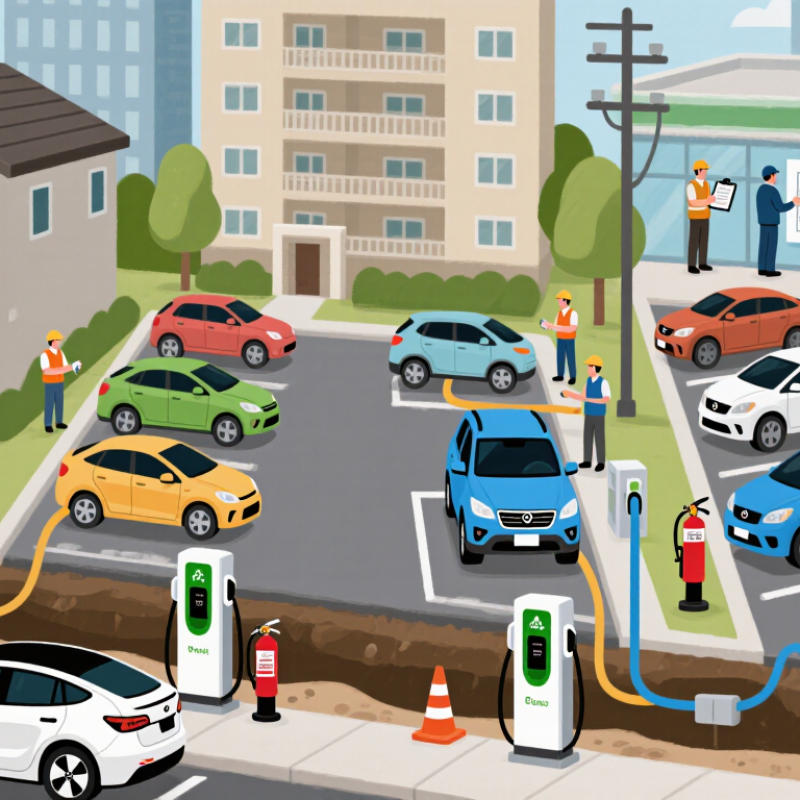
To determine which local EV charging rules apply, start with the property address, not a generic online checklist. A city, county, or state may enforce different building, electrical, fire, zoning, and accessibility requirements. Confirm the authority having jurisdiction, then ask which code editions and local amendments are currently adopted. Requirements can also change with the project: a home installation, a workplace parking lot, and a public charging site may follow different review paths. Note the charger’s location, power level, parking layout, and whether construction is new or existing.
The scale of deployment makes careful checking practical, not merely procedural. The International Energy Agency’s Global EV Outlook 2024 reports that public charging points exceeded four million worldwide in 2023, growing by more than 40% from 2022. That global figure does not establish local requirements. It does show why local offices may have detailed application steps. Ask planning and building staff about permits, setbacks, signage, and accessible spaces; ask the electrical inspector about equipment and installation plans. Contact the utility about service capacity and connection approval. Get the answers in writing. This can feel tedious. A checklist may still miss a recent amendment, so verify dates and project details before ordering equipment.
How to Comply With Local EV Charging Regulations in 2026?
Before installing chargers, check local zoning rules and the property’s approved use. Some areas require a permit for new parking layouts, lighting, or equipment near sidewalks. A site plan should show charger locations, vehicle spaces, cable paths, and nearby entrances. Ask the local planning office which approvals apply; requirements can differ between neighboring jurisdictions. Details matter. A drawing that looks clear on screen may miss a tree, drain, or fire access route on site.
Building and electrical requirements affect both the charger and the surrounding structure. Confirm whether permits, inspections, or a licensed electrical professional are required. The electrical review may consider service capacity, circuit protection, grounding, and conduit placement. For existing buildings, check whether wall penetrations or equipment supports need separate approval. Accessibility rules may specify the number and layout of accessible charging spaces, clear floor areas, reach ranges, signage, and an unobstructed route from parking to the building. Measure the actual space, not just the plan. Cables can cross walking paths if their routes are poorly planned.
Tips: Keep a checklist of zoning, building, electrical, and accessibility questions, then confirm answers with the relevant local offices before ordering equipment. Photograph the site and record measurements. Save permit documents and inspection notes together. Plans change. Recheck requirements when the design or property conditions change.
| Review area | What to check | Typical compliance action | Local verification |
|---|---|---|---|
| Zoning and land use | Whether EV charging is allowed at the site and whether the proposed use, operating hours, signage, or equipment location triggers a zoning review. | Confirm permitted-use rules before design. Check setbacks, screening, lighting, parking layout, signs, and any conditional-use or site-plan process that applies. | Ask the local planning or zoning department; requirements differ by jurisdiction and property type. |
| Building and site permits | Applicable building-code edition, permit triggers, structural details, trenching, bollards, equipment foundations, and any locally adopted EV-ready or EV-capable provisions. | Submit plans and obtain required permits before construction. Show charger locations, accessible routes, equipment protection, and relevant conduit or electrical capacity. | The authority having jurisdiction determines the adopted code edition, amendments, and permit scope. Model-code provisions are not automatically local law. |
| Electrical safety and service capacity | Locally adopted electrical code; circuit and service capacity; overcurrent protection; grounding; wiring methods; equipment listing; and approved load-management arrangements. | Have a qualified electrical professional evaluate the load and prepare permit drawings. Install and inspect EV supply equipment in accordance with the adopted code and equipment instructions. | Confirm the adopted edition and local amendments with the electrical inspector. NEC Article 625 is a commonly used model-code reference in the United States, but adoption and amendments vary. |
| Accessibility | Accessible parking obligations, accessible routes, reach and operability of controls, clear floor space, signage, and any state or local EV-charging accessibility rules. | Review the entire user route from arrival to charger operation. Apply the accessibility standards that govern the facility and project; do not assume that a standard parking stall alone makes a charging space accessible. | Check applicable federal, state, and local requirements with the building official or accessibility specialist. Federal accessibility rules apply to covered facilities; EV-specific technical requirements may also come from state or local rules. |
| Utility coordination | Available electrical capacity, service upgrades, transformer or meter work, interconnection procedures, and utility design or scheduling requirements. | Contact the serving utility early, before finalizing charger count and charging power. Include utility review and any required service work in the project schedule. | Utility requirements are site- and service-specific and are separate from permits issued by the local building department. |
| Inspections and records | Required inspections, approved plans, equipment documentation, final sign-off, and any ongoing operating or maintenance obligations. | Schedule inspections at the required construction stages. Keep permits, inspection approvals, equipment specifications, and accessibility review records with the project file. | Confirm inspection stages and close-out documents with each relevant local authority before opening the chargers for use. |
Requirements vary by jurisdiction, site, and project scope. Confirm current 2026 rules, adopted code editions, and local amendments with the relevant authorities before design or construction.
Local EV charging compliance starts before equipment is ordered. Permit rules differ by city and project type, so ask the planning and building departments which reviews apply. Confirm electrical permits, inspections, accessibility requirements, and any fire or zoning review. Then request written utility guidance on available capacity, service upgrades, transformer locations, and approval timelines.
Make the site plan specific enough for reviewers to assess what will actually be built. Show charger locations, parking and accessible routes, cable reach, trench paths, drainage, lighting, and clear access for emergency vehicles. Mark existing utilities and proposed electrical equipment. Ask the utility to confirm the service point and load requirements against the plan, not just a rough sketch.
Keep a dated record of comments and revised drawings; small changes can trigger another review. I have seen teams focus on charger counts and miss the turning space near a cabinet.
Easy to overlook.
Before submission, walk the site with the designer and compare the drawing with curbs, doors, and pavement conditions. If those details are uncertain, flag them rather than assuming the first plan is final.
Before installing an EV charger, confirm the current requirements with your local building and electrical authorities. Rules can differ by location and property type. Ask whether permits, inspections, accessibility provisions, or parking-space markings apply. Keep the written guidance with the project file.
Choose equipment suited to the site, then have a qualified electrician verify circuit capacity, protective devices, grounding, and cable routing against applicable codes. Check clearances around the charger and protect wiring from vehicle impact, moisture, and routine maintenance work. Details matter. Photograph the installation before walls or conduit covers conceal key connections. Save equipment specifications, permits, inspection results, commissioning readings, and any approved design changes. Record the installer’s credentials and the date each check was completed.
A tidy binder does not prove the installation is safe; records should match the actual equipment and site. Keep it current. Note repairs, firmware changes, recurring faults, and periodic electrical checks in a dated maintenance log. Store digital copies in a secure, accessible location, with a backup. Retention periods vary, so ask the local authority or insurer how long records should be kept. Small gaps happen, especially after a rushed handover. Review the file before adding another charging point, and update drawings when the layout changes.
Install equipment to code and keep compliance records.
These are common North American AC supply voltages, not a complete list of permitted configurations. Confirm the locally adopted electrical, building, and fire codes with your authority having jurisdiction (AHJ). Keep permits, inspection approvals, equipment specifications, and installation records for compliance documentation.
Local requirements can differ between neighboring towns. Before installing or upgrading a charger, check current permit rules, electrical capacity requirements, accessibility provisions, signage, and fire-department access. Then arrange inspections at the stages your authority requires, not just after installation. Keep approved plans, inspection results, equipment specifications, and correction notices together. Small details matter. A clear photo of a labeled disconnect or accessible parking route can help resolve questions later.
Tips: Assign one person to review local updates monthly. Record the source, date checked, and any changes that affect the site. Ask the permitting office to clarify unclear requirements in writing. A checklist can still miss something; review it after every inspection and note what needs improving.
The International Energy Agency’s Global EV Outlook 2024 reports that public charging points worldwide exceeded 4 million in 2023, with additions roughly 40% higher than in 2022. That growth does not create one universal rulebook, but it makes disciplined compliance tracking more useful. Maintain a simple change log with the rule or guidance, affected equipment, responsible person, and deadline. Recheck it before construction, commissioning, and major electrical upgrades. Keep older versions too. They can explain why a site decision was made, even when the original notes are imperfect.
Check local zoning, building, electrical, and accessibility requirements. A nearby city may follow different rules. Details matter.
Show charger locations, parking spaces, cable paths, entrances, drainage, lighting, and emergency access. Mark existing utilities and proposed equipment.
Ask local offices about permits, inspections, fire reviews, and parking or accessibility rules. Confirm utility capacity and approval timelines in writing.
Walk the site with the designer. Compare the drawing with curbs, doors, trees, drains, and pavement. Easy to miss.
A qualified electrician should check circuit capacity, protective devices, grounding, conduit placement, and cable routing against applicable requirements.
Keep walking paths clear and protect wiring from vehicles, moisture, and maintenance work. Measure actual spaces, not just the plan.
Save permits, equipment specifications, inspection results, commissioning readings, installer details, and approved design changes. Photograph connections before they are covered.
Keep a dated log of repairs, faults, firmware changes, and electrical checks. Update drawings when the layout changes. Plans change. Ask local authorities or your insurer about retention periods. A binder alone proves little.
How to comply with local EV charging regulations starts with identifying which rules apply to your property, project type, and installation location. Review local zoning, building, electrical, and accessibility requirements early, since they can affect charger placement, equipment specifications, parking spaces, and site design. Requirements may differ between jurisdictions, so confirm the current standards with the relevant local authorities before work begins.
Next, verify whether permits, utility approvals, or detailed site plans are required, and ensure the installation follows applicable codes and approved plans. Keep clear records of equipment specifications, approvals, inspections, and any changes made during construction. After installation, arrange required inspections and address any issues before the chargers are put into service. Because local requirements can change, periodically check for updates and retain compliance records so future maintenance or expansion can be planned with the current rules in mind.

Walnut Charger