As the demand for electric vehicles (EVs) grows, businesses face a critical question: how to charge multiple EVs at a commercial site efficiently? The increasing number of EVs requires thoughtful planning and execution. Utilizing charging infrastructure in an organized manner is essential. This approach ensures that businesses meet the requirements of their customers while maximizing their own operational efficiency.
Charging multiple EVs often presents challenges. Sites may lack sufficient power supply, or the layout may not support optimal charging. These issues call for innovative solutions. Using advanced charging technologies can alleviate some of the pressing concerns. Implementing smart chargers with load management features can also distribute energy when needed.
Moreover, businesses need to reflect on the user experience. A well-designed charging area enhances customer satisfaction. Integrating amenities like seating or retail options can add value. However, site planners should continually assess the effectiveness of their strategies. Engaging with customers for feedback can lead to improvements. Balancing efficiency and customer experience is an ongoing challenge in charging multiple EVs at commercial sites.
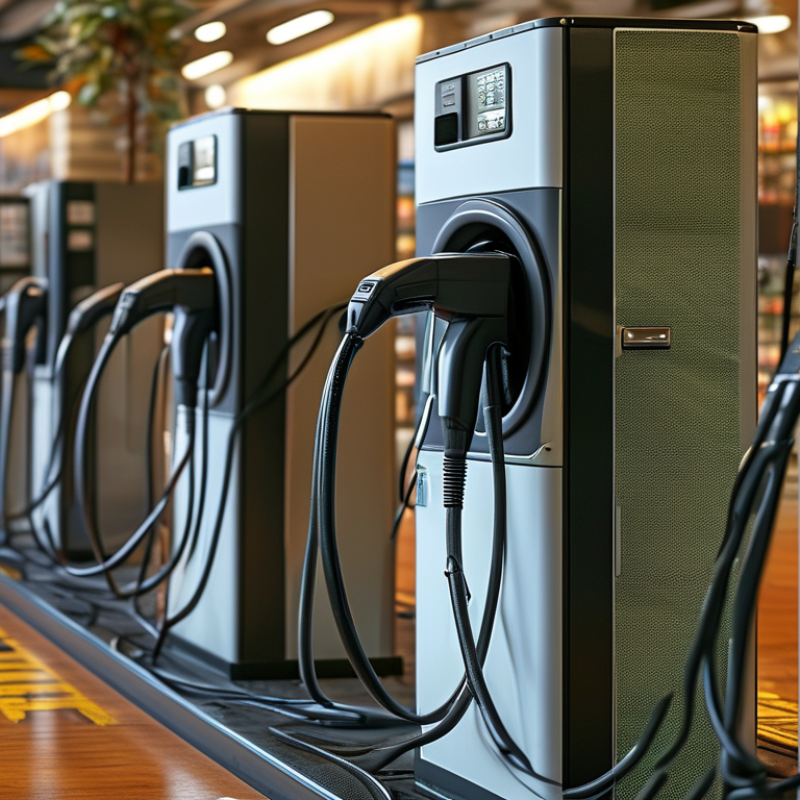
When optimizing EV charging infrastructure in commercial areas, several strategies can enhance
efficiency and usability. One effective approach is to assess the parking layout.
Designated charging spots should be easily accessible and strategically placed near entrances.
This convenience encourages usage while preventing congestion. Clear signage is crucial, guiding
EV drivers to available stations and reducing wait times.
Integrating smart charging technology can also optimize energy
distribution. Real-time data management allows charging speeds to adjust based on demand and grid capacity.
During peak hours, the system can slow down charging to prevent overload. It’s essential to analyze
usage patterns. Tracking charging habits helps identify when and where to install more units.
Not all businesses can see the immediate benefits. Initial costs might be a concern, and slow
adoption can lead to underutilized resources.
Addressing these challenges permits a more tailored approach. Engaging with customers can provide
insights into their needs. Continuous feedback helps refine strategies. Partnerships with local
governments can lead to funding opportunities, enhancing infrastructure development.
Implementing these strategies fosters a sustainable charging network, balancing
efficiency with user experience.
When it comes to charging multiple electric vehicles (EVs) at commercial sites, understanding charger types and capacities is essential. There are three main types of EV chargers: Level 1, Level 2, and DC fast chargers. Level 1 chargers use standard household outlets. They are slow, typically adding about 4 to 5 miles of range per hour. This makes them less ideal for commercial settings with high turnover.
Level 2 chargers, on the other hand, provide a better solution. They can deliver up to 25 miles of range per hour. These units are perfect for workplaces, hotels, and shopping centers. They require a 240-volt outlet, which makes installation slightly more complex. However, their efficiency significantly enhances user experience. Some locations may even opt for DC fast chargers, which can add up to 100 miles of range in just 30 minutes.
Choosing the right type of charger depends on various factors, including traffic flow and charging needs. Not all commercial sites have the same electrical capacity. This can lead to overloading if multiple chargers are used concurrently. It’s important for businesses to assess their power supply and infrastructure before deciding. Adopting the right strategy will maximize usability and deter potential issues.
This chart demonstrates the charging capacities of different types of EV chargers commonly used at commercial sites. Level 1 chargers provide a basic 1.4 kW capacity, suitable for overnight charging. Level 2 chargers offer a more robust 7.2 kW capacity, making them ideal for workstations. DC Fast Chargers, on the other hand, significantly reduce charging time with capacities reaching up to 150 kW.
Charging multiple electric vehicles (EVs) at commercial sites presents a unique challenge. Smart charging solutions are essential for efficient energy management. These solutions can adjust power distribution based on real-time demand, ensuring that no vehicle is left uncharged. By monitoring usage patterns, businesses can prioritize charging schedules.
Integrating renewable energy sources into the charging infrastructure enhances sustainability. For instance, solar panels can generate electricity during peak sunlight hours. This energy can be stored and used to charge EVs later. However, implementing these systems requires upfront investment and regular maintenance. Challenges can arise, such as fluctuations in energy availability or technological compatibility.
Collaboration between energy providers and commercial sites is crucial. A shared understanding promotes innovative charging networks. Encouraging user feedback also helps identify areas needing improvement. Addressing these gaps leads to stronger, more reliable smart charging solutions. With proper management, the transition to electric vehicle charging can be smooth and beneficial for both businesses and the environment.
Charging multiple electric vehicles (EVs) at commercial sites presents unique challenges. One of the key issues is the demand on the local electrical grid. As more EVs are introduced, the need for robust infrastructure increases. Proper load management is essential. It ensures that power is distributed efficiently among all charging stations. This requires careful planning and monitoring.
Another challenge lies in the variability of charging times. Different EV models have distinct battery capacities and charging rates. Some vehicles may take longer to charge, leading to congestion at the stations. Solutions like smart charging systems can help optimize this process. They adjust the charging power based on current demand and vehicle needs. However, implementing these systems can be costly and complex.
Moreover, location plays a significant role. Not every commercial site has enough space for multiple charging stations. In addition, ensuring accessibility for all users is crucial. This involves considering the placement of chargers to avoid potential obstructions. While there is progress in establishing networks, many commercial sites still require innovative solutions to improve efficiency and user experience. The conversation about scaling EV charging infrastructure is ongoing and will evolve.
The future of electric vehicle (EV) charging at commercial sites is rapidly evolving. Industry reports indicate that by 2030, around 30% of new cars sold globally will be electric. The demand for efficient charging solutions is surging. This shift presents both opportunities and challenges for commercial property owners.
One of the most promising trends is the integration of smart charging technology. Smart systems can manage multiple EVs seamlessly, optimizing energy use and reducing costs. They can adjust charging rates based on grid demand and electricity prices. This approach can save businesses up to 25% on energy costs, according to the International Energy Agency (IEA).
Tips: Investing in smart charging stations might lead to long-term savings. Regularly review your charging infrastructure. Stay updated with technological advancements. Additionally, consider user experience; setup locations should ensure easy accessibility to all EVs. Business owners must also prepare for increased maintenance needs as technology evolves. The landscape is shifting, and flexibility will be key.
: There are three main types: Level 1, Level 2, and DC fast chargers.
Level 1 chargers add about 4 to 5 miles of range per hour.
Level 2 chargers deliver up to 25 miles of range per hour.
They struggle with demand on the electrical grid and varied charging times among different vehicles.
It ensures power is distributed efficiently among all charging stations to avoid overloading.
While they add significant range quickly, their installation can be costly and complex.
They optimize charging based on demand and vehicle needs, improving station efficiency.
Traffic flow, charging needs, and electrical capacity of the site are crucial factors.
Charger placement must avoid obstructions to ensure easy access for all users.
Many lack sufficient space and infrastructure for multiple efficient charging stations.
This article explores how to charge multiple EVs at a commercial site by optimizing EV charging infrastructure. It discusses strategies for enhancing charging efficiency in commercial areas, focusing on the different types of EV chargers and their capacities. Additionally, it emphasizes the importance of implementing smart charging solutions for better energy management, which allows for adaptive charging schedules and load balancing.
Furthermore, the article addresses common challenges in deploying multi-station EV charging setups, such as site space and grid capacity constraints. It concludes with an overview of future trends in EV charging technology, highlighting advancements that will support increased demand and sustainability in commercial environments. Together, these insights provide a comprehensive understanding of effective EV charging strategies for businesses looking to accommodate multiple electric vehicles.

Walnut Charger