Buying commercial AC charging equipment from China can reduce costs, but price alone rarely identifies the best supplier. How to secure commercial AC charging stations requires technical judgment, supplier verification, and careful project planning. A polished factory showroom is not enough.
As CharIN Executive Board member Claas Bracklo has emphasized, “Interoperability is the key to successful electric mobility.” That principle should guide every purchasing decision. Ask manufacturers to demonstrate OCPP compatibility, stable communication, load management, and integration with your existing software. Request test reports, production photos, component lists, and references from similar commercial installations.
Walk through the details.
A reliable supplier should explain enclosure protection, cable temperature control, residual-current protection, and emergency shutdown functions. Confirm applicable certifications for your target market, including electrical safety and electromagnetic compatibility requirements. Independent laboratory testing is valuable because supplier documents can be incomplete or outdated.
Before signing, order production samples. Test them during peak demand, cold starts, repeated plug cycles, and network interruptions. Inspect connector strength, display clarity, cable flexibility, and internal wiring. Small defects become expensive after installation.
How to secure commercial AC charging stations also involves commercial protection. Define warranty coverage, spare-parts availability, software support, delivery terms, and response times in writing. A low quote may exclude commissioning, firmware updates, or replacement units.
Do not trust promises blindly.
I have seen purchasing teams focus heavily on unit price and overlook integration costs. That mistake is understandable, but avoidable. Compare total ownership costs across three to five years. The best Chinese supplier is not necessarily the cheapest one. It is the partner that delivers safe hardware, consistent quality, transparent documentation, and dependable support after the shipment arrives.
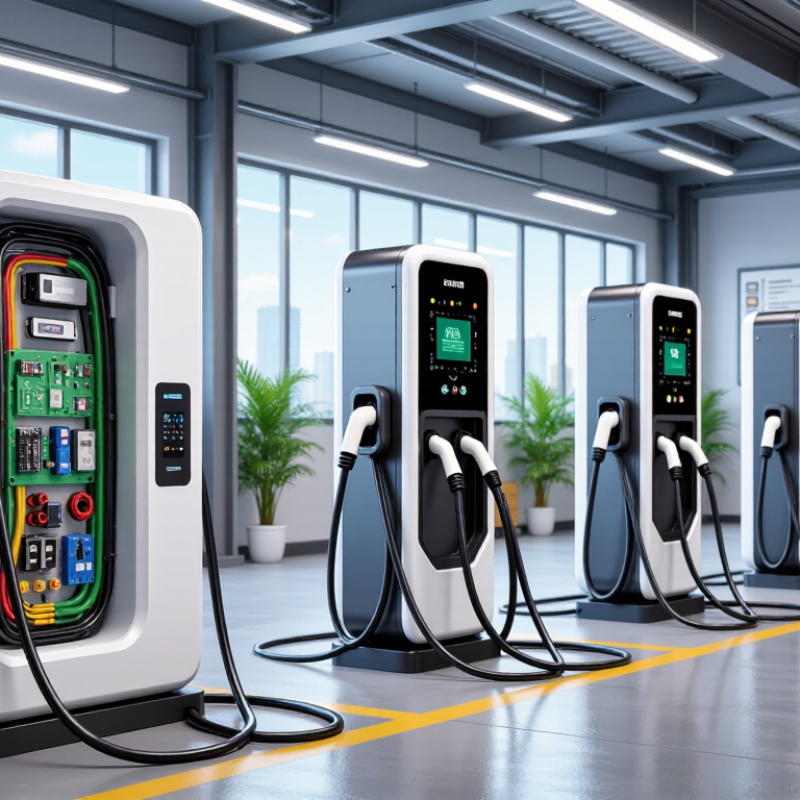
Before sourcing AC charging stations from China, define where and how they will operate. A home unit may need 7.4 kW, while a workplace site may favor 11 or 22 kW. The vehicle’s onboard charger sets the real AC limit. Check single-phase or three-phase supply, available capacity, cable length, connector requirements, and weather exposure. The IEA reported more than four million public charging points worldwide at the end of 2023. Public networks grew by over 40% that year (IEA, Global EV Outlook 2024). That growth hides a practical issue: busy locations need uptime, not attractive specifications alone.
Map each use case by dwell time, daily sessions, parking control, and payment method. Overnight residential charging needs safe load management and simple scheduling. Fleet depots need user authentication, energy records, and easy maintenance access. Retail locations may need clear displays, impact resistance, and network roaming. Specify protection functions, ingress rating, operating temperature, communication protocols, and certification evidence before requesting quotations. IEC 61851 and IEC 62196 offer useful references for charging communication and connectors. Ask for test reports from accredited laboratories. Paperwork can look perfect.
Request a sample and test it with your actual vehicles, meters, network, and installation conditions. Measure startup time, temperature rise, cable handling, fault recovery, and energy accuracy. For Chinese suppliers, compare warranty terms, spare-part lead times, firmware control, and factory quality records. The U.S. Department of Energy’s Alternative Fuels Data Center shows that equipment costs vary widely. Power, installation complexity, and site conditions strongly affect the final budget. Do not assume the cheapest quotation is the most secure purchase. A missed detail, such as winter temperature or cellular coverage, can disrupt daily charging. Requirements may change after testing. That is useful evidence before placing a large order.
When sourcing AC charging stations from China, safety must guide every purchasing decision. Ask suppliers for test reports, wiring diagrams, protection details, and certification documents. Relevant standards may include IEC 61851 and IEC 62196, while market approvals can differ by country. A CE mark may support European sales, but it should not replace independent verification. Check residual-current protection, over-temperature control, enclosure rating, and emergency shutoff functions. These details matter when equipment operates outdoors during rain, dust, and summer heat.
Grid compatibility is equally important. Confirm your local voltage, frequency, phase type, grounding method, and maximum current before ordering. A station designed for three-phase power may not suit a single-phase installation. Smart load management can prevent circuit overload when several vehicles charge together. Ask for software compatibility, communication protocols, and clear installation instructions. During practical inspections, I would test a sample under continuous load. Still, one sample cannot reveal every production problem. That limitation deserves attention.
Tips: Request a pre-shipment inspection and compare the serial number with test records. Have a qualified local electrician review the design. Check connector temperature after extended charging. Ask whether firmware updates are controlled and documented. Do not rely on polished certificates alone. Their authenticity, issuing body, and testing scope need careful review. A lower price can become expensive after rewiring, failed inspections, or unstable charging.
How to Secure the Best AC Charging Stations from China?
Evaluate Chinese manufacturers, suppliers, and production capabilities before discussing price. A capable supplier should explain its AC charging design clearly, including rated power, connector options, enclosure materials, and protection features. Ask for test records, inspection procedures, and current production photos. A factory with organized cable routing, labeled control boards, and traceable components usually inspires more confidence.
Request a sample unit before placing a large order. Test it with different vehicles, outdoor temperatures, and unstable grid conditions. Check charging stability, screen readability, cable flexibility, and emergency shutdown response. Ask whether the factory performs insulation, temperature-rise, leakage, and water-resistance tests. Independent laboratory reports can support these claims, but verify the model numbers carefully. Documents can be outdated.
Production capability matters beyond machinery. Review monthly capacity, staffing, quality checkpoints, and supplier backup plans. Confirm lead times for housings, circuit boards, cables, and replacement parts. A reliable supplier should provide clear packaging details and a practical warranty process. It should also explain software updates and technical support without vague promises.
Price still matters. It should not lead the decision. A lower quotation may hide weak materials, inconsistent testing, or expensive after-sales work. Factory visits are useful, though a polished tour can mislead. Ask difficult questions and compare written answers. Some suppliers may not meet every requirement perfectly. That is acceptable when limitations are disclosed early and corrected with evidence.
Buying AC charging stations from China requires more than comparing unit prices. In sourcing projects, I have seen a low quotation hide missing cables, software fees, and packaging costs. Ask for a line-item quote covering the charger, connector, delivery terms, taxes, installation guides, and spare parts. Compare the total landed cost, not only the factory price.
Features should match your site and vehicle requirements. Check charging power, connector type, cable length, enclosure rating, safety protection, and operating temperature. Networked models may support load balancing, remote monitoring, user authentication, and open communication protocols. Ask for test reports and clear technical drawings. Do not accept vague claims. A neat product sheet is not proof of field performance.
Warranty terms deserve equal attention. Confirm the coverage period, replacement process, labor responsibility, and excluded damage. A reliable agreement should state response times for technical faults. After-sales support should include installation training, troubleshooting documents, firmware guidance, and access to replacement components. Request sample support replies before placing a large order. My own early comparison focused too heavily on price, and that was a mistake. One missing spare cable delayed a small project for days. I now check support capacity as carefully as charging speed. There is still room to improve.
Securing reliable AC charging stations from China starts with disciplined sample verification. The International Energy Agency’s Global EV Outlook 2024 reports more than four million public charging points worldwide at the end of 2023. That rapid expansion increases pressure on quality control. Request production samples matching the final bill of materials. Test connector fit, cable temperature, enclosure sealing, emergency stop response, and repeated charging cycles. Check IEC 61851 and IEC 62196 compatibility where applicable. Do not trust a polished sample alone.
Production inspection must happen before shipment, not only during supplier meetings. Use an independent inspector to verify dimensions, wiring, torque, labeling, insulation resistance, and leakage protection. Photograph serial numbers and carton markings. A sample may pass while a later batch changes components. This happens. Define acceptable quality limits in writing, then retain tested samples for comparison. The IEA also notes that China held the world’s largest public charging network in 2023, making supply depth attractive but supplier consistency essential.
Shipping requires equal attention. Confirm the correct customs classification, commercial invoice, packing list, origin documents, and destination safety requirements. Review pallet strength and moisture protection before container loading. For international transport, the World Bank’s Logistics Performance Index 2023 highlights how documentation and border efficiency affect delivery reliability. Build buffer time for inspections and customs questions. I would avoid choosing the lowest freight quote; unclear responsibilities can cost more than the station itself. Use a pre-shipment checklist. Keep every record.
Practical procurement checklist and data framework for evaluating AC electric vehicle charging stations
| Procurement Stage | Evaluation Dimension | Recommended Data or Benchmark | Verification Method | Acceptance Criterion | Risk-Control Action |
|---|---|---|---|---|---|
| 1. Define the Requirement | Rated charging power | 7.4 kW, 11 kW, or 22 kW are common AC configurations. A 22 kW unit normally requires a suitable three-phase electrical supply. | Compare the product datasheet with the electrical capacity available at the installation site. | Rated voltage, current, phase configuration, and frequency match the destination market and site design. | Do not select a 22 kW model where the site can only support single-phase or limited-current operation. |
| 2. Check Charging Compatibility | Connector and communication protocol | Use the connector required by the target market, such as Type 2 or SAE J1772. IEC 61851 is widely used for conductive AC charging control. | Review connector drawings, pin configuration, charging sequence, and vehicle compatibility records. | The connector, control pilot behavior, cable rating, and charging mode are compatible with intended vehicles. | Request compatibility testing with representative vehicle models before approving mass production. |
| 3. Verify the Sample | Sample quantity and test period | Order at least 2–3 samples when possible. Conduct a functional test for 7–14 days under normal operating conditions. | Test charging start, stop, restart, fault recovery, load changes, cable heating, and user-interface functions. | All samples perform consistently without unexplained resets, overheating, communication loss, or abnormal noise. | Keep one approved sample as a reference unit for production inspection and future dispute resolution. |
| 4. Validate Electrical Safety | Protection and safety functions | Check residual-current protection, over-current protection, over-voltage protection, over-temperature protection, grounding, and emergency stop behavior where applicable. | Review test reports and repeat critical tests using calibrated equipment or an independent laboratory. | Protection functions operate at the limits specified by the applicable electrical and product standards. | Confirm that certification documents apply to the exact model, rated power, enclosure, and destination market. |
| 5. Assess Enclosure Quality | Ingress protection and mechanical durability | Outdoor installations commonly require an enclosure rated at least IP54; higher protection may be necessary for exposed locations. | Inspect seals, cable glands, hinges, locks, mounting points, drainage, corrosion protection, and enclosure materials. | The enclosure rating is supported by valid test evidence and remains consistent after assembly and cable installation. | Specify UV resistance, operating temperature, humidity, and corrosion requirements in the purchase contract. |
| 6. Review Software and Connectivity | Network and backend integration | For connected chargers, confirm supported network options and the applicable management protocol, such as OCPP 1.6J or OCPP 2.0.1. | Test authorization, remote start and stop, meter readings, transaction records, firmware updates, alarms, and offline operation. | Data is transmitted accurately, offline transactions are handled correctly, and user access is protected. | Require documented API or protocol behavior, cybersecurity controls, account ownership, and a clear firmware-update process. |
| 7. Inspect Production | In-process and final inspection | Use a written inspection plan covering appearance, dimensions, wiring, torque, labeling, accessories, charging output, and protective functions. | Perform inspections during assembly and before shipment. Statistical sampling may use an agreed AQL plan. | Critical safety defects: zero accepted. Major and minor defect limits must be agreed before production begins. | Use photo and video evidence, serial-number records, test logs, and a signed inspection report before release. |
| 8. Control Packaging | Export packaging and handling | Packaging should protect against vibration, moisture, impact, and stacking pressure during inland and ocean transport. | Check carton strength, internal cushioning, moisture barriers, pallet stability, labels, and accessory separation. | Each carton identifies model, quantity, gross weight, dimensions, handling marks, and destination information. | Use a packaging drop or vibration test for fragile units and photograph packed goods before container loading. |
| 9. Manage Shipping | Lead time and transport planning | Typical planning ranges are 7–14 days for samples, 30–60 days for production, and approximately 25–45 days for ocean transit, depending on route and congestion. | Confirm production milestones, cargo-ready date, booking schedule, cut-off time, and estimated arrival date. | The purchase order clearly defines Incoterms, shipment window, documents, insurance responsibility, and delay notification. | Compare total landed cost rather than product price alone, including freight, insurance, duties, taxes, and destination charges. |
| 10. Prepare Importation | Customs classification and documents | Prepare the commercial invoice, packing list, bill of lading or air waybill, certificate of origin where required, and conformity documents. | Ask a customs broker to confirm the correct HS classification, duty rate, import restrictions, and local marking requirements before shipment. | Product description, quantity, value, country of origin, weights, and serial information are consistent across all documents. | Do not rely on a generic HS code or supplier estimate; import duties and taxes vary by destination and product configuration. |
| 11. Complete Delivery Inspection | Quantity and condition at arrival | Inspect cartons and units immediately after receipt. Record shortages, impact damage, water exposure, and visible defects. | Match received goods against the packing list and approved sample. Photograph damaged packaging before opening. | Delivered quantity and model configuration match the purchase order, with no undisclosed transport damage. | Notify the carrier, insurer, supplier, and customs broker promptly when damage or shortage is found. |
| 12. Approve Final Payment | Payment and warranty protection | Link final payment to inspection approval, complete documentation, and resolution of agreed defects. | Verify test records, serial numbers, spare parts, manuals, warranty terms, and after-sales response procedures. | All contractual deliverables are complete and the warranty start date, coverage, exclusions, and service channel are documented. | Retain a reasonable balance until inspection and documentation are complete, subject to the agreed payment terms. |
Request test reports, wiring diagrams, protection details, and certification documents. Check the exact model number. Documents can be outdated.
Check residual-current protection, over-temperature control, enclosure protection, and emergency shutoff functions. Imagine rain on the casing and dust near the cable. Safety claims still need verification.
Confirm local voltage, frequency, phase type, grounding method, and maximum current. A three-phase station may not suit a single-phase site. Ask a qualified electrician to review the design.
It can reduce circuit overload when several vehicles charge together. Ask about software compatibility and communication protocols. A simple load diagram can reveal hidden problems.
Test different vehicles, outdoor temperatures, and changing grid conditions. Check charging stability, screen readability, cable flexibility, and emergency shutdown response. Test continuously.
Review monthly capacity, staffing, quality checkpoints, and backup suppliers. Look for labeled control boards and organized cable routing. Factory appearance alone proves little.
Ask whether the factory performs insulation, temperature-rise, leakage, and water-resistance tests. Request inspection procedures and current production photos. Independent reports help, but verify their scope.
Confirm lead times for housings, circuit boards, cables, and replacement parts. Request packaging details and a practical warranty process. Written answers are safer than vague promises.
No. A low price may hide weak materials, inconsistent testing, or costly rewiring. Cheap can become expensive.
A pre-shipment inspection can compare serial numbers with test records. However, one sample cannot expose every production problem. That weakness deserves honest attention.
Securing the best AC charging stations from China begins with clearly defining your requirements, including charging power, connector types, installation environment, user volume, payment functions, and future expansion plans. The process of determining how to secure commercial AC charging stations should also include checking safety standards, required certifications, communication protocols, and compatibility with the local electrical grid. These factors help ensure that the selected equipment is safe, reliable, and suitable for its intended application.
Next, evaluate potential Chinese manufacturers by reviewing their production experience, quality-control systems, customization capabilities, and delivery capacity. Compare total pricing, technical features, warranty coverage, spare-parts availability, and after-sales support rather than focusing only on the initial purchase price. Before placing a large order, request samples, test performance, and arrange an independent or on-site production inspection. Finally, confirm packaging, shipping documents, import responsibilities, delivery schedules, and installation requirements to reduce delays and ensure a smooth procurement process.

Walnut Charger