Top 10 Ways to Upgrade Existing Floor Mounted Chargers?

Time:2026-09-20 Author:Sophia
0%

Upgrading a floor-mounted charger is rarely as simple as replacing its outer casing. Existing units may have worn cables, outdated connectors, loose anchors, or limited power capacity. A practical review should begin with the charger’s age, installation records, charging load, and daily operating conditions. How to upgrade existing floor-mounted chargers depends on these details, not on appearance alone.

Field experience shows that small faults often reveal larger problems. A cracked cable jacket can indicate repeated bending. Heat marks near a plug may suggest poor contact or excessive resistance. Water, dust, and cleaning chemicals can also affect floor-level equipment. This guide examines ten realistic upgrade methods, including connector improvements, cable management, protection, software updates, accessibility changes, and energy monitoring. Each method should be checked against the manufacturer’s instructions and applicable electrical standards.

Safety comes first.

A qualified technician should inspect circuits, grounding, insulation, and protective devices before work begins. Professional testing can confirm whether an existing circuit supports higher charging power without overheating. Reliable upgrades also consider users who operate the charger in low light, crowded parking areas, or wet conditions. Clear labels and durable controls matter more than many owners expect.

Not every upgrade produces immediate savings. A new control system may add complexity. A higher-rated cable may expose limitations elsewhere. That is why this article keeps room for reassessment, measured testing, and honest cost comparisons. The best improvement is not always the newest feature. It is the change that delivers safer, steadier, and easier charging over time.
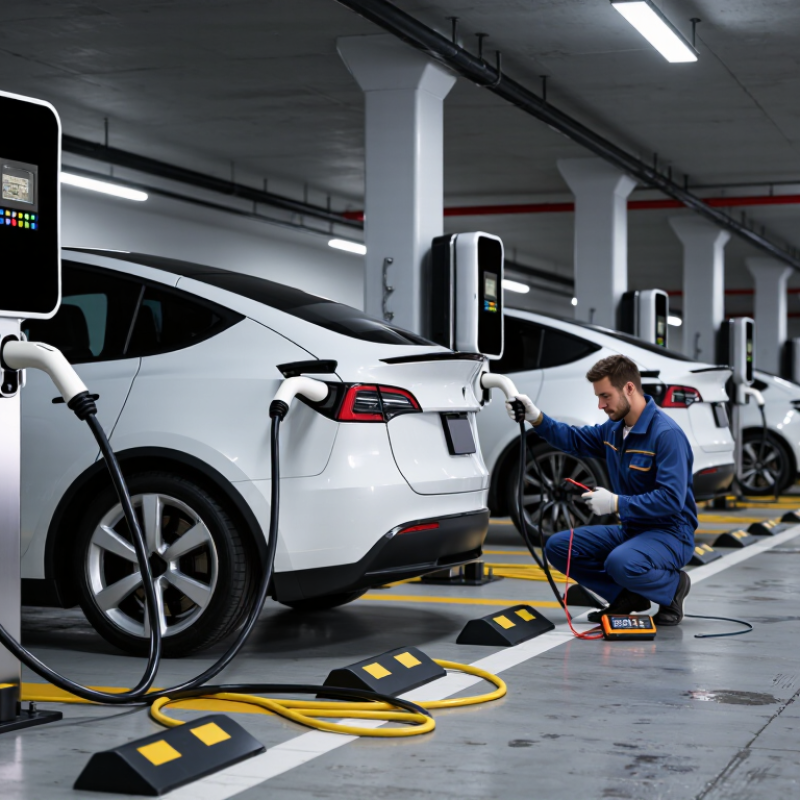
Top 10 Ways to Upgrade Existing Floor Mounted Chargers?

Assess the Existing Floor-Mounted Charger and Define Upgrade Goals

Before upgrading a floor-mounted charger, inspect its real condition rather than trusting its appearance. Check the enclosure for cracks, corrosion, loose panels, and water marks. Examine cables, connectors, grounding points, and protective devices with a qualified electrician. Record charging faults, average session length, peak demand, and maintenance history. These details reveal whether the unit needs repair, added capacity, or full replacement.

Define the upgrade goal in measurable terms. You might need faster charging, better weather resistance, clearer status signals, or easier access for users. Compare the charger’s rated output with the site’s available electrical capacity. Inspect cable routing and nearby obstacles, including drainage problems and vehicle impact risks. A thermal scan during operation can reveal hot terminals that a visual check misses. Small details matter.

Our initial capacity estimate was wrong once several chargers operated together. That mistake changed the upgrade plan. Leave room for future demand, but avoid paying for unused capacity today. Set targets for uptime, charging speed, inspection frequency, and fault response. Document every finding with photographs, test readings, and dates. If records are incomplete, say so. Guesswork weakens a reliable upgrade decision.

Improve Charging Speed, Power Capacity, and Energy Efficiency

Upgrading an existing floor-mounted charger should start with measurements, not guesswork. A 24-hour power logger reveals voltage drops, peak demand, and idle consumption. The International Energy Agency’s Global EV Outlook 2024 reports more than four million public charging points worldwide at the end of 2023. Older units now face heavier daily use. Improve them in ten practical moves: inspect connectors, replace worn cables, increase circuit capacity, install a higher-output power module, balance loads dynamically, add temperature sensors, improve ventilation, update firmware, schedule charging during cleaner periods, and test energy losses monthly. Some upgrades sound obvious. They are often skipped.

A load-management controller can prevent several chargers from tripping one feeder. It also protects capacity for vehicles needing faster charging. Set current limits from measured site demand, then review them seasonally. The U.S. Department of Energy’s Alternative Fuels Data Center identifies Level 2 charging as typically using 208–240 volts. This makes conductor condition and voltage drop important at higher currents. Use qualified technicians and verify protective devices after electrical changes. Reduce standby draw with sleep settings, occupancy controls, and automatic restart checks. Keep vents clear. Dust can create a slow, hot cabinet. Maximum speed is not guaranteed. A stronger charger may deliver less power when the building is busy. Record delivered kilowatt-hours, charging time, and fault frequency before and after each upgrade. This evidence can expose improvements that feel impressive but save little energy.

Top 10 Ways to Upgrade Existing Floor Mounted Chargers? - Improve Charging Speed, Power Capacity, and Energy Efficiency

No. Upgrade Method Primary Objective Typical Technical Change Expected Benefit Important Requirements
1 Increase the Circuit Rating Increase available charging power Upgrade the branch circuit, protective device, and conductors to support a higher continuous current. May raise a single-phase AC charger from approximately 7.4 kW to 9.6 or 11.5 kW, where supported by the charger and supply. Requires load calculation, code-compliant wiring, suitable overcurrent protection, and inspection by a qualified electrician.
2 Use Three-Phase Power Expand power capacity for commercial installations Replace or supplement a single-phase input with a three-phase supply and compatible charging equipment. Supports higher site capacity and more balanced electrical loading; common AC outputs include 11 kW and 22 kW. The building service, charger, vehicle, protection system, and local electrical rules must all support three-phase operation.
3 Install Dynamic Load Management Prevent overload while maximizing charging power Use real-time metering and automatic current adjustment based on the building's remaining electrical capacity. Allows chargers to use spare capacity without exceeding the site limit and can reduce unnecessary electrical service upgrades. Requires compatible meters, communication wiring or networking, correct phase monitoring, and properly configured limits.
4 Replace the Internal Power Module Improve output power and conversion efficiency Replace an aging AC charging module with a higher-rated, compatible module using improved power electronics. Can improve power conversion efficiency, reduce heat generation, and increase stable output where the enclosure and wiring allow it. Must match voltage, current, control pilot functions, thermal limits, enclosure certification, and safety requirements.
5 Upgrade the Charging Cable and Connector Reduce charging restrictions and electrical losses Replace worn or undersized cables with correctly rated conductors, connectors, strain relief, and temperature sensing. Reduces voltage drop, connector heating, and interruptions; the cable upgrade alone does not increase power beyond the charger's rating. Cable ampacity, connector rating, bend radius, ingress protection, and vehicle compatibility must be verified.
6 Improve Thermal Management Maintain full power during extended charging Clean air paths, replace thermal interface materials, improve ventilation, or add controlled cooling where permitted. Limits thermal derating, extends component life, and helps the charger maintain its rated output in warm conditions. Maintain the original safety rating; prevent dust, moisture, condensation, and unauthorized modifications to cooling systems.
7 Add Scheduled and Off-Peak Charging Reduce operating cost and grid stress Configure charging windows to operate during lower-tariff periods or when site demand is lower. Can lower electricity costs where time-based tariffs apply and reduce peak demand charges in commercial facilities. Requires accurate time settings, tariff information, user scheduling rules, and a reliable network connection when remotely managed.
8 Integrate Solar and Battery Storage Increase renewable energy use and manage demand Connect the charging system to on-site solar generation or a battery energy storage system through an approved energy-management controller. May reduce grid imports, smooth short-term demand peaks, and increase charging from on-site renewable generation. Requires compatible inverters, protection equipment, control logic, battery capacity analysis, and a compliant interconnection design.
9 Upgrade Monitoring and Communication Improve performance visibility and fault response Add energy meters, remote diagnostics, firmware management, event logging, and standardized network communication. Helps identify power losses, repeated faults, abnormal temperatures, and underused charging capacity. Use secure network access, accurate metering, role-based permissions, and regular firmware and cybersecurity maintenance.
10 Perform Preventive Electrical Maintenance Restore efficiency, reliability, and safety Inspect terminals, protective devices, insulation, grounding, contactors, filters, connectors, and enclosure seals. Reduces contact resistance, nuisance trips, overheating, charging interruptions, and avoidable standby losses. Maintenance intervals should follow the equipment instructions, site conditions, local regulations, and measured operating data.

Note: Actual charging performance depends on the vehicle's onboard charger, battery state of charge, ambient temperature, supply voltage, installation capacity, and applicable electrical regulations.

Add Smart Connectivity, Payment Options, and Usage Monitoring

Top 10 Ways to Upgrade Existing Floor Mounted Chargers

Existing floor mounted chargers can become smarter without replacing the entire unit. In field inspections, technicians often find that the enclosure and power system remain reliable. A connectivity module can add Wi-Fi, cellular, or wired network access. Remote dashboards then show charging status, faults, and energy consumption. Operators can receive alerts when a connector stays idle or overheats. That small warning may prevent a longer service interruption.

Payment options also improve daily usability. A secure card reader, QR payment interface, or mobile checkout system can support different driver preferences. Payment software should use encrypted communication and clear transaction records. Usage monitoring reveals peak hours, average session length, and frequently used charging points. This evidence helps owners adjust pricing, maintenance schedules, and site capacity. However, data can mislead when sensors are poorly calibrated. Regular testing remains essential.

Tips: Start with a site survey. Confirm network strength, electrical capacity, and enclosure condition before adding hardware. Use access controls for staff dashboards, and limit stored customer information. Test payment failures, offline operation, and emergency shutdown procedures. Keep firmware current, but schedule updates during low-demand periods. A practical upgrade is not always the most advanced one. Sometimes, a clearer display and accurate meter deliver the greatest improvement.

Upgrade Safety Features, Accessibility, and Physical Protection

Top 10 Ways to Upgrade Existing Floor Mounted Chargers

Upgrade safety with a qualified electrical inspection before changing hardware. Check grounding, insulation, cable wear, and protective devices against local requirements. Add residual-current protection where appropriate, then label the isolation switch clearly. Improve water resistance with sealed cable entries and a raised, sloped base. Install brighter lighting, but avoid glare that hides warning labels. A visible emergency stop can help during faults.

Accessibility needs practical testing, not assumptions. Keep a firm, obstacle-free route around the charger and provide enough space for wheelchair turning. Place screens, handles, and card readers within a comfortable reach range. Use large text, strong colour contrast, tactile markings, and clear audible or visual status signals. Cable hooks should prevent loops from crossing the walking path. Test the layout with real users. Drawings often miss small frustrations.

Physical protection can extend service life. Add impact posts or low rails where vehicles reverse nearby. Use lockable, tamper-resistant panels and protect exposed connectors from sharp edges. Improve drainage around the mounting point to reduce standing water and corrosion. Add a weather shield without blocking ventilation or access. During site checks, I have seen protective barriers create new trip hazards. That mistake is easy to overlook. Photograph clearance zones after installation, then review them during busy hours, when parked vehicles may change the risk.

Top 10 Ways to Upgrade Existing Floor-Mounted Chargers

Reference accessibility dimensions for improving safety, usability, and physical protection

The chart uses minimum dimensional references from the 2010 ADA Standards for accessible routes, parking access aisles, and vehicle clearance. Use these values as a planning baseline, then confirm applicable electrical, building, fire, and accessibility requirements with the local authority having jurisdiction.

Establish Maintenance, Software Updates, and Future Expansion Plans

Upgrading existing floor mounted chargers begins with disciplined maintenance. In field inspections, loose terminals and blocked cooling paths appear more often than major hardware failures. Check connectors, cables, mounting bolts, and emergency controls every month. Record unusual heat, noise, or charging interruptions. A simple maintenance log can reveal repeated faults before they stop service. Use thermal inspections during busy periods, when weak connections become easier to identify. Keep spare fuses and approved replacement parts nearby.

Software deserves the same attention as physical equipment. Review update notes, test new firmware on one charger, and keep a recovery plan. Back up configuration files before changing settings. Confirm charging schedules, user access, and load balancing after each update. Never update every unit during peak demand. That mistake can create a needless outage. A perfect maintenance schedule is unrealistic, especially in busy parking areas. Adjust inspection timing when weather, traffic, or usage changes.

Future expansion should influence today’s upgrade decisions. Measure available electrical capacity before adding charging points. Reserve conduit space and panel room for additional circuits. Choose cable routes that allow safe replacement without removing floor surfaces. A scalable layout may cost more now, but it can reduce construction delays later. Still, forecasts can be wrong. Review usage data every six months, then revise expansion plans. Leave clear service access around each charger, even when parking demand pressures every available space.

FAQS

How should I begin upgrading an existing floor-mounted charger?

Start with measurements, not guesses. Use a 24-hour power logger to record voltage drops, peak demand, and idle consumption. Compare actual readings with charger performance. A stronger unit may not solve the real problem.

Which physical parts should technicians inspect first?

Check connectors, cables, mounting bolts, terminals, vents, and emergency controls. Look for loose connections, unusual heat, noise, or charging interruptions. Dust inside a cabinet can create slow, hot operation. Keep approved fuses and replacement parts nearby.

Can load management improve charging speed?

Yes, it can prevent several chargers from tripping one electrical feeder. Set current limits from measured site demand. Review those limits each season. The fastest charging option may weaken when the building is busy.

What electrical changes may increase charging capacity?

Increase circuit capacity or install a higher-output power module when measurements support it. Check conductor condition and voltage drop at higher currents. Qualified technicians should complete electrical changes. Protective devices must be verified afterward.

How can charging equipment waste less energy?

Enable sleep settings, occupancy controls, and automatic restart checks. Improve ventilation and keep cooling paths clear. Schedule charging during periods with cleaner electricity, when practical. Record delivered energy, charging time, and monthly losses.

How often should floor-mounted chargers receive maintenance?

Inspect connectors, cables, bolts, and emergency controls every month. Use thermal inspections during busy periods. Record repeated faults in a simple maintenance log. Perfect schedules are unrealistic. Adjust timing for weather, traffic, and usage.

How should software updates be managed safely?

Review update notes before changing settings. Test new firmware on one charger first. Back up configuration files and keep a recovery plan. Confirm schedules, user access, and load balancing afterward. Do not update every unit during peak demand.

How can a site prepare for future charger expansion?

Measure available electrical capacity before adding charging points. Reserve conduit space and panel room for future circuits. Leave clear service access around every charger. Review usage data every six months. Forecasts can be wrong. Keep revising the plan.

Conclusion

Upgrading existing floor-mounted chargers begins with a careful assessment of their current condition, charging performance, electrical capacity, installation environment, and user requirements. The goal is to identify whether the system needs faster charging, greater power output, improved energy efficiency, or better compatibility with future equipment. Practical upgrades may include optimized power management, more efficient components, improved cable handling, and load balancing to support reliable daily operation while reducing unnecessary energy use.

When considering how to upgrade existing floor-mounted chargers, operators should also evaluate smart connectivity, digital payment functions, usage monitoring, and remote status reporting. Safety improvements may include stronger protection against impact, weather, overheating, and unauthorized access, along with accessible controls and clearer user guidance. A complete upgrade plan should include regular inspections, software and firmware updates, replacement procedures for worn parts, staff training, and space for future expansion. This approach can extend equipment life, improve user satisfaction, and create a safer, more flexible charging environment.

Sophia

Sophia

Sophia is a dedicated marketing professional with an exceptional depth of knowledge about her company's products and services. With a keen understanding of market trends and customer needs, she crafts insightful blog posts that not only inform but also engage readers, enriching the company’s online......