Top 10 Integrated EV Charging Solutions Manufacturers & Exporter

Empowering Global Infrastructure with Highly Compliant, Smart-Grid Grid-Tied AC & Ultra-Fast DC Hardware Ecosystems

Featured Integrated EV Charging Solutions (Hardware Segment A)

Explore our leading collection of certified electric vehicle supply equipment (EVSE), engineered for high compatibility, advanced communication protocols (OCPP 1.6J/2.0.1), and robust load balancing environments.
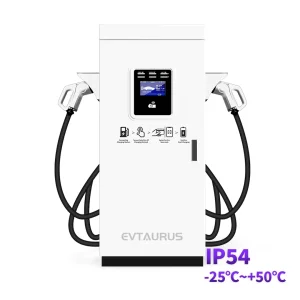
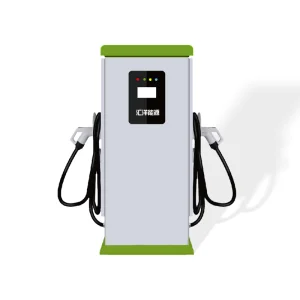
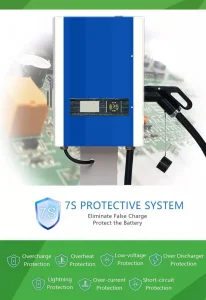
120kw DC Charger
DC EV Charger Ocpp 1.6j CE Certificate 120kw DC Charger for Electric Fleet Operator EV Charging Station
View Technical Specs
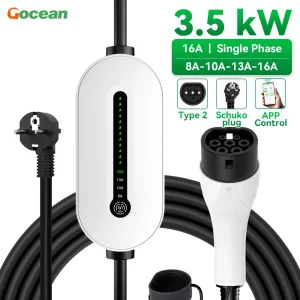
Gocean Portable EV Charger 3.5kw
Gocean APP Electric Car Portable Charger 3.5kw Type 2 Electric Vehicle EV Car Charger 16A AC Portable EV Charger
View Technical Specs
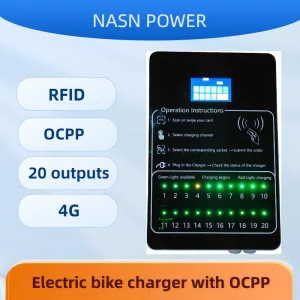
Ocpp Electric Bike Charging Stations
View Technical Specs
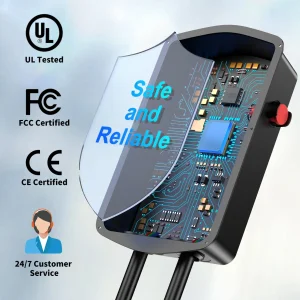
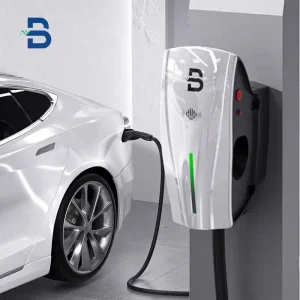
BYD AC Wallbox Level 2
Car Chargers Parts for Byd Home Use AC Evse Wallbox EV Charger Station Level 2 Type 1 Electric Car Charging Remote APP RFID Card Control
View Technical Specs
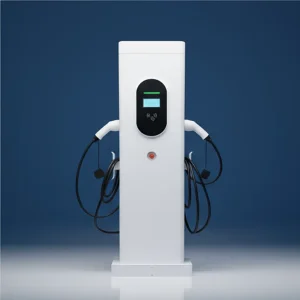
22kw AC EV Charger Level 2
Home Use 22kw AC EV Charger Pile Level 2 Smart Commercial Charging Station Type 2 Connector High-Power Floor Evse
View Technical Specs
AC EV Charger DLB Wallbox
AC EV Charger with Dlb Dynamic Load Balancing Wallbox for Home & Commercial Use Ocpp Compatible
View Technical Specs
Beny Type2 22kw AC Commercial Charger
Beny Type2 GB/T AC Commercial EV Charging Station 22kw 32A AC EV Chargers with Dynamic Load Balancing Optionalfor Public Use
View Technical Specs
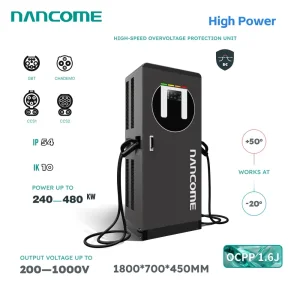
Nancome High Power Station 480kw
Nancome Industrial High Power Charging Station for Bus Depot Charging with 480kw
View Technical Specs

Understanding Integrated EV Charging Solutions: The Infrastructure Paradigm

As the global market transitions from pilot EV adoption programs to massive, nation-scale fleet conversions and high-density multi-family housing requirements, integrated EV charging solutions have evolved. Hardware alone is no longer the bottleneck. Today's procurement teams and utility engineers prioritize total system orchestration: the convergence of energy management systems (EMS), power electronics, hardware reliability, grid safety protocols, and cloud management layers.

An integrated solution merges high-efficiency energy distribution with robust communications, allowing smart load profiling, local peak shaving, and active grid support. It addresses the critical pain points of station operators: maximizing uptime, reducing capital expenditure on grid upgrades through intelligent control, and providing future-proof pathways for Vehicle-to-Grid (V2G) implementations.

"Integrated EV Charging represents the shift from passive socket provision to active, intelligent load orchestration. Modern manufacturers must deliver systems capable of local autonomy, ensuring safety even in the event of persistent network loss."

Grid Harmonization

Advanced algorithms supporting local Dynamic Load Balancing (DLB) dynamically monitor building loads, routing power output in real-time to avoid breaching peak load thresholds.

Military-Grade Safety

Comprehensive protective circuitry including Type B RCDs, DC 6mA leakage sensors, over/under-voltage mitigation, and real-time thermal monitoring on connector contacts.

Interoperable Firmware

Fully compliant with the Open Charge Point Protocol (OCPP 1.6J/2.0.1) ensuring seamless back-end integration with generic or proprietary charge management platforms.

Macro Industry Solutions: Segment-Specific Architectures

Different application environments present distinct structural, thermal, and operational challenges. A leading exporter must provide a modular technology portfolio that accommodates these vertical niches:

1. Transit & Fleet Depots
High-power DC cabinets (120kW–480kW) designed for continuous duty cycles, bus depots, and heavy commercial vehicle logistics.
2. Commercial Destinations
Pedestal-mounted AC chargers with integrated billing, RFID, App authorizations, and high-visibility LCD user interfaces.
3. Multi-Family Dwellings
Robust smart-charging networks sharing centralized utility drops, governed by sophisticated local load scheduling.
4. Industrial & Mining
Heavy-duty, weather-protected enclosures featuring high ingress ratings (IP54/IP55) and high seismic tolerance.

Maximizing Fleet Operational Efficiency

For fleet operations, charging speed is not the only metric—minimizing downtime and avoiding peak grid demand charges dictate profitability. Our industrial solutions include schedule-driven charging, pre-conditioning limits, and sequential power routing, ensuring depots pull only the necessary kilowatts while guaranteeing every vehicle is fully charged by the start of the shift.

Corporate Spotlight: Foshan Walnut Charger Co., Ltd.

Foshan Walnut Charger Co., Ltd. is a leading manufacturer specializing in advanced AC EV charging solutions for both residential and commercial applications. With a focus on wall-mounted and floor-mounted chargers, the company provides a comprehensive range of smart charging products designed to meet the diverse needs of homeowners, businesses, and fleet operators.

The company’s product portfolio includes high-efficiency AC chargers equipped with intelligent power management systems, dual-port charging options, and real-time monitoring capabilities. By integrating cutting-edge technology, Foshan Walnut Charger ensures optimal charging performance, energy efficiency, and user-friendly operation for every installation.

Committed to sustainable mobility, Foshan Walnut Charger emphasizes seamless integration of smart home and commercial energy systems. Its solutions support load balancing, remote management via mobile applications, and safety compliance with international standards, providing reliable and efficient charging for all electric vehicles.

With strong R&D capabilities, rigorous quality control, and a customer-centric approach, Foshan Walnut Charger has established itself as a trusted partner in the EV charging industry. The company’s mission is to deliver innovative, safe, and energy-efficient charging solutions that empower customers to embrace electric mobility while optimizing energy use and reducing costs.


Foshan Walnut Charger manufacturing facility & R&D center
Quality testing of smart AC EV charging piles
150K+
Units Produced Annually
50+
Export Destinations
99.8%
MTBF Reliability Rate
100%
OCPP Interoperability

China Factory 4.0: Supply Chain Resilience & Cost-Efficiency

Operating out of Foshan, a global hub for advanced hardware engineering, Walnut Charger's production facilities integrate elements of Smart Factory 4.0. Vertical integration is key to controlling cost and quality: we design and manufacture our PCBA modules, control systems, and structural enclosures under one roof.

This localized supply chain ecosystem ensures we avoid disruptions associated with external third-party sourcing. The use of automated surface mount technology (SMT) lines, robotic functional testing systems, and isolated environmental simulation labs ensures that every charger passing inspection meets the rigorous electrical safety requirements of diverse destination markets.

Rigorous Multi-Stage Quality Gateways

Quality control is structured into four distinct gates: Incoming Quality Control (IQC) for silicon component reliability, In-Process Quality Control (IPQC) during manufacturing, Outgoing Quality Assurance (OQA) testing electrical loads, and a mandatory 24-hour burn-in phase under thermal stress. This process minimizes field failure rates, shielding global distributors from high operational warranty liabilities.

Procurement Evaluation Matrix for Global Enterprises

Enterprise procurement divisions evaluating EVSE tier-1 manufacturing partners typically weigh multiple technical factors before finalizing supply agreements. A true OEM/ODM partner must excel across the following parameters:

Interoperability Assurances

Hardware must demonstrate extensive testing history with major EV manufacturer protocols (including premium European and American brands), eliminating regional charging handshaking failures.

Dynamic Smart Firmware

Native support for OCPP over-the-air (OTA) updates, enabling remote firmware updates to match evolving vehicle battery management configurations.

Flexible Customization

Full white-label options encompassing customized brand enclosures, UI design elements, app localization, and direct APIs for customized integrations.

Localization Support & Compliance Protocols

Deploying charging stations globally means complying with complex local grid regulations and electrical safety standards. Failure to meet these criteria can lead to delayed project signs-offs, regulatory penalties, or safety risks.

Walnut Charger guarantees structural designs meet specific regional benchmarks:

  • European Union (CE, TUV): Full compliance with IEC 61851-1 standards, incorporating RCD protection mechanisms to cut currents instantly when ground faults are detected.
  • North America: Support for SAE J1772 connectors and UL-compliant safety design metrics targeting grid volatility resistance.
  • Smart Metering & Grid Integration: MID (Measuring Instruments Directive) certified metering options integrated directly into the hardware to support accurate financial billing.

Technology Roadmap & Future Outlook

The next decade of EV charging solutions relies on bi-directional integration and intelligent edge computing. Key focuses of Walnut Charger's R&D path include:

ISO 15118 (Plug & Charge)
Eliminating manual cards and mobile app sign-ins. The vehicle identifies itself automatically to initiate secure charging and billing.
V2G (Vehicle-to-Grid)
Bidirectional charging enables fleet operators to feed power back into the municipal grid during high-tariff periods.
AI Energy Management
Predictive machine learning models analyze historic building usage to dynamically optimize micro-grid allocations.
Solid-State Power Modules
Silicon carbide (SiC) switches allow smaller enclosures with lower heat signatures and elevated efficiency ratings.

Integrated EV Charging Solutions: Industry Q&A

Review comprehensive breakdowns of standard technical inquiries from network developers and procurement departments.

What is Dynamic Load Balancing (DLB) and how does it prevent electrical overloads?
Dynamic Load Balancing (DLB) is an intelligent system that continuously monitors the total electricity consumption of a facility or household. When the aggregate load approaches a pre-configured maximum threshold, the charging station dynamically decreases its output. When other household or facility appliances are switched off, the system automatically redirects the freed capacity back to the EV. This prevents tripping main circuit breakers and eliminates the need for expensive electrical infrastructure upgrades.
Why is OCPP 1.6J/2.0.1 compliance essential for commercial EV charging networks?
The Open Charge Point Protocol (OCPP) is an open-source application protocol that standardizes the communication between EV charging hardware (EVSE) and back-end central management systems (CMS). Compliance with OCPP 1.6J or 2.0.1 ensures hardware is not locked to a single proprietary software vendor. Network operators can change software providers, manage user authorizations, customize payment models, and pull remote telemetry data without having to replace physical hardware.
How does Type B RCD protection differ from standard Type A configurations?
A standard Type A Residual Current Device (RCD) is designed to detect alternating current (AC) and pulsating direct current (DC) residual faults. However, modern EVs can leak smooth DC residual currents during charging. If a smooth DC leakage exceeds 6mA, it can saturate the core of a Type A RCD, rendering it blind and unable to trip during an AC fault. A Type B RCD, or a system using a Type A RCD paired with a dedicated 6mA DC detection sensor (RCMU), ensures protection against both AC and DC leakage scenarios.
What variables dictate the choice between Level 2 AC and Level 3 DC fast charging?
The primary variables are dwell time and available grid capacity. Level 2 AC charging (ranging from 7kW to 22kW) relies on the vehicle's onboard converter to transform AC power to DC for the battery pack. This is ideal for destinations where vehicles remain parked for several hours, such as residential complexes, office spaces, or hotels. Level 3 DC fast charging (30kW to 480kW+) bypasses the onboard converter to feed DC energy directly to the battery, making it the standard choice for highway service plazas, fleet logistics hubs, and commercial operators needing rapid turnaround times.

Advanced EV Charging Portfolios (Hardware Segment B)

Explore the remainder of our technical export portfolio, featuring smart home wallboxes, battery exchange cabinets, and customizable multi-port charging platforms.
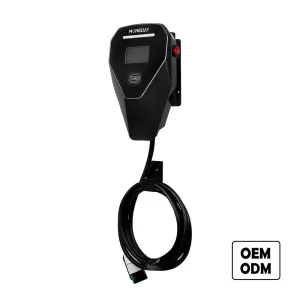
CE 7kw Wall-Mounted Charging Station
CE Certificate 7kw 220V 32A Wall-Mounted AC EV Charging Station Type 2 Level 2 Smart EV Chargers System for Home
View Technical Specs
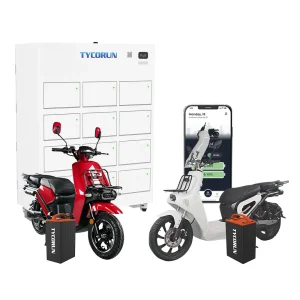
Battery Swapping Station Cabinet
Tycorun Battery Swapping Station Power Exchange Solution Outdoor Charging Cabinet
View Technical Specs
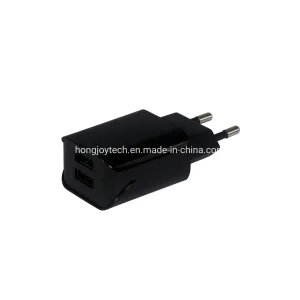
Argentina AC Power Plug Dual USB
Black OEM ODM S-MARK Argentina AC Power Plug DOE Level VI 100-240VAC 50-60Hz Dual USB Ports Total 5V 2.4A Max Intelligent Smart Mobile Phone Quick Fast Charger
View Technical Specs
BMW EV Charger Level 3 Wall Mounted
for BMW EV Charger DC Quick Level 3 30kw 40kw Wall Mounted
View Technical Specs
Commercial Charger with 4.3 Inch LCD Screen
4.3 Inch Color LCD Screen 7kw 14kw 22kw 44kw Floor Type Commercial Charger AC EV Charging Station
View Technical Specs
22kw Wall Mounted Smart EV Charger
Factory Direct Supply 22kw Electric Car Wall Mounted Smart Electric Vehicle Charger Pile 7kw 11kw 22kw RFID APP WiFi Control AC EV Charger
View Technical Specs
7kw AC EV Charger Wallbox CE TUV
7kw AC EV Charger Wallbox New CE TUV Approved Electric Car Charging Station with Load Balance
View Technical Specs
7kw Level 2 Home Fast Wallbox
New 7kw Level 2 32A Home EV Charger Fast Charging Type1/2 Wallbox AC Electric Car Charging Station
View Technical Specs