Engineered for high-frequency commercial use and East African grid stability.
Uganda is currently standing at the threshold of a green transport revolution. Driven by government initiatives like the National E-Mobility Strategy and the innovative work of local companies like Kiira Motors, the demand for robust charging infrastructure has skyrocketed. Unlike residential charging, fleet-scale AC charging requires a specialized approach that considers the unique operational environment of East Africa.
The "Pearl of Africa" faces specific challenges: voltage fluctuations in the Umeme grid, high ambient temperatures, and the need for scalable infrastructure for the burgeoning e-boda-boda and e-bus sectors. For manufacturers and factories serving Uganda, "Information Gain" is not just a SEO term—it’s about providing hardware that understands the local landscape. AC chargers, specifically the 7kW to 22kW range, serve as the backbone of fleet operations because they allow for cost-effective, overnight "slow" charging, which preserves battery health and reduces the immediate load on municipal transformers.
Our role as a leading manufacturer is to provide Ugandan businesses with more than just a plug. We provide Load Balancing (DLB) solutions that ensure a fleet of 50 electric motorcycles can charge simultaneously without blowing the local circuit. This is the difference between a simple factory and a strategic growth partner.
Integration of 4G/GPRS modules specifically tuned to Ugandan telecom frequencies (MTN, Airtel), ensuring seamless communication with fleet management software.
Vehicle-to-Grid (V2G) technology roadmap to allow fleets to act as energy storage, supporting the grid during peak Kampala demand hours.
Surge protection (Type II) as standard, vital for regions prone to lightning and unstable voltage drops during heavy rains.
Looking ahead to 2025-2030, the technical roadmap for EV charging in Uganda will pivot toward ISO 15118 (Plug & Charge). This eliminates the need for complex RFID cards or mobile apps for drivers—simply plug in, and the fleet’s account is automatically billed. For a factory, staying ahead means ensuring every AC charger leaving the production line today is modular enough to be upgraded with these future protocols via OTA (Over-The-Air) updates.
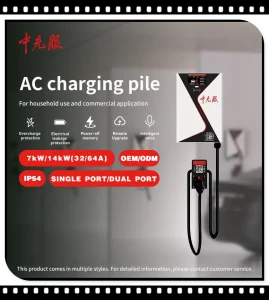
Foshan Walnut Charger Co., Ltd. is a leading manufacturer specializing in advanced AC EV charging solutions for both residential and commercial applications. With a focus on wall-mounted and floor-mounted chargers, the company provides a comprehensive range of smart charging products designed to meet the diverse needs of homeowners, businesses, and fleet operators.
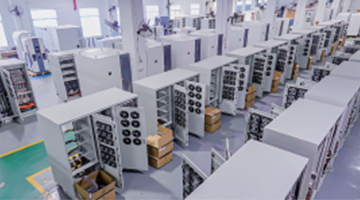
The company’s product portfolio includes high-efficiency AC chargers equipped with intelligent power management systems, dual-port charging options, and real-time monitoring capabilities. By integrating cutting-edge technology, Foshan Walnut Charger ensures optimal charging performance, energy efficiency, and user-friendly operation for every installation.
Committed to sustainable mobility, Foshan Walnut Charger emphasizes seamless integration of smart home and commercial energy systems. Its solutions support load balancing, remote management via mobile applications, and safety compliance with international standards, providing reliable and efficient charging for all electric vehicles.
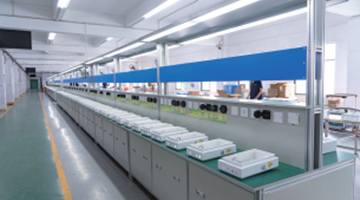
With strong R&D capabilities, rigorous quality control, and a customer-centric approach, Foshan Walnut Charger has established itself as a trusted partner in the EV charging industry. The company’s mission is to deliver innovative, safe, and energy-efficient charging solutions that empower customers to embrace electric mobility while optimizing energy use and reducing costs.
Why source from our Chinese factory for your Uganda projects? It comes down to Supply Chain Resilience. In a world of fluctuating material costs, our "Industry 4.0" facility in Foshan utilizes automated assembly lines and AI-driven quality inspection to maintain stable pricing and superior quality control. This ensures that every 22kW dual-port charger is identical in performance, whether it’s installed in Entebbe or Gulu.
Every unit undergoes 48 hours of full-load aging tests and IPX-level water ingress testing before shipping to Mombasa port for Uganda transit.
Our centralized procurement of Grade-A components allows us to offer Ugandan fleet operators a 20-30% CAPEX reduction compared to European alternatives.
We provide Ugandan distributors with complete SDKs and API documentation to integrate our chargers into local payment gateways like MTN Mobile Money.
For most last-mile delivery fleets (e-motorcycles and small vans), the 7kW or 11kW AC charger is ideal. It allows for full charging in 4-6 hours, perfect for overnight rotation without requiring a massive upgrade to the local grid connection.
Yes, our chargers are designed for the standard 230V/400V 50Hz supply common in Uganda. They include wide-voltage tolerance ranges to prevent damage during brownouts or spikes.
We utilize the OCPP 1.6J protocol, which connects all chargers to a central cloud management dashboard. This allows you to monitor energy consumption, set charging schedules for off-peak rates, and handle driver authentication via RFID or app.
Absolutely. Our chargers feature IP65/IK10 ratings, meaning they are completely dust-tight, protected against water jets, and resistant to physical impact, making them perfect for outdoor parking areas in Uganda.
Scaling your Uganda EV project? Explore our high-capacity commercial range.
Partner with a factory that understands the intersection of technology, climate, and commercial viability.
Our engineering team is ready to assist you with site planning, hardware selection, and backend integration. Whether you are a government agency in Kampala, a logistics firm in Entebbe, or a private fleet operator, we have the manufacturing capacity and technical expertise to power your journey.
 Walnut Charger
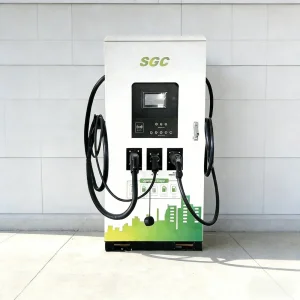
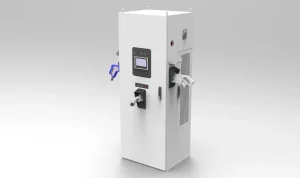
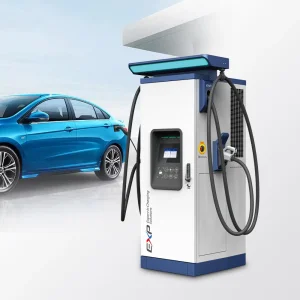
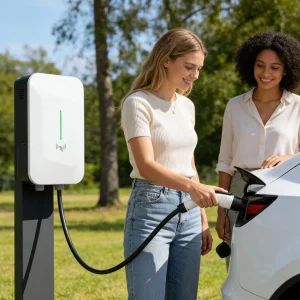
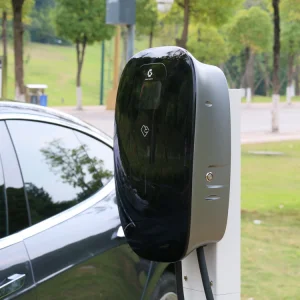
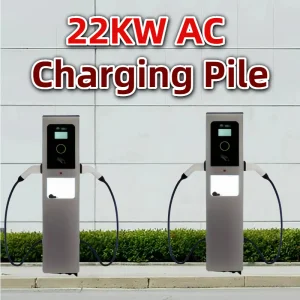
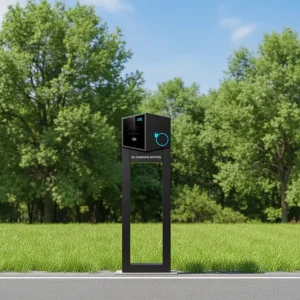
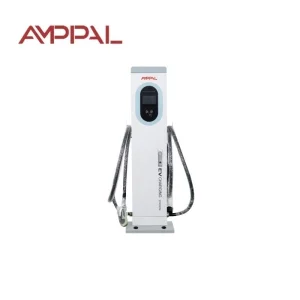
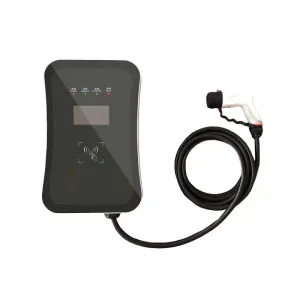
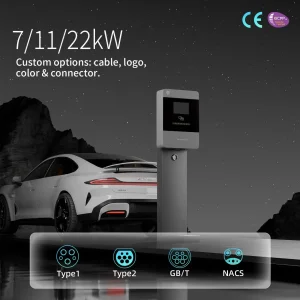
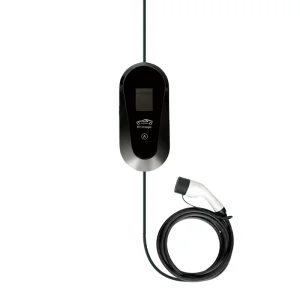
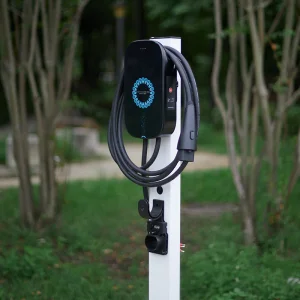 Is This EV Charger AC with 11kw Output Suitable for Your Commercial Uganda Fleet? Click to Learn More.