Smart AC & DC high-efficiency chargers certified to meet international EV protocols, supporting remote cloud integration, RFID identification, and APP management.
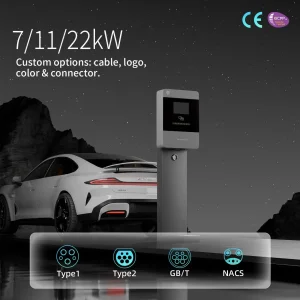
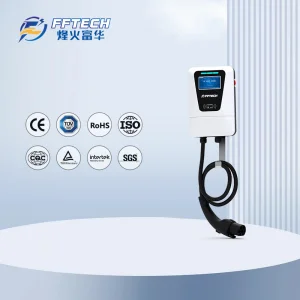
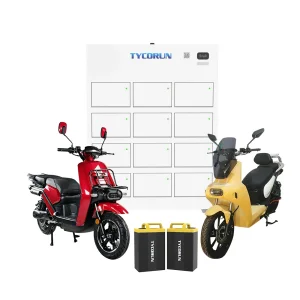
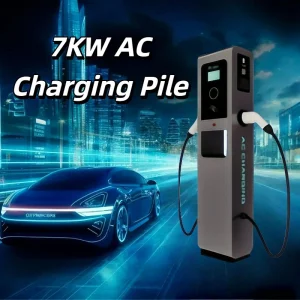
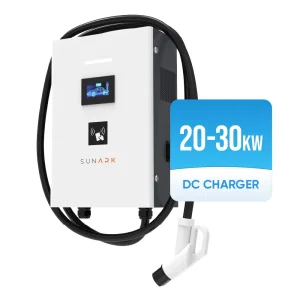

The global transition to sustainable mobility has moved beyond simple vehicle electrification. The current bottleneck is the deployment of an optimized, reliable, and intelligent charging infrastructure network. Foshan Walnut Charger Co., Ltd. is a leading manufacturer specializing in advanced AC EV charging solutions for both residential and commercial applications. With a focus on wall-mounted and floor-mounted chargers, the company provides a comprehensive range of smart charging products designed to meet the diverse needs of homeowners, businesses, and fleet operators.
Our solutions bridge the gap between physical EV supply equipment (EVSE) and remote monitoring networks. By pairing state-of-the-art charging units with Custom OEM Charger Location Applications, we empower mobility operators, businesses, and municipalities to build their proprietary charging networks. This custom integration ensures that end-users can seamlessly discover, authorize, manage, and pay for charging sessions in real-time, driving user retention and operational efficiency.

The global electric vehicle charging infrastructure is transitioning from a localized utility to a hyper-connected service. According to market research, the integration of custom-branded mobile applications and location mapping APIs is driving the monetization of commercial EVSE installations. Modern EV drivers expect more than just static power delivery; they demand real-time telemetry indicating slot availability, booking functionalities, dynamic payment gateways, and vehicle charging progress updates.
Municipalities, car sharing services, hotel chains, and retail enterprises no longer rely solely on third-party public networks. To maximize customer retention and establish brand dominance, these organizations are investing in custom OEM charger location apps. These applications serve as the primary digital interface between the customer's smartphone and the physical charging hardware, supporting custom UI/UX branding, local service integrations, and customized advertising models.
Without standard protocols, scaling an EV network is virtually impossible. Modern charging apps utilize Open Charge Point Protocol (OCPP 1.6J or OCPP 2.0.1) to bridge the physical chargers to the central billing and mapping cloud. These APIs communicate real-time charging status, connector types (CCS1, CCS2, GB/T, Type 2), power outputs, error logs, and occupancy statuses. Custom app development relies on highly stable RESTful APIs and WebSocket backends to guarantee less than 1-second latency in status updates.
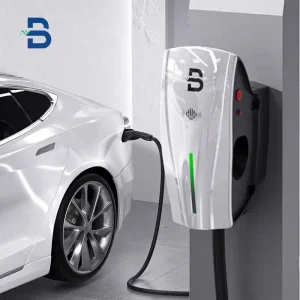
Fully integrated with OCPP 1.6 and OCPP 2.0.1, Walnut EVSE allows flexible communication with proprietary maps and charge point management systems (CPMS).
Enables EV drivers to pre-book chargers on the go, reducing waiting queues and improving the throughput of commercial charging sites.
Allows chargers to dynamically shift power capacity depending on overall grid load and real-time site constraints, preventing overload.
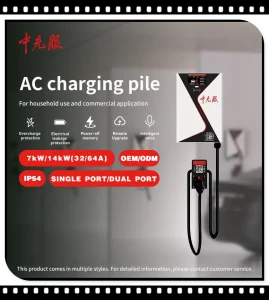
Committed to sustainable mobility, Foshan Walnut Charger emphasizes seamless integration of smart home and commercial energy systems. Its solutions support load balancing, remote management via mobile applications, and safety compliance with international standards, providing reliable and efficient charging for all electric vehicles.
By leveraging real-time data flow between the in-car system, the smartphone application, and Walnut’s smart grid controllers, building managers can optimize energy consumption curves. The hardware monitors electrical parameters continuously, automatically throttling charging rates during peak periods and accelerating them during off-peak hours to save on utility bills.

The technology driving the electric mobility landscape is evolving rapidly. To maintain competitive advantage, OEM software platforms and charging stations must align with next-generation requirements. Below is the development roadmap focusing on hardware interoperability and location applications:
Moving from RFID or app authentication to automatic hardware identification. With ISO 15118 integration, the charger automatically communicates with the vehicle upon connection, securely processing payment credentials without requiring the user to tap an app or cards.
Integrating predictive modeling algorithms in the Custom Charger Location App. Drivers will receive dynamic routing suggestions that adjust based on vehicle battery level, historical station wait times, grid stress levels, and charging speeds for all compatible sites.
With bidirectional hardware and custom software management, EVs can serve as mobile battery banks. The software schedules power feeding back into the local grid or facility during emergency peak demand, helping owners generate revenue.
Custom software integrations paired with smart Walnut hardware address specific needs across diverse industrial sectors.
Integrate private location telemetry, automated dispatch algorithms, and scheduling logic. Allows depot managers to assign vehicles to specific charging berths to optimize turnaround time and reduce peak power charges.
Draw foot traffic to retail businesses by offering localized, branded charger maps. Utilize custom API links to push geo-targeted promotional coupons to drivers while their vehicles are connected to Walnut's fast-charging units.
Provide residential communities with custom user access controls. Tenant billing, unit allocation, and grid management are handled via Walnut's smart home dashboard, ensuring fair sharing of the complex's power capacity.
With strong R&D capabilities, rigorous quality control, and a customer-centric approach, Foshan Walnut Charger has established itself as a trusted partner in the EV charging industry. The company’s mission is to deliver innovative, safe, and energy-efficient charging solutions that empower customers to embrace electric mobility while optimizing energy use and reducing costs.
Find authoritative answers regarding the manufacturing, implementation, and management of customized EV charging hardware and software.
Our EV charging hardware is built on the industry-standard Open Charge Point Protocol (OCPP 1.6J/2.0.1). When you custom build or purchase a charger location application, it communicates with a Central Charge Point Management System (CPMS) via WebSockets. The CPMS sends real-time commands and retrieves diagnostic statuses from Walnut's hardware, relaying data directly to the driver's mobile device.
Yes. By utilizing open APIs integrated with our CPMS partners, Walnut chargers publish live status data, physical addresses, connector options, and pricing structures. This data feed complies with the Open Charge Point Interface (OCPI) protocol, allowing third-party navigation engines and mapping databases to display live, up-to-date station status.
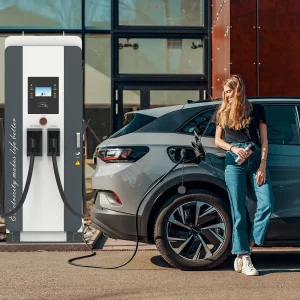
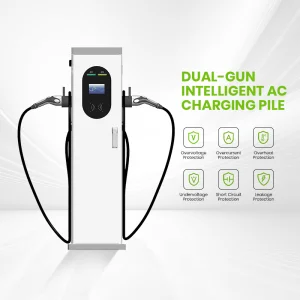
Dual-port charging stations maximize space utilization and lower hardware installation costs. Since one unit can serve two parking spaces concurrently, grid-connected spaces double their operational capability. Walnut's dynamic load balancing algorithm automatically manages the distribution of energy between the two ports, prioritizing maximum efficiency without exceeding local grid capacities.
Walnut chargers feature comprehensive hardware safety integrations, including IP55/IP65 ingress protection rating against heavy dust and rain, over-current protection, leakage current protection (Type A 30mA AC + 6mA DC), over-temperature monitoring, and lightning protection. All units undergo rigorous R&D testing to meet stringent CE, TUV, and UL guidelines.
Absolutely. Walnut AC smart chargers can integrate with home energy management systems (HEMS). When configured with solar priority modes through our app control functions, the charger dynamically adjusts its charging speeds to correspond to solar generation, utilizing clean energy from the sun to power the vehicle rather than pulling expensive energy from the public grid.
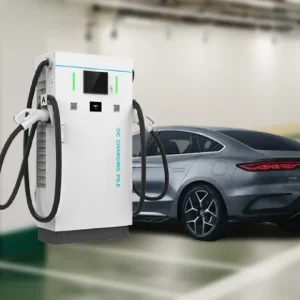
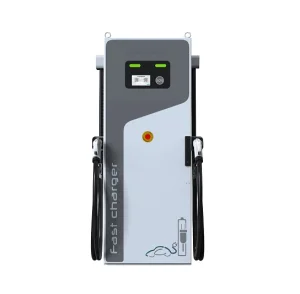
Heavy-duty, high-voltage, and rapid DC/AC charging systems engineered for robust performance in municipal stations, fleets, and public parking zones.
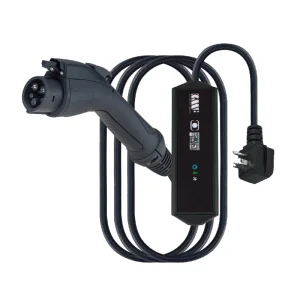
 Walnut Charger