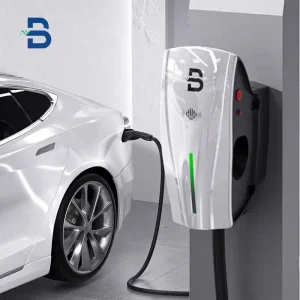
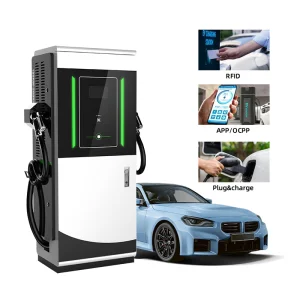
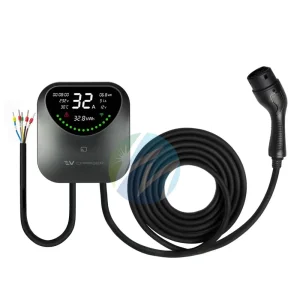
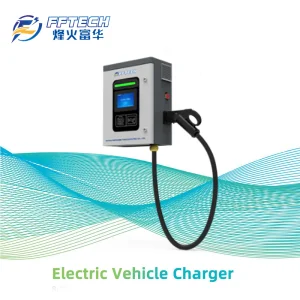
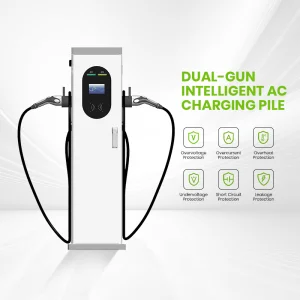
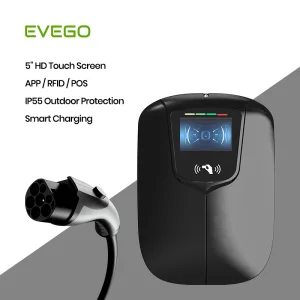
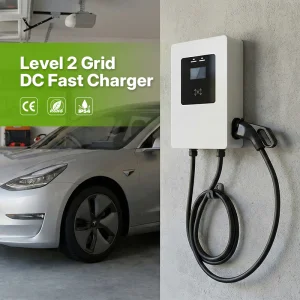
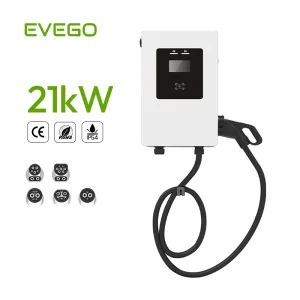
As the world pivots toward electric mobility, the demand for Ethernet connected chargers has reached an industrial peak. In commercial settings like office complexes, shopping malls, and logistics hubs, wireless connectivity often faces interference and signal drops. This has established wired Ethernet (RJ45) connectivity as the global gold standard for reliable EVSE (Electric Vehicle Supply Equipment) networks.
In Europe and North America, regulatory frameworks are increasingly mandating smart charging capabilities. Manufacturers are now integrating Ethernet ports to ensure seamless communication with Central Management Systems (CMS) via OCPP (Open Charge Point Protocol). This allows for real-time data monitoring, remote firmware updates (OTA), and precise billing, which are essential for large-scale industrial charging deployments.
Uptime with Wired Ethernet
Latest Protocol Standard
Vehicle-to-Grid Ready
Smart Load Balancing
The industry is moving toward AI-driven energy management. Ethernet connected chargers act as the "nervous system" of a smart building, communicating directly with local energy storage systems and solar arrays. Modern trends include the transition from OCPP 1.6J to OCPP 2.0.1, which offers enhanced security and better support for ISO 15118 (Plug & Charge).
Furthermore, "Dynamic Load Balancing" (DLB) has become a non-negotiable feature for property managers. By utilizing a stable Ethernet connection, a cluster of chargers can communicate instantly to distribute available power without overloading the local grid. This trend is driving manufacturers to produce hardware that is not just a power outlet, but a sophisticated IoT device.
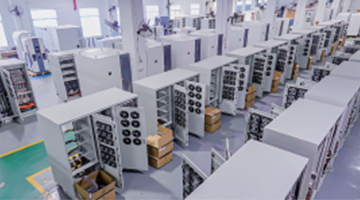
China has become the global hub for EV infrastructure R&D. Sourcing from a factory like Foshan Walnut Charger Co., Ltd. provides several strategic advantages:
Global buyers today are looking for more than just a piece of hardware. They need Localizable Solutions. This means chargers that support multiple languages in their apps, various plug types (Type 1, Type 2, CCS, NACS), and robust connectivity options. Ethernet is often the deciding factor for government contracts and large enterprise tenders because it guarantees the "Online" status required for public subsidies and carbon credit reporting.
Integrated with BMS (Building Management Systems) via Ethernet to optimize peak-hour energy consumption.
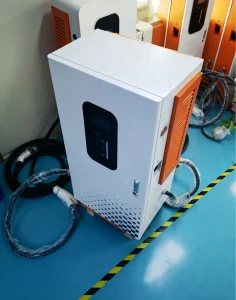
Ensuring heavy-duty electric trucks are ready for departure with high-speed DC fast charging and constant monitoring.
Shared charging stations in apartment basements where Wi-Fi signal is weak, utilizing Ethernet for reliable user billing.

Foshan Walnut Charger Co., Ltd. is a leading manufacturer specializing in advanced AC EV charging solutions for both residential and commercial applications. With a focus on wall-mounted and floor-mounted chargers, the company provides a comprehensive range of smart charging products designed to meet the diverse needs of homeowners, businesses, and fleet operators.
The company’s product portfolio includes high-efficiency AC chargers equipped with intelligent power management systems, dual-port charging options, and real-time monitoring capabilities. By integrating cutting-edge technology, Foshan Walnut Charger ensures optimal charging performance, energy efficiency, and user-friendly operation for every installation.
Committed to sustainable mobility, Foshan Walnut Charger emphasizes seamless integration of smart home and commercial energy systems. Its solutions support load balancing, remote management via mobile applications, and safety compliance with international standards, providing reliable and efficient charging for all electric vehicles.
With strong R&D capabilities, rigorous quality control, and a customer-centric approach, Foshan Walnut Charger has established itself as a trusted partner in the EV charging industry. Our mission is to deliver innovative, safe, and energy-efficient charging solutions that empower customers to embrace electric mobility while optimizing energy use and reducing costs.
When selecting a manufacturer from the Top 10 list, it is vital to evaluate their hardware's ability to handle high data throughput. Ethernet connected chargers are often subjected to extreme weather conditions in outdoor installations. A top-tier factory ensures that the RJ45 ports are industrially shielded against electromagnetic interference (EMI) and moisture.
Moreover, the integration of OCPP 1.6J/2.0.1 over Ethernet allows for "Self-Healing" networks. If a charger loses connection, a robust firmware can automatically re-establish the handshake with the cloud without manual intervention. This level of sophistication is what separates a world-class factory from a basic assembly plant.
As we look toward 2025 and beyond, the convergence of EV charging with AI and Big Data will only deepen. Ethernet remains the backbone of this revolution, providing the bandwidth necessary for high-definition user interfaces, facial recognition for payment, and complex grid-response algorithms. Choosing a partner like Walnut Charger means investing in a future-proof infrastructure that scales with your business needs.
 Walnut Charger