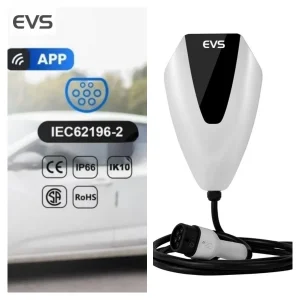
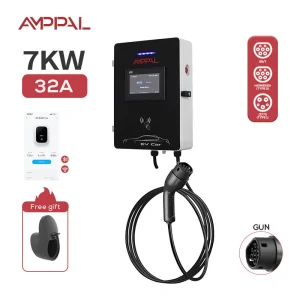
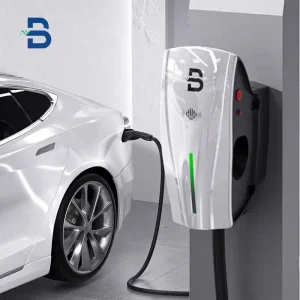
Deploy high-performance load-balancing technology tailored for regional commercial centers, maritime ports, and upscale real estate developments.
Equatorial Guinea is positioning itself as a progressive energy hub in Central Africa. Historically characterized by strong liquefied natural gas (LNG) and petroleum production, the nation is actively implementing economic diversification strategies. Under national development frameworks such as "Horizonte 2035," the government is channelling investments into modern infrastructure, urban development, and electrification. Key municipal centers like the capital city Malabo on Bioko Island, the mainland economic capital Bata, and the rising administrative center Oyala (Ciudad de la Paz) are modernizing their urban designs.
This rapid urban expansion presents unique challenges and opportunities for the electrical grid. Operated by the national utility Sociedad de Electricidad de Guinea Ecuatorial (SEGESA), the distribution grid faces spatial supply-demand variations, occasional voltage instabilities, and localized overloading, particularly in highly built-up commercial centers and port areas. Introducing electric vehicles (EVs) into this environment requires careful planning. If unmanaged, adding fleet-scale or multi-residential charging loads could overload transformer stations and compromise local energy distribution.
Consequently, EV charging infrastructure in Equatorial Guinea must incorporate Dynamic Load Balancing (DLB). Standard AC charging installations without DLB risk causing localized dropouts or forcing commercial facility owners to pay high peak-demand grid connection fees. Implementing DLB allows building administrators, hoteliers, oil & gas corporate campuses, and logistics companies in Bata to deploy multiple charging points without upgrading their existing building transformers. The charging station reads the real-time energy use of the facility and adjusts the charging speed dynamically, protecting the local grid while ensuring vehicles receive power.
Dynamic Load Balancing is an active power management system designed to optimize energy distribution across one or more EV chargers based on the building's current capacity. In standard electrical installations, a facility has a fixed maximum power limit set by SEGESA or its local substation. The primary challenge is that household appliances, industrial machinery, HVAC units, and lighting use highly variable amounts of power throughout the day.
When an EV is plugged in, it can draw a continuous load of up to 7.4kW (single-phase) or 22kW (three-phase). If multiple EVs charge simultaneously while the building is running at peak capacity (e.g., during midday air-conditioning peaks in Bata), the total load can easily exceed the main breaker's threshold, resulting in building-wide power outages.
Our DLB-enabled chargers solve this issue through integrated Current Transformers (CT) or intelligent energy meters placed at the main distribution panel. The system continuously measures the total current consumed by the building. The control board within the charger dynamically calculates the remaining available current and adjusts the EV's charging rate (using the IEC 61851 Control Pilot signal) within milliseconds. When building consumption drops, EV charging speeds increase; when building consumption rises, the charging speed automatically scales down.
Avoids catastrophic overloads on local distribution boxes and distribution transformers, which is vital for maintaining uptime in the tropical climates of Bioko Island and the Rio Muni mainland.
Eliminates the need for expensive infrastructure upgrades (e.g., purchasing larger transformers or paying recurring high-demand tariff surcharges to SEGESA).
Allows site operators in Malabo and Bata to feed excess solar energy from local photovoltaic panels directly into electric vehicles, rather than feeding it back to an uncompensated grid.
Multinational companies, petroleum operators (operating in Punta Europa), logistics giants, and diplomatic missions in Equatorial Guinea require high-quality charging hardware that complies with international standards. When procuring EV chargers, procurement departments prioritize the following specifications:
For industrial operations, ports, and remote corporate quarters in Oyala, grid power can be supplemented by microgrid technology. Solar panels combined with Battery Energy Storage Systems (BESS) are common choices for local power generation in Equatorial Guinea. Integrating solar power with EV charging requires a controller that balances grid supply, battery reserves, building loads, and EV demand in real time.
Foshan Walnut Charger's DLB solutions can communicate directly with hybrid inverters and BESS systems via Modbus RTU or TCP/IP protocols. When solar panels produce excess energy, the charging stations automatically scale up current to connected vehicles, utilizing green power. If clouds reduce solar generation, the system scales down charging speeds to prevent drawing power from expensive battery reserves or the grid. This integration reduces operating costs for off-grid and hybrid installations.
As vehicle-to-grid (V2G) and vehicle-to-home (V2H) technologies mature, EVs will serve as mobile energy storage units. In Equatorial Guinea, where grid resilience is key, V2G-enabled chargers can feed power back into commercial buildings or the national grid during peak hours or outages.
Foshan Walnut Charger is designing its hardware roadmap to support ISO 15118, enabling bidirectional energy transfer and Plug & Charge capabilities. In the future, fleets in Bata Port will charge during low-demand periods and supply energy back to warehouse operations during heavy machinery operation, stabilizing local power grids.
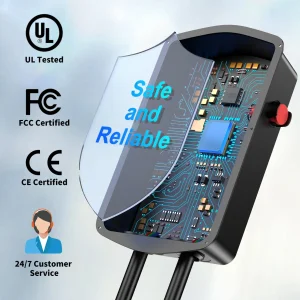
Deploying electrical equipment in Equatorial Guinea requires adhering to Spanish and European electrical standards (IEC 60364/IEC 61851), which are commonly used in the country's building codes. Import and installation processes require compliance certificates such as CE and TUV. Our chargers are fully certified, ensuring smooth customs clearance at Bata and Malabo ports.
To support local installers and distributors, Walnut Charger provides complete documentation in Spanish and French, including technical drawings and wiring schematics. We also offer remote engineering support to ensure local teams can configure DLB parameters, CT meter calibrations, and OCPP connections for municipal projects, housing estates, and commercial structures.
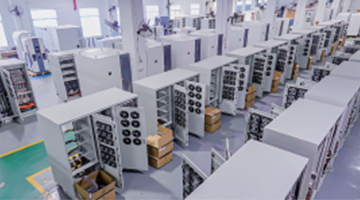
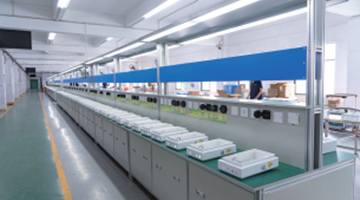
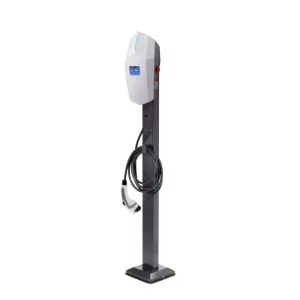
Foshan Walnut Charger Co., Ltd. is a leading manufacturer specializing in advanced AC EV charging solutions for both residential and commercial applications. With a focus on wall-mounted and floor-mounted chargers, the company provides a comprehensive range of smart charging products designed to meet the diverse needs of homeowners, businesses, and fleet operators.
The company’s product portfolio includes high-efficiency AC chargers equipped with intelligent power management systems, dual-port charging options, and real-time monitoring capabilities. By integrating cutting-edge technology, Foshan Walnut Charger ensures optimal charging performance, energy efficiency, and user-friendly operation for every installation.
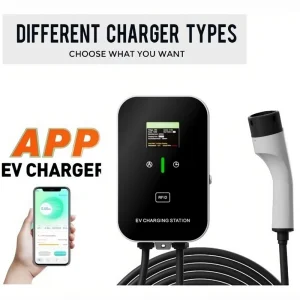
Committed to sustainable mobility, Foshan Walnut Charger emphasizes seamless integration of smart home and commercial energy systems. Its solutions support load balancing, remote management via mobile applications, and safety compliance with international standards, providing reliable and efficient charging for all electric vehicles.
With strong R&D capabilities, rigorous quality control, and a customer-centric approach, Foshan Walnut Charger has established itself as a trusted partner in the EV charging industry. The company’s mission is to deliver innovative, safe, and energy-efficient charging solutions that empower customers to embrace electric mobility while optimizing energy use and reducing costs.
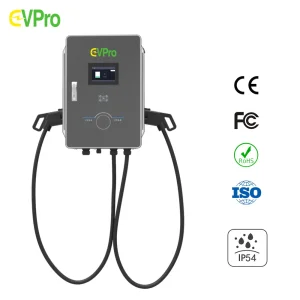
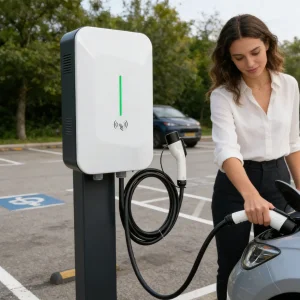
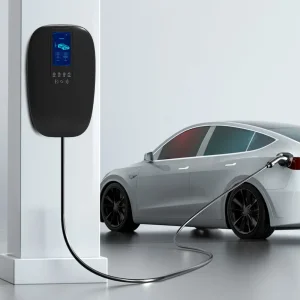
Comprehensive range of dynamic, intelligent AC EV chargers certified for residential networks and heavy commercial deployments.
Answering critical implementation, regulatory, and engineering questions for the Equatorial Guinea charging infrastructure.
Our DLB system uses a dedicated CT meter installed directly at the building's main circuit breaker panel. The meter continuously transmits the total building current reading to the charging stations. When the building's electricity demand approaches its maximum allowable current limit set by SEGESA, the charger's processor reduces the PWM duty cycle, lowering the charging speed of the electric vehicles. Once the building's internal load decreases, the system restores full charging capacity. This real-time scaling prevents the building's main breaker from tripping.
Yes. Our chargers support integration with solar and Battery Energy Storage Systems (BESS) via Modbus RTU/TCP protocols. Users can select "Solar Only" or "Hybrid Grid-Solar" modes. In solar mode, the charger only uses excess photovoltaic power generated during the day, preventing consumption from the grid or draining deep-cycle battery banks during peak times.
Our chargers are designed with high protection ratings (IP65/IK10) and feature sealed internal compartments that prevent moisture and dust ingress. Electronics undergo a conformal coating process that protects circuitry against humidity up to 95% and salt spray corrosion typical of the Gulf of Guinea. Operating temperature ranges extend from -30°C to +55°C, ensuring reliable operation under direct sunlight.
For fleet, municipal, or retail charging setups, OCPP 1.6J or OCPP 2.0.1 is recommended. It allows site operators to manage access control, schedule off-peak charging, generate reports, and bill users. Our chargers are fully OCPP compliant, allowing integration with any third-party management platform via standard internet connections (Ethernet, Wi-Fi, or 4G LTE).
Partner with Foshan Walnut Charger Co., Ltd. to access high-quality charging hardware designed for the Equatorial Guinea market. Get custom solutions, local compliance documentation, and technical support.
Send Inquiry Now Walnut Charger