These four factory-direct AC EV charging platforms are a practical starting point for apartment compounds, business centers, fleet depots, destination parking, and commercial properties in Novosibirsk. Each product link preserves the original product URL so procurement teams can verify specifications, request datasheets, and compare OCPP, connector, enclosure, and power options before a tender.
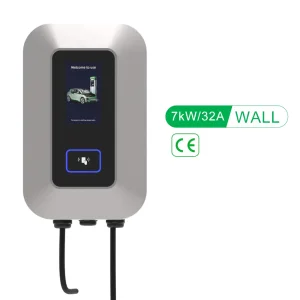
A practical 7kW wallbox for residential compounds, small commercial sites, and destination parking where vehicles dwell for several hours.
7kw AC Type 2 Charging Station APP Control Waterproof for Home & Commercial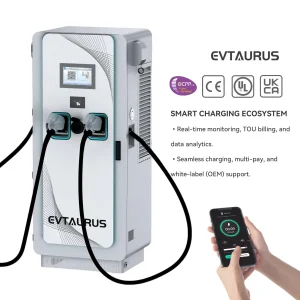
A flexible AC+DC platform for fleet yards and corridor projects that need multiple connector standards and OEM configuration.
Chinese Factory Wholesale Commercial 80kw 120kw 180kw 240kw Type2 CCS2 Gbt Byd Nacs OEM AC+DC Electric Vehicle EV Car Charging Station
A compact three-phase wallbox platform for business centers, hotels, dealerships, and residential projects requiring OCPP and DLB.
Factory Direct OEM ODM Smart Wallbox AC EV Charger 22kw 11kw Three Phase Type 2 Evse, Ocpp Dlb IP65 CE Certified Commercial Charging Station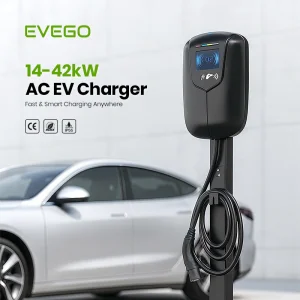
A GB/T-oriented AC family for operators serving Chinese EV models, mixed fleets, and commercial parking with higher power needs.
High Performance Gbt Standard 7kw 14kw 22kw 44kw Best Commercial EV AC Charging StationsApproximate city population, creating a large mixed-use urban market for destination, workplace, and residential charging.
Winter engineering benchmark for cold-climate due diligence; final operating range must be confirmed on the datasheet.
Typical dwell window for depot, property, workplace, and hotel charging, where commercial AC stations are most efficient.
AC platform range represented in the product portfolio for different phases, sites, and fleet charging profiles.
Novosibirsk is the largest city in Siberia and a major administrative, scientific, educational, industrial, and transport center. Its economy spans power engineering, machine building, metalworking, food processing, logistics, IT, research, and higher education. Akademgorodok, Tolmachevo Airport, the Trans-Siberian Railway, and federal road corridors all create a flow of people, corporate fleets, and commercial vehicles that will shape charging demand. For suppliers, the opportunity is not only private EV owners; it is the commercial layer of apartment compounds, business centers, retail parking, taxi and car-sharing depots, delivery fleets, municipal vehicles, and industrial parks.
The climate is the first filter. Long winters, freeze-thaw cycles, snow, ice, road salt, and low temperatures affect cable jackets, connectors, seals, displays, locking mechanisms, and electronics. A charger that performs well in a mild climate may fail in Novosibirsk if condensation management and cold-temperature flexibility are not engineered. Procurement teams should ask for documented operating and storage temperature ranges, cold-bend cable options, IP ratings, anti-condensation design, and winter service access.
This planning model is not a market forecast. It illustrates why an AC-first portfolio should be evaluated across multiple commercial use cases rather than as a single product category.
Information gain for buyers: start with the vehicle dwell profile, building supply capacity, winter temperature envelope, and connector mix. These four inputs determine whether a 7kW, 11kW, 22kW, or 44kW AC platform is the right commercial choice.
The strongest charging strategies combine global product maturity with local operating reality. In Novosibirsk, that means respecting winter conditions, grid constraints, building density, and service distance while using proven AC charging platforms from experienced factories.
Novosibirsk’s industrial and scientific base is diverse: power equipment, machine building, metalworking, food processing, logistics, research institutes, universities, and technology companies. This diversity matters for charging demand because it creates multiple parking patterns. A research campus may need daytime employee charging; a logistics warehouse may need overnight van charging; a retail center may need visitor charging; a municipal depot may need scheduled charging and reporting.
Commercial AC charging stations are well matched to these patterns because vehicles usually remain parked for hours. A 7–22kW AC charger can deliver meaningful energy during a workday or overnight stay without placing the same peak demand on the local grid as a DC fast charger. For many Novosibirsk properties, the first question is not “How fast can we charge?” but “How much existing electrical capacity can we use intelligently?”
Globally, the EV charging market is splitting into two practical layers. DC fast charging attracts attention because it is visible and supports long-distance travel. AC charging does the quiet, everyday work: homes, apartments, offices, hotels, retail, depots, and fleet yards. In mature markets, AC chargers dominate by unit count because they are cost-effective, grid-friendly, and matched to the hours vehicles are parked. The same logic fits Novosibirsk: build an AC-first backbone where dwell time exists, then add DC where corridor speed is essential.
Europe’s regulatory environment has pushed open protocols, smart metering, and roaming. China’s supply chain has compressed costs and accelerated product cycles. North America is moving toward NACS while maintaining multiple connector variants. For a Novosibirsk buyer, this global fragmentation creates a connector and software decision. Type 2 is common for European AC vehicles; GB/T matters for Chinese EVs and some commercial fleets; CCS2 appears in DC and AC/DC hybrid projects. The safest procurement approach is to define the vehicle mix first, then lock the connector standard, cable length, and OCPP requirements.
Factory efficiency is valuable when it shortens engineering cycles, improves consistency, and supports local adaptation. It becomes risky when price is the only filter. The right supplier combines manufacturing scale with documented quality control and export experience.
China’s EV charging supply chain is concentrated in clusters that combine electronics, connectors, cable assembly, sheet metal, PCBA, testing, and software. This concentration supports fast quotation cycles, lower tooling cost, and flexible OEM/ODM configurations for distributors and project developers.
A factory that already produces 7kW single-phase, 11kW/22kW three-phase, and 22–44kW three-phase AC units can adapt enclosures, cable options, connectors, RFID, 4G/WiFi, and branding without rebuilding the entire product architecture. That shortens the path from a pilot order to a repeatable container program.
Efficiency should not be confused with verification. A serious buyer should request the factory profile, quality-control process, traceability records, test reports, and certification scope for the exact model. Cold-climate claims should be documented, not assumed. The goal is to combine Chinese manufacturing speed with a specification package that performs in Novosibirsk.
The same charger model can perform differently depending on parking duration, building supply, user access, and winter maintenance. These scenarios help align product selection with the real operating environment.
New residential districts and upgraded housing estates can use 7–22kW AC chargers with RFID, app payment, and dynamic load balancing to share limited building supply. Prioritize cable reach, anti-condensation design, snow clearance, and a service plan that does not require long-distance travel for simple faults.
Akademgorodok and central business districts have predictable daytime dwell. 11–22kW AC charging makes sense for employees and visitors, with OCPP integration to access control, energy reporting, and back-office billing. Load scheduling can reduce peak demand while still delivering a full workday charge.
Destination charging improves the visitor experience and supports commercial tenants. 7–22kW wallboxes with LCD, WiFi/4G, and simple payment can be installed in phases. Outdoor units should be specified for snow, ice, UV, and freeze-thaw exposure, with clear maintenance access and cable management.
Fleet vehicles return to base for hours, making AC charging highly efficient. 22–44kW AC or AC/DC hybrid configurations can support overnight charging and between-shift top-ups. RFID access, scheduling, and energy reporting are essential for cost allocation and driver accountability.
Commercial vehicle yards around Novosibirsk can use AC charging where vehicles dwell and DC where quick turnaround is required. Dynamic load balancing and scheduled charging protect the site supply. For cold outdoor yards, cable flexibility and connector protection should be included in the specification.
Automotive showrooms and service parks need flexible connector options, display, and branded hardware for customer-facing charging. A supplier that can support Type 2, GB/T, and CCS2 configurations from a common platform can help dealers serve a mixed vehicle import market.
These additional configurations extend the shortlist across compact wall-mounted units, smart app-controlled chargers, IP-rated outdoor products, and higher-power commercial AC options.
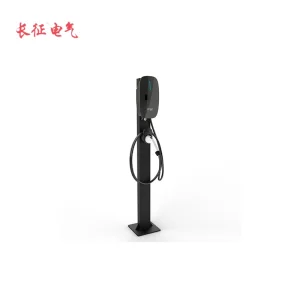
A compact commercial wallbox for indoor and covered outdoor parking where space, cable management, and installation speed matter.
AC Powered Wall Mounted High Efficiency Smart Durable Commercial EV Charging Station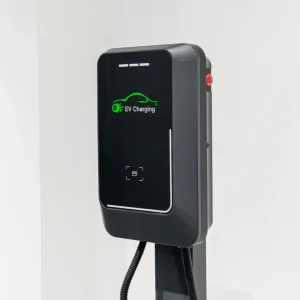
A user-facing 7kW charger with app and WiFi features for residential compounds, offices, and small commercial destinations.
Commercial Smart APP WiFi Electric Vehicle Car AC Charging Stations 7kw EV Charger Station with LCD DisplayA similarly configured smart wallbox option for distributors and projects that require app visibility and simple user interaction.
Commercial Smart APP WiFi Electric Vehicle Car AC Charging Stations 7kw EV Charger Station with LCD Display
A weather-resistant AC wall charger for outdoor commercial parking, with Type 2 or GB/T configurations and LED status display.
IP55 Commercial EV Wall Charger 7kw 22kw Type2 Gbt with LED Display Waterproof AC Electric Vehicle Car EV Charger Charging Station for Europe Us UK MarketCold climate is not a marketing label. It is a specification package that should be visible in the datasheet, test report, installation manual, and warranty terms. Use this matrix to ask better questions before approving a supplier.
| Requirement | Why it matters in Novosibirsk | Evidence to request |
|---|---|---|
| Low-temperature cable and connector flexibility | Winter cold can stiffen cable jackets and strain connectors, especially in outdoor parking and depot yards. | Cold-bend test data, cable material specification, connector operating temperature, and storage range. |
| Anti-condensation and enclosure breathing design | Freeze-thaw cycles and temperature swings can create condensation inside outdoor equipment. | Enclosure design notes, IP rating, drainage strategy, heater option if applicable, and installation clearance guidance. |
| IP54/IP55/IP65 and corrosion resistance | Snow, ice, road salt, and sand can attack enclosures, fasteners, and seals in commercial parking areas. | Ingress protection report, salt-spray or corrosion information where available, and hardware finish specification. |
| Electrical protection and RCD strategy | Outdoor EV charging requires careful protection against leakage, surge, and fault conditions in a commercial installation. | RCD Type A plus DC leakage detection details, surge protection option, breaker coordination guidance, and installation manual. |
| Dynamic load balancing and scheduling | Many commercial buildings have limited spare capacity; winter peak loads can tighten the available margin further. | DLB architecture, supported meter inputs, load-sharing accuracy, OCPP smart-charging profile support, and commissioning procedure. |
| OCPP and back-office integration | Operators need authentication, billing, monitoring, and remote diagnostics across a distributed charging estate. | OCPP version, conformance evidence, API documentation, RFID/4G/WiFi options, firmware update policy, and cybersecurity notes. |
| Metering and energy allocation | Residential compounds, fleet depots, and commercial tenants often need cost allocation or tenant billing. | Meter accuracy, MID option if required, reporting format, and integration with payment or building management systems. |
| Serviceability and spare-parts plan | Novosibirsk is far from many European and Chinese service hubs; downtime is expensive for commercial operators. | Modular component list, recommended spare-parts kit, remote diagnostics capability, RMA process, and local installation partner checklist. |
Reliability note: final certifications, ambient temperature ratings, connector options, and warranty terms must be confirmed for the exact model and order configuration. Product pages are a starting point for due diligence, not a substitute for a signed technical specification.
The next procurement cycle will reward suppliers that can combine hardware reliability with software integration, winter engineering, and local service logic.
Operators are installing AC where vehicles dwell and DC where rapid turnaround is essential. This reduces initial grid cost and lets sites scale charging as utilization grows.
OCPP 1.6J and OCPP 2.0.1 readiness, API documentation, and roaming capability are becoming standard tender requirements for commercial charging networks.
Dynamic load balancing, scheduled charging, and consumption reporting help properties avoid expensive transformer upgrades and participate in energy-management programs.
Low-temperature cable, anti-condensation design, snow-safe connectors, and service access are becoming differentiators in Siberian and northern markets.
As installed bases grow, distributors and EPCs will compete on response time, spare-parts depth, and local commissioning quality, not only hardware price.
Connected chargers need secure firmware updates, access control, and data protection. Enterprise buyers increasingly ask for software maintenance commitments in the contract.
Professional buyers no longer evaluate a charging station as a standalone box. They evaluate a supplier’s ability to document, integrate, ship, support, and scale the product across a multi-site programme.
A credible commercial AC charging supplier should be able to provide a technical file, product catalogue, model datasheets, connector options, installation manual, certification documents, packaging plan, and spare-parts list. For a Novosibirsk buyer, the evidence package should also clarify low-temperature limits, enclosure rating, load-balancing method, firmware update process, and expected service response.
This is where the procurement conversation becomes more valuable than a simple price list. The factory that can answer these questions quickly and consistently is usually better prepared for a multi-phase project in a cold-climate region.
The original factory information is preserved below, supported by the cold-climate and procurement context required for Novosibirsk market evaluation.
Foshan Walnut Charger Co., Ltd. is a leading manufacturer specializing in advanced AC EV charging solutions for both residential and commercial applications. With a focus on wall-mounted and floor-mounted chargers, the company provides a comprehensive range of smart charging products designed to meet the diverse needs of homeowners, businesses, and fleet operators.

The company’s product portfolio includes high-efficiency AC chargers equipped with intelligent power management systems, dual-port charging options, and real-time monitoring capabilities. By integrating cutting-edge technology, Foshan Walnut Charger ensures optimal charging performance, energy efficiency, and user-friendly operation for every installation.
Committed to sustainable mobility, Foshan Walnut Charger emphasizes seamless integration of smart home and commercial energy systems. Its solutions support load balancing, remote management via mobile applications, and safety compliance with international standards, providing reliable and efficient charging for all electric vehicles.

With strong R&D capabilities, rigorous quality control, and a customer-centric approach, Foshan Walnut Charger has established itself as a trusted partner in the EV charging industry. The company’s mission is to deliver innovative, safe, and energy-efficient charging solutions that empower customers to embrace electric mobility while optimizing energy use and reducing costs.
These answers help project owners, distributors, and EPCs ask the right questions before requesting a quotation or approving a factory for a Novosibirsk deployment.
Use 7kW for single-phase sites with long dwell time, such as residential parking or small commercial destinations. Use 11kW or 22kW three-phase units for apartment compounds, offices, hotels, dealerships, and fleet depots where faster turnaround is useful. Use 22–44kW three-phase AC where the site has sufficient supply and vehicles can accept higher AC power. The final choice should be based on the building’s electrical capacity, connector standard, vehicle mix, and expected parking duration.
They can be specified for cold climates, but the buyer must verify the details. Ask for the operating and storage temperature ranges, cable cold-bend data, connector temperature rating, IP rating, anti-condensation design, and installation guidance for snow and ice. Do not rely on a generic “winter-ready” claim. The exact model datasheet, test evidence, and warranty terms should be reviewed before approval.
The connector choice depends on the vehicle mix. Type 2 is common for European AC vehicles. GB/T is relevant for Chinese EVs and some commercial fleets. CCS2 is mainly associated with DC fast charging and AC/DC hybrid projects. Many commercial sites benefit from a mixed strategy: Type 2 or GB/T for AC dwell charging and CCS2 for DC range extension where required. Lock the standard before ordering cables, connectors, labels, and user documentation.
Many commercial and residential buildings have limited spare electrical capacity. Dynamic load balancing allows multiple chargers to share the available supply without exceeding the site limit. This can reduce or defer expensive transformer upgrades and make phased charging rollouts more practical. For winter peak conditions, load management also helps protect the building supply when other electrical loads are high.
Many products in the portfolio are available with OCPP, RFID, 4G, WiFi, app control, LCD display, and smart energy features. However, the exact configuration must be confirmed for each model and order. Buyers should request the OCPP version, API documentation, RFID capability, communication module specification, and firmware update policy before signing a purchase order.
Request the certification scope for the exact model, test reports, IP rating evidence, EMC and safety documentation where applicable, RoHS information, installation manual, datasheet, packaging specification, and warranty terms. If the project requires CE, TUV, or other marks, confirm that the certificate covers the ordered configuration. Certification claims should be traceable to the model and manufacturing site.
MOQ, lead time, and shipping route depend on the model, configuration, branding requirements, and order volume. Buyers should request a written quotation with production lead time, packaging dimensions, container loading plan, and shipping options. For Novosibirsk, rail and road combinations or sea-plus-rail routes may be evaluated with the freight forwarder. Spare parts and sample units should be planned separately from the main shipment.
Yes, OEM/ODM support can include logo, enclosure color, label, manual, packaging, connector configuration, and firmware language, subject to MOQ and engineering approval. The distributor should provide the target specification, branding files, and market requirements early in the process so the factory can confirm feasibility and testing requirements.
A practical pilot can start with 4–8 units across two sites: one residential or workplace site with limited supply, and one fleet or outdoor site exposed to winter conditions. Measure installation time, load balancing, app/backend integration, user authentication, cable handling, and service response. After the winter acceptance period, scale the proven configuration rather than changing every variable at once.
Plan for controllers, connectors, cables, surge-protection modules, RCD-related components, communication modules, and display assemblies where applicable. Ask for a recommended spare-parts percentage based on the installed base, remote diagnostic capability, firmware support period, RMA process, and local installation partner requirements. For a remote market like Novosibirsk, modular serviceability is a commercial advantage.
This final product group covers durable wall-mounted AC units, higher-power commercial charging, RFID/4G options, AC/DC single-gun products, and outdoor commercial configurations. All original product URLs are preserved for specification review and inquiry.

A robust wall-mounted AC option for commercial parking, service areas, and properties that need a compact high-power unit.
Durable Wall Mounted AC Compact Commercial Use High Power EV Charging Station
A higher-power commercial charging option for sites that need scalable output and OCPP integration across larger vehicle fleets.
Commercial Use 60kw 120kw 160kw 240kw Electric Vehicle Car Battery AC EV Charge Charger Charging Station with Ocpp1.6 CE TUV Certificates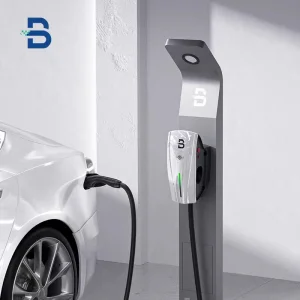
A commercial AC EV charger option with RFID and 4G features for outdoor use and mixed connector markets.
Beny Commercial AC EV Charger Type 1 7kw 22 Kw RFID 4G AC EV Charging Station Type2 GB/T Electric Car Charging Stations for Outdoor Use
A compact AC/DC single-gun configuration for commercial sites that need faster charging without a large multi-gun footprint.
40kw AC DC Single Gun Best Commercial EV Electric Vehicle Charging Stations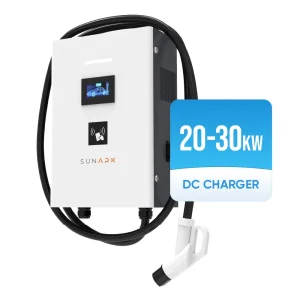
A Sunark AC-to-DC fast charging option for commercial sites that need a bridge between AC dwell charging and rapid top-up.
Sunark AC to DC EV Commercial Charging Station CCS 20kw 25kw 30kw Fast Car ChargingAn additional Sunark commercial charging configuration for projects comparing AC dwell charging with small DC fast charging.
Sunark AC to DC EV Commercial Charging Station CCS 20kw 25kw 30kw Fast Car Charging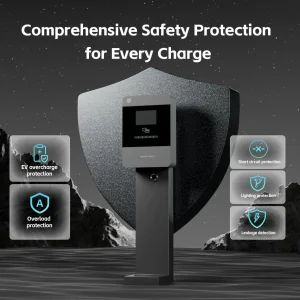
A manufacturer-wholesale AC charging station option for distributors, installers, and project buyers requiring flexible sourcing.
AC Electric Vehicle Car Battery EV Charger Charging Station Manufacturer Wholesale Commercial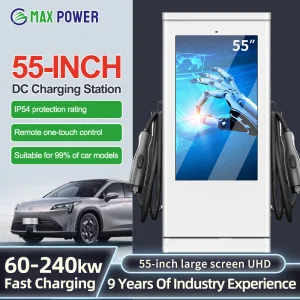
A multi-standard outdoor commercial charging pile option for projects that need AC and DC connectors in one procurement strategy.
60kw/120kw/180kw Ocpp 1.6j Chademo, CCS2, Type 2 DC+ AC Connector EV Car Charging Station Charging Pile for Outdoor Commercial Use Walnut Charger