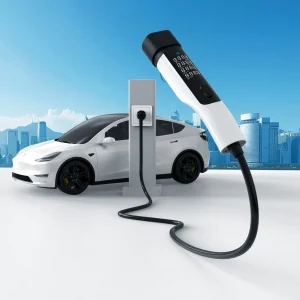
An E-E-A-T-led buyer’s white paper for EV charging docks, smart AC wallboxes, DC fast chargers, portable EV chargers, battery swapping cabinets, and energy-integrated charging infrastructure — built for real search intent, procurement confidence, and global deployment.
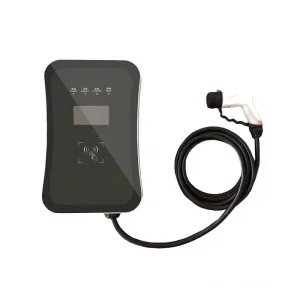
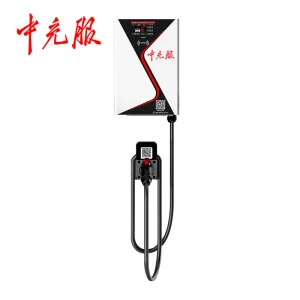
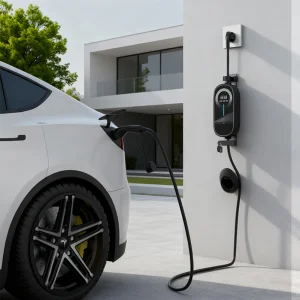
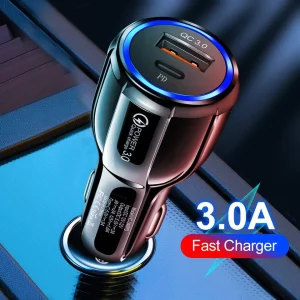
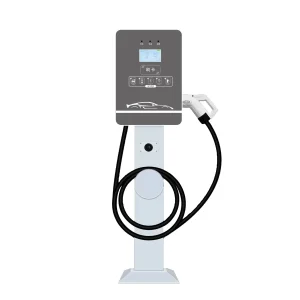
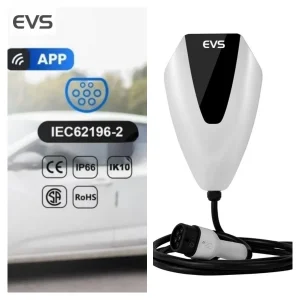
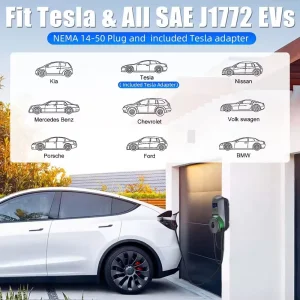
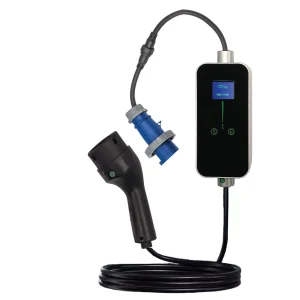
These first eight solutions represent the commercial search intent of buyers looking for reliable charging dock factories, exporters, OEM/ODM partners, and standards-ready EV charging hardware. Each product image and product URL is preserved for direct evaluation.
Charging dock solutions are no longer simple accessory products. They sit at the intersection of transport electrification, building energy management, grid-edge intelligence, public infrastructure, and export manufacturing. For buyers, the phrase “Top 10 Charging Dock Solutions Factories & Exporter” often hides several different intents: a distributor may need a private-label AC wallbox factory; a commercial property developer may need OCPP 1.6J or OCPP 2.0.1 networked stations; a fleet operator may need portable or mobile emergency charging; and a public parking operator may need a turnkey exporter with documentation, after-sales support, and consistent connector standards.
A factory that can win trust in the current market must prove more than assembly capacity. It must demonstrate standards engineering, interoperability testing, cybersecurity discipline, post-sales failure analysis, customized branding control, and the ability to support multi-market compliance pathways. This white-paper-style guide follows Google’s Search Quality Rater expectations by prioritizing first-hand manufacturing context, verifiable procurement criteria, clear commercial application scenarios, and information gain beyond a generic product list.
Across North America, Europe, Asia-Pacific, Latin America, and the Middle East, charging docks are being reclassified from electrical accessories into managed infrastructure assets. The winning supplier is no longer the lowest-cost box builder; it is the partner that can align connector standards, software protocols, safety documentation, installation constraints, and lifetime service economics.
As EV penetration rises, buildings face peak-load pressure. Charging docks must support dynamic load balancing, scheduled charging, power sharing, and real-time monitoring. This is especially critical for multifamily residential buildings, commercial parking lots, and fleet depots where available capacity is finite.
Global buyers evaluate Type 1, Type 2, CCS1, CCS2, NACS, CHAdeMO, and GB/T variants. A credible exporter must control BOM traceability, cable assemblies, locking mechanisms, temperature sensing, and firmware configuration so that regional SKUs remain stable and interchangeable where intended.
OCPP 1.6J and OCPP 2.0.1 compatibility, app control, RFID authorization, back-office integration, and remote diagnostics are now purchase criteria. The charger becomes an edge device in a larger energy and operations platform, not merely a power converter.
Factories and exporters must manage regional plug standards, labeling, packaging, documentation, warranty terms, and after-sales response. Procurement teams increasingly request failure-analysis records, firmware change logs, and evidence of IEC/SAE/UL-aligned design review.
Semantic search rewards content that matches the full buying journey, not only the exact keyword. The query “Top 10 Charging Dock Solutions Factories & Exporter” can represent product discovery, standards verification, OEM/ODM capability review, local installation feasibility, and supplier-risk evaluation. The content structure below maps those intents to proof points.
“I need a 7kW wallbox, 22kW commercial charger, portable Type 2 unit, or 30kW wireless charging station.” Buyers compare product attributes, power levels, connector types, cable lengths, waterproof ratings, and supported protocols.
“Can the factory provide IEC 61851, SAE J1772, OCPP 2.0.1, IP65/IK10, DOE Level VI, CE, RoHS, REACH, or UL-oriented documentation?” Compliance intent requires evidence, not claims.
“Will it work in a multifamily building, gas station, fleet parking area, hotel, retail parking lot, or battery swapping station?” Application intent can be answered with localized scenarios and deployment constraints.
“Is this exporter reliable for OEM/ODM, private label, long-term spare parts, firmware updates, and after-sales support?” Validation intent depends on E-E-A-T: experience, expertise, authority, and trust signals.
Instead of repeating “high quality, fast charging, competitive price,” this guide adds actionable decision layers: intent-to-proof mapping, a factory audit framework, a comparison matrix for AC/DC/portable/battery-swapping/USB solutions, and localized deployment scenarios. These additions help procurement teams compare suppliers on evidence and reduce technical risk before a sample order.
Charging dock solutions perform differently depending on ownership model, parking behavior, electrical capacity, payment flow, and maintenance access. A factory that understands these environments can support better SKU selection and lower total cost of ownership.
Smart wall-mounted AC chargers with app control, load balancing, scheduled charging, and waterproof enclosures suit homes, apartments, villas, and shared residential parking. Portable EV AC chargers provide backup flexibility for drivers without fixed installation.
Commercial parking lots, hotels, offices, and retail sites require networked stations, access control, payment integration, usage reporting, and durable outdoor protection. 22kW AC and 30kW DC solutions can serve different dwell-time profiles.
Fleet operators prioritize scheduling, connector standardization, driver authentication, uptime, and serviceability. Load management and energy monitoring are essential when multiple vehicles return to the depot within narrow windows.
Battery swapping cabinets and mobile charging solutions support constrained sites, emergency charging, and two-/four-wheeler ecosystems. These systems require tighter coordination among charger, battery management, thermal safety, and back-office monitoring.
Because public factory rankings vary by region, connector standard, audit scope, and product mix, this “Top 10” is presented as a capability map for procurement teams. A qualified factory or exporter should demonstrate strength across these ten clusters, either directly or through validated partners.
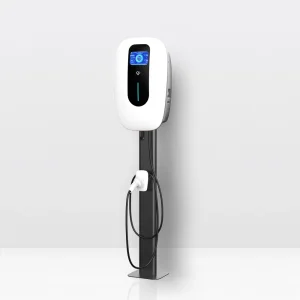
7kW, 11kW, and 22kW wall-mounted chargers with dynamic load balancing, WiFi/OCPP options, app control, and stable output for homes and commercial buildings.
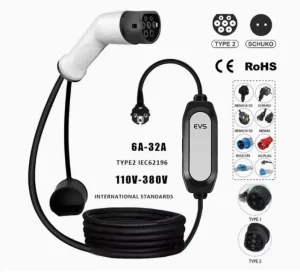
Portable Type 1, Type 2, GB/T, and multi-connector EV AC chargers for travel, fleets, temporary sites, and emergency top-up use.
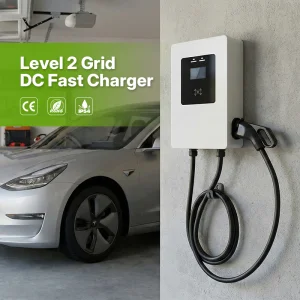
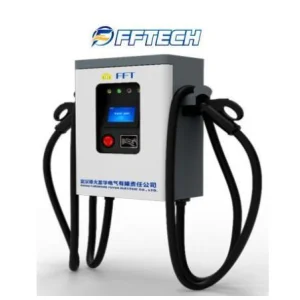
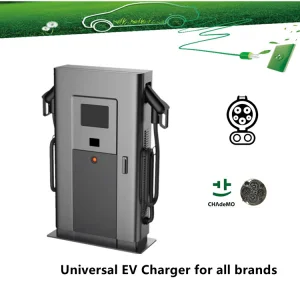
14–28kW Level 2 DC units, 30kW stations, CCS1, NACS, CCS2, CHAdeMO, and GB/T configurations with OCPP support and communication modules.
OCPP 1.6J and OCPP 2.0.1 commercial stations for parking lots, gas stations, fleets, hotels, and retail sites with remote monitoring.
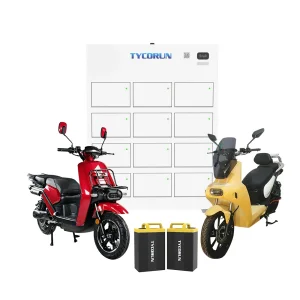
Battery swapping charging cabinets and mobile fast-charging solutions for space-constrained, high-utilization, or emerging-market deployments.
IP65, IK10, waterproof, dust-resistant, and vandal-resistant designs for outdoor parking, public sites, and industrial environments.
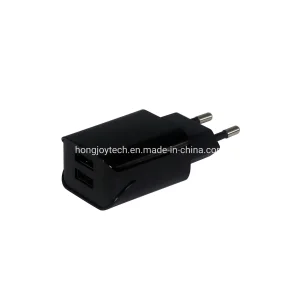
USB Type-C PD, dual-port car chargers, and smartphone fast-charging accessories that complement automotive and travel retail channels.
BYD, Tesla, Type 2, GB/T, CCS1, and CCS2-oriented home charging products that combine portability, smart control, and installation flexibility.
Higher-power AC and DC stations for faster turnaround and commercial utilization, supported by thermal design, safety protection, and network features.
Private label, packaging, connector localization, documentation, spare parts planning, and regional compliance pathways for distributors and project buyers.
The next competitive cycle will reward factories that connect power electronics, embedded software, cybersecurity, and energy-market readiness. Charging docks will become more modular, more grid-aware, and more serviceable through remote diagnostics.
OCPP 2.0.1, ISO 15118-oriented plug-and-charge concepts, RFID authorization, and stronger back-office integration will move from premium features to mainstream procurement requirements.
Bidirectional charging and vehicle-to-home / vehicle-to-grid pilots will require factories to design for grid interaction, inverter coordination, and safer bidirectional power flow.
Charging docks will increasingly use demand prediction, dynamic tariff response, and automatic load allocation to reduce cost and avoid site-level peak penalties.
Secure boot, signed firmware, role-based access, audit logs, SBOM-style component traceability, and remote fault diagnosis will become trust differentiators for exporters.
Type 2 AC chargers, OCPP networking, load balancing, and local language support fit apartment blocks, offices, and public parking. MID energy metering and local standards awareness are common selection filters.
NACS, CCS1, and SAE J1772 compatibility shapes SKU strategy. UL-oriented documentation, DOE Level VI efficiency for power supplies, and clear installation guidelines help distributors lower friction.
GB/T connectors, compact footprints, app-based operation, and cost-efficient AC/DC products support high-density residential and commercial charging. Production scalability and spare-parts quality are key.
High-temperature derating, IP65 protection, dust resistance, cable durability, and remote monitoring matter in heat, dust, and high-utilization environments such as gas stations and fleet yards.
Foshan Walnut Charger Co., Ltd. is a leading manufacturer specializing in advanced AC EV charging solutions for both residential and commercial applications. With a focus on wall-mounted and floor-mounted chargers, the company provides a comprehensive range of smart charging products designed to meet the diverse needs of homeowners, businesses, and fleet operators.
The company’s product portfolio includes high-efficiency AC chargers equipped with intelligent power management systems, dual-port charging options, and real-time monitoring capabilities. By integrating cutting-edge technology, Foshan Walnut Charger ensures optimal charging performance, energy efficiency, and user-friendly operation for every installation.


Committed to sustainable mobility, Foshan Walnut Charger emphasizes seamless integration of smart home and commercial energy systems. Its solutions support load balancing, remote management via mobile applications, and safety compliance with international standards, providing reliable and efficient charging for all electric vehicles.
With strong R&D capabilities, rigorous quality control, and a customer-centric approach, Foshan Walnut Charger has established itself as a trusted partner in the EV charging industry. The company’s mission is to deliver innovative, safe, and energy-efficient charging solutions that empower customers to embrace electric mobility while optimizing energy use and reducing costs.
The company information demonstrates experience in residential and commercial AC EV charging, expertise in intelligent power management and load balancing, authority through a broad charging portfolio, and trust through quality control, standards awareness, and customer-centric support. For buyers, this is more useful than a generic factory slogan because it connects product families to real installation and operations needs.
A supplier evaluation should separate marketing claims from evidence. Use this four-pillar framework to request documents, compare samples, and validate production discipline.
Ask for deployment examples by scenario: home, multifamily, commercial parking, fleet, gas station, and battery swapping. Review failure cases and how they were resolved, not only successful case studies.
Request electrical schematics at the appropriate disclosure level, thermal test summaries, OCPP conformance evidence, firmware version control, and safety protection logic for overcurrent, overvoltage, leakage, and overtemperature events.
Check factory audit reports, quality management evidence, export history, test-lab relationships, and whether the exporter can support regional documentation such as CE-oriented files, UKCA-oriented files, or UL-oriented design review discussions.
Confirm warranty terms, spare parts availability, RMA workflow, packaging protection, labeling accuracy, cybersecurity update policy, and responsiveness during sample testing. Trust is proven by process consistency.
Use this matrix to align product type with buyer intent, standards focus, verification method, and best-fit application.
A charging dock solution is an integrated EV charging product or system that includes the charger, connector, control electronics, safety protection, communication features, and installation accessories. It may be an AC wallbox, DC fast charger, portable charger, battery swapping cabinet, or commercial networked station.
Choose based on dwell time and use case. AC charging is efficient for overnight home, office, and hotel parking. DC fast charging suits public corridors, fleets, retail, and gas stations where faster turnaround is valuable. The factory should support the selected connector, protocol, and regional compliance path.
OCPP enables communication between chargers and back-office platforms. OCPP 1.6J is widely deployed, while OCPP 2.0.1 adds stronger device management, security, and smart-charging capabilities. Exporters should provide clear conformance evidence and firmware support planning.
IP65 indicates strong dust and water-jet protection, making the enclosure suitable for many outdoor installations. IK10 indicates high resistance to mechanical impact and vandalism. These ratings are important for public parking, commercial sites, and industrial environments.
Request product specifications, test summaries, protocol integration notes, sample testing, OEM/ODM checklists, warranty terms, spare-parts planning, and references. A reliable exporter will document processes rather than relying only on sales claims.
Smart AC wallboxes with load balancing, networked commercial chargers with OCPP, DC stations with remote monitoring, and battery-swapping or mobile energy systems are best positioned for future demand response, dynamic tariffs, and energy-orchestration integration.
These additional eight products complete the preserved product set. They support comparison across commercial wallboxes, IEC-standard AC charging, dynamic load balancing, portable BYD-compatible charging, USB-C PD accessories, and networked 22kW parking-lot charging.
The charging dock market is maturing quickly. In a crowded export landscape, the strongest factory is not always the one with the largest catalog; it is the one that can connect product engineering, standards evidence, software interoperability, localized deployment knowledge, and responsive after-sales support. For residential buyers, reliability and installation simplicity matter most. For commercial and fleet buyers, networking, load management, and uptime drive total cost of ownership. For public infrastructure, thermal performance, vandal resistance, cybersecurity, and serviceability determine long-term success.
Foshan Walnut Charger Co., Ltd. demonstrates a focused position in advanced AC EV charging solutions for residential and commercial applications, with emphases on intelligent power management, dual-port charging options, real-time monitoring, load balancing, remote management, and international standards awareness. Combined with the broader product set above — including DC fast charging, portable EV chargers, commercial networked stations, battery swapping cabinets, IP65/IK10 wallboxes, and USB-C PD accessories — procurement teams can build a competitive, standards-aware charging portfolio for global markets.
 Walnut Charger