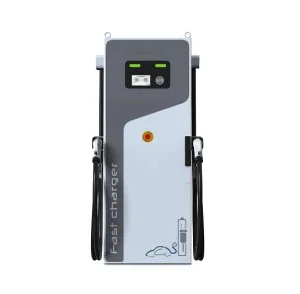
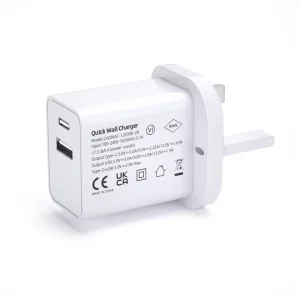
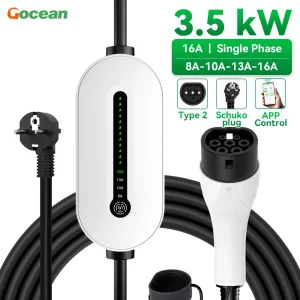
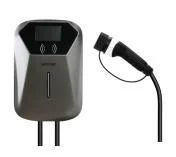
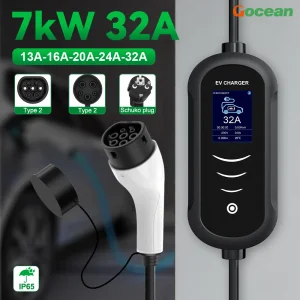
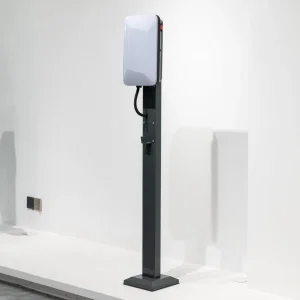
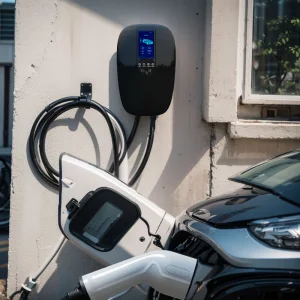
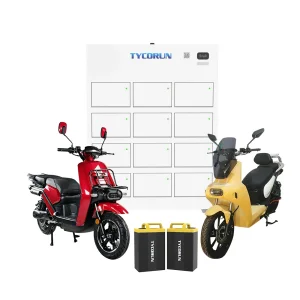
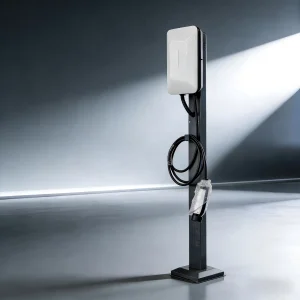
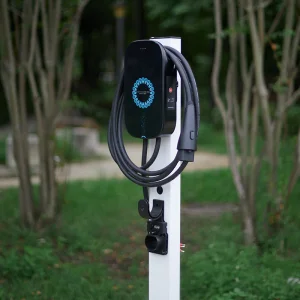
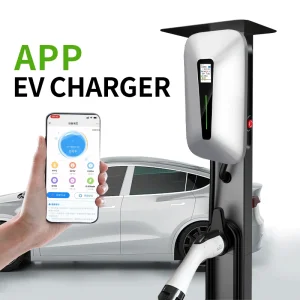
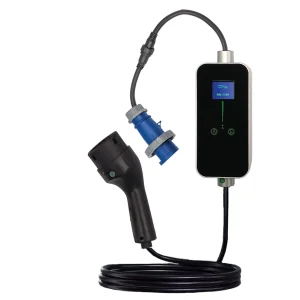
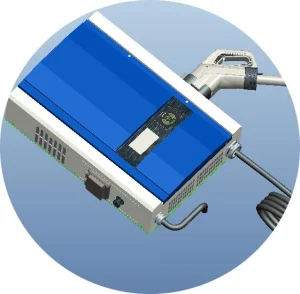
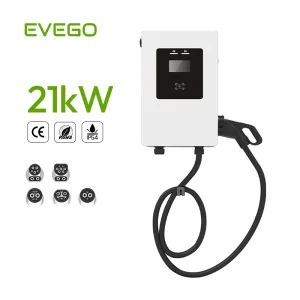
Discover our highly sought-after hardware array, engineered to support residential micro-mobility networks and commercial vehicle infrastructures globally.
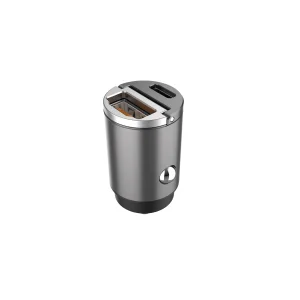
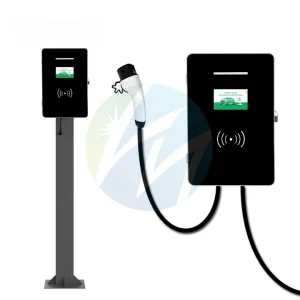
Mapping the worldwide expansion of high-capacity electric charging systems for commercial e-fleets and lightweight urban vehicles.
The global transition to micro-mobility and light electric vehicles (LEVs) has catalyzed an unprecedented demand for robust, highly efficient charging infrastructures. As megacities implement low-emission zones, logistics companies, postal services, and food delivery networks are rapidly replacing their combustion fleets with electric bikes, cargo e-bikes, and utility electric vehicles. This paradigm shift demands industrial-grade charging technologies that go far beyond standard consumer plug-in bricks.
Today, the industrial landscape requires multi-port intelligent charging stations, wallboxes with dynamic power management, and systems that seamlessly blend high safety standards with rapid power delivery. To achieve optimal efficiency, fleet operators are integrating high-power density converters with custom cooling systems that ensure continuously sustained power without thermal throttling. In this ecosystem, the charging device is no longer just a power supply unit—it is a critical node in a larger digital energy landscape.
Sourcing from premier Chinese manufacturing hubs ensures highly optimized component pricing, reliable supply chains for critical magnetic parts, and state-of-the-art automated testing protocols that verify performance under intense workload conditions.
Modern commercial chargers deploy integrated smart energy controls that interact with localized building management networks, shifting power draws based on real-time electricity rates and load configurations.
International operations necessitate rigorous alignment with international electrical safety standard codes, including EN 15194, UL 2271, UL 2849, and CE certifications, mitigating risk profiles for commercial installations.
Tracking the integration of Wide Bandgap semiconductors, predictive battery health algorithms, and IoT cloud management.
The charging technology sector is rapidly transitioning toward GaN (Gallium Nitride) and SiC (Silicon Carbide) semiconductor architectures. These materials possess higher dielectric breakdown fields and electron mobility compared to traditional silicon, allowing designers to build power modules with over 96% efficiency ratings while drastically reducing footprint. This shift allows for the development of sleek, compact wall-mounted configurations that deliver extreme power levels with minimal thermal dissipation.
Simultaneously, firmware architectures are evolving. The integration of Open Charge Point Protocol (OCPP 1.6J & 2.0.1) allows hardware systems to dynamically negotiate power allocation, report precise state-of-health (SoH) diagnostics of the vehicle batteries, and run real-time insulation resistance checks before initiating energy transfer. By combining hardware durability with smart firmware, modern chargers extend the life of both infrastructure and vehicle fleet batteries.
Transitioning from silicon MOSFETs to GaN technology, shrinking physical sizes by 40% while significantly reducing power loss during conversion stages.
Enabling direct MQTT and OCPP integrations to facilitate real-time monitoring, billing, remote diagnostics, and cloud-driven power throttling.
Applying intelligent fan-curve modulation and thermally optimized potting compounds to maintain structural integrity under sub-zero or high-temperature conditions.
Developing native DC-to-DC connection schemes that bypass conversion loss to charge batteries directly from localized solar panel grids.
Foshan Walnut Charger Co., Ltd. is a leading manufacturer specializing in advanced AC EV charging solutions for both residential and commercial applications. With a focus on wall-mounted and floor-mounted chargers, the company provides a comprehensive range of smart charging products designed to meet the diverse needs of homeowners, businesses, and fleet operators.
The company’s product portfolio includes high-efficiency AC chargers equipped with intelligent power management systems, dual-port charging options, and real-time monitoring capabilities. By integrating cutting-edge technology, Foshan Walnut Charger ensures optimal charging performance, energy efficiency, and user-friendly operation for every installation.
Committed to sustainable mobility, Foshan Walnut Charger emphasizes seamless integration of smart home and commercial energy systems. Its solutions support load balancing, remote management via mobile applications, and safety compliance with international standards, providing reliable and efficient charging for all electric vehicles.
With strong R&D capabilities, rigorous quality control, and a customer-centric approach, Foshan Walnut Charger has established itself as a trusted partner in the EV charging industry. The company’s mission is to deliver innovative, safe, and energy-efficient charging solutions that empower customers to embrace electric mobility while optimizing energy use and reducing costs.
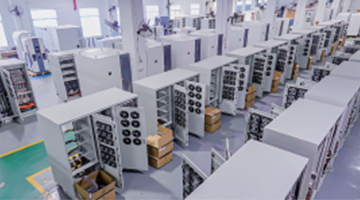

Standardizing electrical safety, physical scalability, and deployment economics across public and industrial properties.
Deploying charging systems at scale requires looking beyond individual devices to design unified electrical ecosystems. Commercial properties, multi-tenant residential complexes, and central logistical depots face strict electrical service limitations. To resolve these challenges, modern deployments incorporate dynamic load management (DLM) hubs. These hubs monitor real-time consumption limits, dynamically allocating available currents to prevent localized grid overloads and eliminate the need for costly substation upgrades.
Additionally, forward-thinking fleet operations are adopting integrated green microgrids. By pairing local commercial solar panel arrays with smart vehicle charging points and battery swapping cabinets, operators can capture and store clean energy. This stored energy is then dispatched back to delivery vehicles or local battery systems during periods of high demand. This dynamic cycling not only reduces operational costs but also provides backup emergency power during utility grid interruptions.
Compact, wall-mounted AC configurations optimized for tight parking spaces, integrating robust RFID activation or mobile app control interfaces to restrict charging access to authorized users.
Integrated swapping systems designed for rapid multi-battery charging, featuring active cell temperature monitoring and automatic aerosol fire-suppression systems within each storage cell.
Open OCPP integrations that support payment gateway linkages, customized electricity rate scheduling, and accurate corporate billing reporting for mixed-use parking lots.
Adapting hardware designs for different climates, utility networks, and municipal regulations.
Hardware performance changes significantly based on localized field environments. For example, chargers deployed in Northern European climates must operate reliably in sub-zero winter temperatures, which requires heavy-duty cable insulation and internal heating components to prevent components from freezing. Conversely, coastal installations in Southeast Asia require rugged IP65 enclosure ratings and anti-corrosion marine-grade coatings to protect internal electronics from high humidity and salt mist.
In municipal delivery depots across North America, chargers must comply with strict electrical safety codes, including national UL specifications and local city utility requirements. By designing hardware with flexible grid input configurations—such as 110V/220V single-phase and 380V/480V three-phase systems—our clients can scale their micro-mobility hubs globally without having to redesign their core infrastructure layouts.
Detailed answers to complex questions regarding manufacturing capabilities, compatibility, safety compliance, and OEM integration.
Our systems run advanced firmware safety loops that continuously check internal resistances, ground connections, and temperature limits. If a connected battery exhibits voltage drops or thermal anomalies, the charger instantly shuts off power to prevent cell damage or thermal hazards.
Our smart chargers are equipped with Wi-Fi, Ethernet, and optional 4G LTE communication modules. They fully support OCPP 1.6J and 2.0.1, making it easy to connect with third-party software for remote diagnostics, energy monitoring, and billing.
Yes. Our charging algorithms can be configured for diverse lithium-ion chemistries, including Lithium Iron Phosphate (LiFePO4) and Lithium Nickel Manganese Cobalt Oxide (NMC). We can pre-load custom charging profiles to match your specific fleet requirements.
Standard OEM branding (including custom logos and colored enclosures) typically takes 4 to 6 weeks. Complete custom ODM developments (such as specialized PCB layouts or enclosure designs) are delivered in 12 to 16 weeks, including full safety certification processes.
Our chargers feature built-in Dynamic Load Balancing (DLB). When multiple stations run simultaneously, they dynamically share power to protect the local building's main breaker from overloading while maintaining charging efficiency.
We provide a standard 2-year warranty on all commercial and residential charging hardware. Our dedicated technical support team offers 24/7 troubleshooting, remote firmware updates, and fast spare part replacement shipping worldwide.
Explore our robust chargers, built to handle heavy use in public areas, workplaces, and commercial fleet networks.
 Walnut Charger