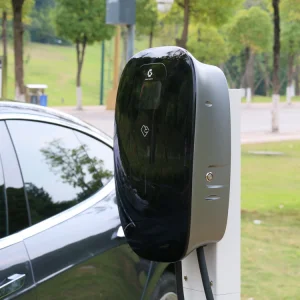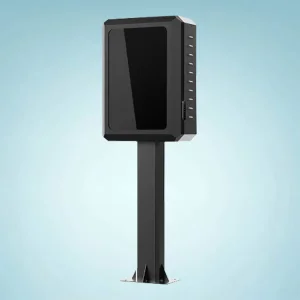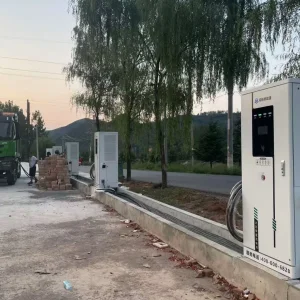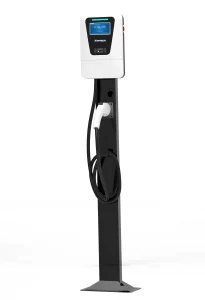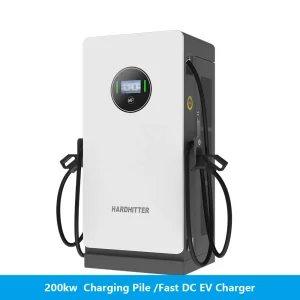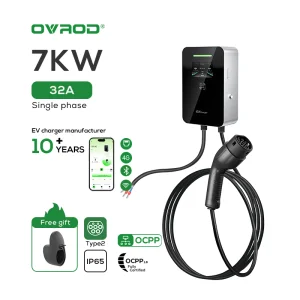
The global transition toward electrification demands more than simply consumer-grade infrastructure. For B2B procurement officers, distributors, and large-scale real estate developers, identifying premium China home EV charging kits factories represents a core operational objective. In evaluating a premium home EV charging kits factory, sophisticated buyers must shift from treating equipment as basic components to understanding it as part of an integrated home energy ecosystem.
Modern residential EVSE (Electric Vehicle Supply Equipment) units are transforming from passive electrical appliances into intelligent, bidirectional power nodes. This definitive industry analysis establishes the structural engineering, raw-material verification pathways, compliance matrices, and algorithmic governance capabilities that define leading manufacturing paradigms in China, positioning your infrastructure investments for maximum longevity and commercial viability.
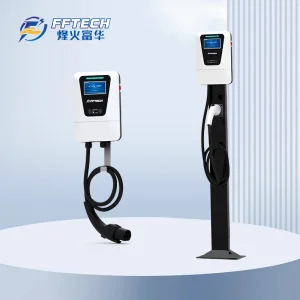
Anchoring this manufacturing standard is Foshan Walnut Charger Co., Ltd., a premier enterprise specializing in advanced AC EV charging solutions for both residential and commercial applications. With an engineering focus on wall-mounted and floor-mounted chargers, the company delivers a comprehensive range of smart charging products explicitly engineered to satisfy the rigorous requirements of homeowners, international commercial developments, and fleet management operators.
The corporation’s specialized product portfolio integrates high-efficiency AC chargers equipped with smart power management sub-systems, dual-port simultaneous charging architectures, and real-time analytical monitoring frameworks. By embedding cutting-edge topology and solid-state safety designs, Foshan Walnut Charger ensures optimized power delivery profiles, class-leading energy efficiency metrics, and streamlined, intuitive user interactions across all deployment topologies.
Dedicated to fostering sustainable cross-border mobility matrixes, Foshan Walnut Charger prioritizes the symbiotic integration of smart residential grids and commercial smart energy ecosystems. Their solutions feature comprehensive dynamic load balancing algorithms, secure remote operation over custom API and mobile client applications, and strict validation alignment with premium international performance mandates. This provides high-reliability, optimized fuel-to-electric migration vectors for all market-relevant electric vehicle architectures globally.

“Backed by elite R&D pipelines, microscopic quality control testing protocols, and a customer-centric global framework, Foshan Walnut Charger has cemented its stature as an authoritative provider within the EVSE ecosystem. The organization's foundational trajectory focuses on deploying innovative, safe, and thermodynamically optimized charging solutions that empower buyers to embrace clean mobility frameworks while lowering operating costs.”

The manufacturing capabilities of leading Chinese providers like Foshan Walnut Charger enable seamless interplay with complex downstream loads. Rather than merely channeling alternating current to the vehicle's onboard converter, these systems maintain active digital oversight of structural heat dissipation, domestic branch circuit utilization, and grid-wide supply variations. This exhaustive, system-wide management prevents grid overloads during peak usage times and maximizes component lifespan.
The next decade of residential charging equipment requires an evolutionary leap in energy architecture. Leading China home EV charging kits factories are actively moving past static energy models, implementing advanced technological roadmaps that position equipment as a crucial buffer between the macro grid and smart residences.
Integration of ISO 15118-20 standards enables Vehicle-to-Home (V2H) and Vehicle-to-Grid (V2G) multi-layered communications. Home charging kits no longer function strictly as load draw points; they serve as dynamic power gateways, utilizing the automotive high-voltage traction battery to support household operations during rolling blackouts or extreme demand pricing spikes.
Transitioning from traditional silicon MOSFETs to Gallium Nitride (GaN) and Silicon Carbide (SiC) power switching elements allows modern AC internal controllers to achieve exceptionally high thermal tolerances and structural reduction in board footprints. This lowers static system energy losses by up to 34% compared to legacy architectures.
Deploying microcontrollers running specialized edge learning algorithms enables the charger to autonomously map local consumption routines. By monitoring baseline home behavior patterns, the charging kit dynamically modifies power delivery profiles without needing consistent cloud connectivity, enhancing data security and operational stability.
Through these advanced technology platforms, modern charging equipment addresses major integration challenges, enabling high-amperage systems to balance cleanly with delicate home automations and local consumer electronics.
For municipal asset owners, massive multi-family housing complexes, and logistical enterprise fleets, residential charging solutions must scale efficiently into broader decentralized networks. Procurement mandates for an elite home EV charging kits factory require evaluating how hardware integrates into macro-level open networks.
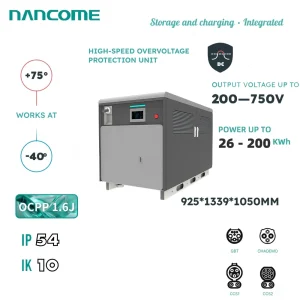
Modern localized installations utilize OCPP 1.6J and OCPP 2.0.1 JSON architectures to integrate seamlessly with global virtual power plants (VPPs). Through these standard secure structures, large-scale deployments of home wallboxes can participate in demand-response networks, shifting power allocations across thousands of endpoints within fractions of a second to prevent distribution transformer overloads.
By using real-time Phase Balancing methodologies, modern multi-tenant installations actively balance load profiles across distinct incoming electrical lines. This protects infrastructure stability and avoids the significant capital costs typically required for grid supply upgrades.
The clear structural advantage of a premier China home EV charging kits factory centers on advanced vertical production integration. Industrial automation under the Industry 4.0 framework ensures that every relay, motherboard assembly, and external enclosure achieves absolute parameter replication across large production runs.
From automated Manufacturing Execution Systems (MES) tracking to automated optical inspection (AOI) diagnostic matrices, modern component production eliminates human error profiles. Copper procurement networks and custom localized injection molding infrastructure reduce assembly cycle times, providing exceptional supply chain resiliency during raw material or transport fluctuations.
Surface Mount Technology lines feature strict atmospheric controls, robotic placement, and lead-free nitrogen reflow profiling to guarantee zero voids on multi-layer PCBA logic board configurations.
Every finalized charging controller undergoes continuous full-load electrical testing cycles within specialized thermal chambers, checking for component variance prior to international packaging and export.
Specialized diagnostic stations calibrate integrated Residual Current Devices (RCD), validating protection responses for both 30mA AC and 6mA DC faults to ensure complete operational safety.
International distribution partners face complex technical requirements across different jurisdictions. A leading China home EV charging kits factory must design its hardware to meet varied regulatory demands globally, ensuring clean, frictionless market entry.
From the strict UL 2594 testing standards of North American markets to the comprehensive CE and UKCA directives used across Europe, internal component design must align with specific performance criteria. This includes incorporating premium structural flame-retardant enclosures (UL94 V-0 metrics) and robust internal surge protection setups capable of handling voltage spikes up to 6kV.
Compliance Matrix Verification Note: Enterprise buyers must ensure suppliers provide valid, accredited test documentation for EN 61851-1 safety requirements, alongside certified EMC testing reports that prove protection against radio-frequency interference in residential environments.
Additionally, localized integration relies heavily on custom software access. Leading manufacturers offer comprehensive white-label SDK architectures, allowing global brands to seamlessly link imported charging kits into localized applications and regional payment systems.
 Walnut Charger