Proven fleet-scale AC stations engineered for Togo's urban zones, featuring 4G telemetry and native OCPP transaction billing integrations.
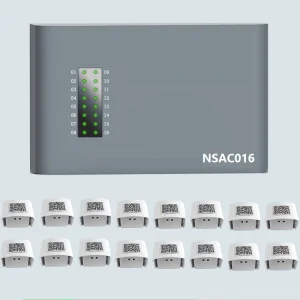
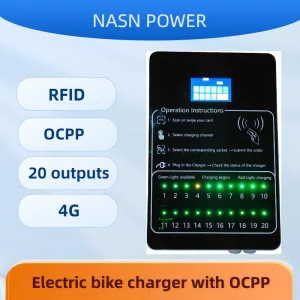
As West Africa transitions rapidly towards modern transportation paradigms, Togo stands out as a leading experimental hub for lightweight electric mobility, particularly in the urban sprawl of Lomé. Under the guidance of the Togolese Ministry of Digital Economy and Technological Innovation, the demand for networked EV infrastructure has surged. Heavy logistics corridors along the Port of Lomé and the rise of electric motorcycle taxi fleets ("Zémidjans") are creating a structural need for high-uptime charging systems.
The primary technological bottleneck in Togo's EV deployment is the integration of ruggedized AC charging stations with local mobile money billing platforms. Standard Western software suites fail to integrate with Togo's predominant digital payment operators, such as Togocom's TMoney and Moov Money. As a specialized manufacturer, we configure hardware controllers to support open-standard OCPP 1.6J/2.0.1 protocols, enabling developers and fleet managers to map charging events directly to local API endpoints.
Uptime in high-humidity coastal zones
Ready API backend connectivity

Custom-engineered charging platforms tailored to the environmental, grid, and payment characteristics of the West African market.
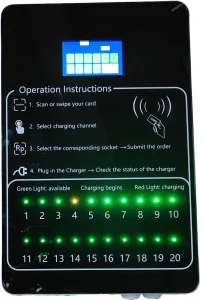
With the rapid adoption of electric two-wheelers in Lomé and Kara, localized charging clusters placed near transit points allow drivers to swap or charge batteries quickly. Our multi-port AC units utilize robust RFID-based billing systems, enabling taxi cooperatives to issue prepaid charging cards.
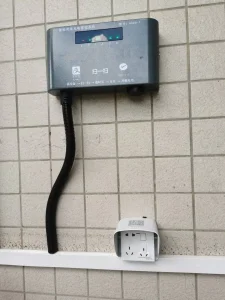
Shopping centers, business districts, and international agencies in Togo are deploying wall-mounted smart AC chargers as value-added amenities. Dynamic Load Management (DLM) ensures charging speeds auto-adjust, protecting building electrical architectures from spikes and brownouts.
Due to the rural electrification challenges outside Lomé, solar PV microgrids are growing. Our OCPP charging stations interface cleanly with battery storage systems, offering variable charging rates designed to use surplus daytime solar power and transition to grid power at night.
A deep look at how we design products to survive grid instability and extreme dust environments while maintaining strict IEC compliance.
Togo's electricity distribution network often experiences voltage fluctuations from 180V up to 260V. Our chargers are integrated with Class II Surge Protection Devices (SPD) and automated over/under-voltage release switches, preventing damage to the EV battery and the charger interior during lightning storms or grid switching.
The Harmattan wind carries highly abrasive red dust across Togo during dry seasons. Our cabinets feature double-compartment sealing rated up to IP65, with integrated heat exchangers rather than direct ventilation. This isolates sensitive electronics from dust accumulation and moisture.
To handle intermittent 4G cellular data coverage in rural Togo, our chargers feature a localized SQLite offline database cache. When cellular networks drop, drivers can still swipe registered RFID tags to start a charging cycle. The transaction details are cached locally and synced once connectivity resumes.
OCPP Protocol Support
Tropical Weather Rating
Operating Input Voltage
Emergency Shut-Off Speed
Providing certified, highly resilient charging systems designed for global scalability and robust commercial deployment.
Foshan Walnut Charger Co., Ltd. is a leading manufacturer specializing in advanced AC EV charging solutions for both residential and commercial applications. With a focus on wall-mounted and floor-mounted chargers, the company provides a comprehensive range of smart charging products designed to meet the diverse needs of homeowners, businesses, and fleet operators.
The company’s product portfolio includes high-efficiency AC chargers equipped with intelligent power management systems, dual-port charging options, and real-time monitoring capabilities. By integrating cutting-edge technology, Foshan Walnut Charger ensures optimal charging performance, energy efficiency, and user-friendly operation for every installation.
Committed to sustainable mobility, Foshan Walnut Charger emphasizes seamless integration of smart home and commercial energy systems. Its solutions support load balancing, remote management via mobile applications, and safety compliance with international standards, providing reliable and efficient charging for all electric vehicles.

With strong R&D capabilities, rigorous quality control, and a customer-centric approach, Foshan Walnut Charger has established itself as a trusted partner in the EV charging industry. The company’s mission is to deliver innovative, safe, and energy-efficient charging solutions that empower customers to embrace electric mobility while optimizing energy use and reducing costs.
By anchoring our R&D and assembly pipelines in Foshan, China's industrial manufacturing heartland, we provide unmatched cost-efficiency for large-scale infrastructure investments in Togo. Our raw material sourcing network allows us to bypass global component bottlenecks that typically delay Western manufacturers.
For Togolese municipal tenders and utility companies, this translates to guaranteed lead times and rigorous component tracing. Every batch of commercial AC chargers leaves our facility with comprehensive CE, RoHS, and IEC compliance certificates, ensuring quick customs clearance at West African entry ports.
Get Factory Direct QuotationSimplifying the path from import to commercial operation with direct engineering support and network certification.
Our units comply fully with CEET (Compagnie Énergie Électrique du Togo) grid-connection standards, including active harmonic suppression and rapid auto-disconnection protocols during low-frequency events.
Integrated 4G modems support local Togocom and Moov bands (specifically LTE Bands 1, 3, 7, 8, 20), ensuring stable connections to regional cellular backbones for billing validation.
We supply Togo operators with local diagnostic spares kits, containing replacement modular controller cards, RFID reader panels, and contactor blocks that local electricians can swap in under 10 minutes.
Providing expert answers to key integration, billing system setup, and environmental durability questions for Togo projects.
Our AC charging stations support the standardized OCPP 1.6J/2.0.1 protocol. When a user initiates a transaction (either by scanning a QR code or swiping an RFID card), the charger communicates this event to your centralized cloud OCPP backend. Your backend server acts as a bridge, querying local mobile payment APIs to verify the user has sufficient funds (TMoney/Moov Money). Once approved, the backend instructs the charger to release power. We provide complete OCPP API documentation to assist your local software development partners.
Yes. Lomé's coastal environment presents severe challenges due to high relative humidity and salt-laden air. Our outdoor floor-mounted and wall-mounted models feature cabinets coated with high-grade anti-corrosive powder paint and pass ASTM salt spray tests. Internal electronic components (PCB modules) receive double conformal coatings to isolate circuits from ambient air, preventing galvanic corrosion.
Our intelligent controllers monitor parameters in real-time. If grid voltage drops below 175V or surges above 265V, or if phase imbalance exceeds 10%, the charger automatically pauses the session. This safeguards both the station's contactor assembly and the vehicle's onboard converter. The system auto-recovers and resumes charging once grid parameters stabilize for a continuous 30-second window.
Absolutely. For private transport fleets or internal cargo companies, we program the stations with localized offline whitelist authorizations. This allows registered RFID badges to access power immediately without requiring a continuous internet connection. Cards can be configured, revoked, or updated via local USB diagnostic ports or remotely via the central OCPP backend.
Typical production time for volume orders (50-200 units) is 15 to 21 days. Ocean transit from Shenzhen/Guangzhou ports to the Port of Lomé is approximately 30 to 45 days. We provide complete logistical documentation including Certificates of Origin and CE conformity reports to simplify clearing procedures.
Explore our full range of AC & DC high-efficiency charging systems built to international safety standards.
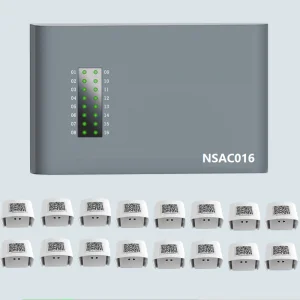
Partner with a direct-to-factory manufacturer of OCPP-compliant charging platforms. Get technical layout advice, firm lead times, and API integration guidelines today.
 Walnut Charger