Explore our hot-selling wallbox, dynamic load balancing, and AC/DC smart charging products engineered for global residential, commercial, and microgrid deployments.
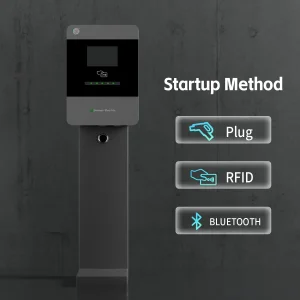
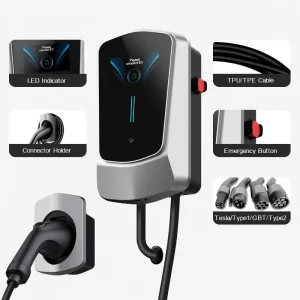
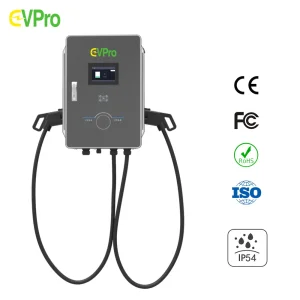
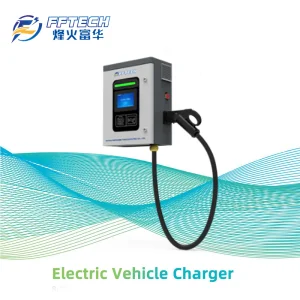
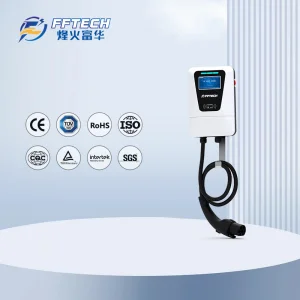
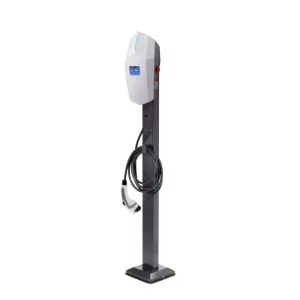
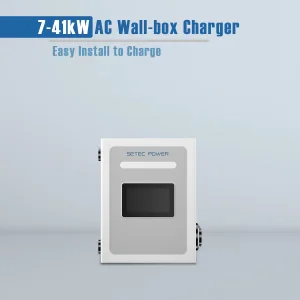
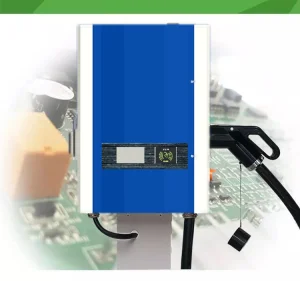
Foshan Walnut Charger Co., Ltd. is a leading manufacturer specializing in advanced AC EV charging solutions for both residential and commercial applications. With a focus on wall-mounted and floor-mounted chargers, the company provides a comprehensive range of smart charging products designed to meet the diverse needs of homeowners, businesses, and fleet operators.
Our product portfolio includes high-efficiency AC chargers equipped with intelligent power management systems, dual-port charging options, and real-time monitoring capabilities. By integrating cutting-edge technology, Foshan Walnut Charger ensures optimal charging performance, energy efficiency, and user-friendly operation for every installation.
Committed to sustainable mobility, Foshan Walnut Charger emphasizes seamless integration of smart home and commercial energy systems. Its solutions support load balancing, remote management via mobile applications, and safety compliance with international standards, providing reliable and efficient charging for all electric vehicles.


With strong R&D capabilities, rigorous quality control, and a customer-centric approach, Foshan Walnut Charger has established itself as a trusted partner in the EV charging industry. Our mission is to deliver innovative, safe, and energy-efficient charging solutions that empower customers to embrace electric mobility while optimizing energy use and reducing costs.
Our engineering division leverages state-of-the-art simulation software and hardware-in-the-loop (HIL) testing rigs to ensure that every charger rolling off our line meets the strict environmental requirements of modern microgrids. Our focus extends past raw energy delivery to structural durability, thermal dissipation, and long-term operating efficiency.
Validated manufacturing precision combined with top-tier R&D capabilities to meet world-class compliance.
As electric vehicle adoption surges, the role of the EV battery is undergoing a paradigm shift. No longer just a sink for electrical energy, the modern EV is an active Distributed Energy Resource (DER). Bidirectional EV chargers sit at the epicenter of this shift, facilitating two-way power transmission: charging the vehicle (Grid-to-Vehicle, G2V) and exporting energy back to the home (Vehicle-to-Home, V2H) or the grid (Vehicle-to-Grid, V2G).
Enables EV batteries to act as residential back-up power supply during blackouts. By linking the home's distribution panel to our smart bidirectional charger, users can prioritize solar self-consumption and lower peak utility fees.
Enables utility-scale grid balancing by aggregating parked EVs to feed power back into regional grids. This provides peak shaving and frequency regulation services, turning private fleets into decentralized power plants.
Our systems incorporate the latest communications frameworks, supporting secure Plug & Charge functionality and encrypted vehicle-to-charger-to-grid handshakes for complete grid stability compliance.
The transition from unidirectional (G2V) charging to highly networked, bidirectional systems is occurring rapidly. Walnut Charger is actively leading this engineering transformation. Below is our strategic focus roadmap aimed at meeting future infrastructure requirements:
Transitioning from traditional IGBTs to Wide Bandgap Silicon Carbide (SiC) semiconductor technologies. SiC lowers switching losses, reduces component size by 35%, and increases round-trip conversion efficiency to over 97% during vehicle discharge phases.
Integrating localized solar PV arrays, stationary BESS (Battery Energy Storage Systems), and bidirectional EV chargers under a centralized energy broker. This utilizes AI prediction algorithms to dynamic shift charging based on solar peaks.
Implementing native ISO 15118-20 (Bidirectional Power Transfer) profiles, enabling seamless AC/DC vehicle-to-grid communications across all international EV manufacturers (CCS, NACS, and GBT interfaces).
Operating a world-class manufacturing complex in Foshan, China, Walnut Charger integrates advanced robotics, digital twins, and Lean assembly systems to address the primary concern of global procurement managers: Supply Chain Risk.
Our facility houses high-speed surface-mount technology (SMT) lines that construct the critical logic boards and control cards in-house. To ensure defect-free shipments, every power module undergoes Automated Testing Equipment (ATE) validation, subjecting chargers to real-world grid anomalies and high-temperature environmental simulation chambers before packaging.
By positioning our manufacturing assets in the Guangdong-Hong Kong-Macao Greater Bay Area (GBA), we maintain direct partnerships with key component foundries (semiconductors, copper relays, magnetic components). This integration minimizes lead times and shields our supply chains from global material shortages.
Integrating EV charging infrastructure requires specialized configurations depending on the end-use ecosystem.
Dynamic Load Balancing (DLB) ensures that multi-family apartment buildings can deploy multiple EV charging units without exceeding the facility’s mains rating, optimizing smart power allocation.
Our solutions feature dual-port outputs and support Ethernet/4G connectivity, allowing logistics operators to track fleet state-of-charge (SoC) and plan charging cycles to match off-peak hours.
Leveraging OCPP 1.6J/2.0.1, operators can connect charging infrastructure directly to external billing software, monitor system health remotely, and perform over-the-air (OTA) diagnostic updates.
Walnut Charger simplifies global system deployments by engineering our products for direct compliance with regional safety codes, grid connection standards, and wireless protocols.
Our products are certified to meet major international regulatory frameworks, including:
Our local partnership networks across Europe and North America offer field-level configuration, hardware replacement, and remote software optimization. We provide localized integration support for developers deploying chargers into larger energy management systems (EMS).
Furthermore, our SDK/API packages allow developers to customize and control charging workflows, ensuring compatibility with virtual power plants (VPPs) and enterprise utility networks.
We work with global automotive brands, grid operators, and distributors to manufacture white-label charging solutions. Our factory configurations adapt to specific regional needs:
Custom colors, branding options, and weather-resistant wall mount or floor stands.
Customized charging algorithms, display languages, and communication parameters.
Varying lengths up to 10m, with Type 1, Type 2, NACS, or GB/T standard configurations.
Proprietary API integrations, customized Modbus RTU/TCP settings, or OCPP configurations.
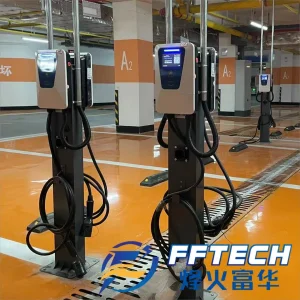
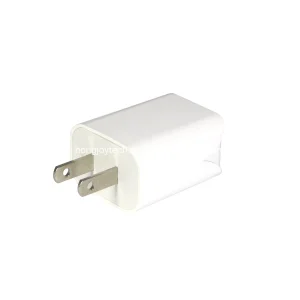
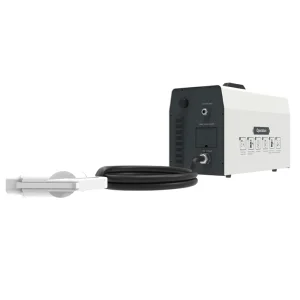
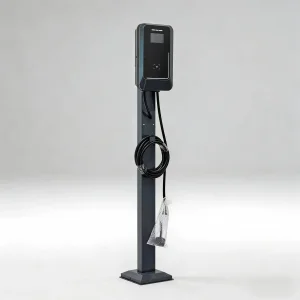
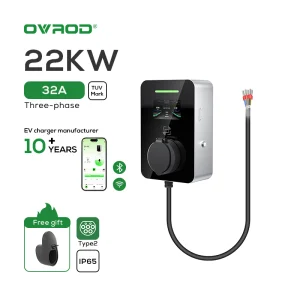
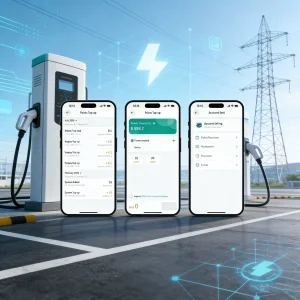
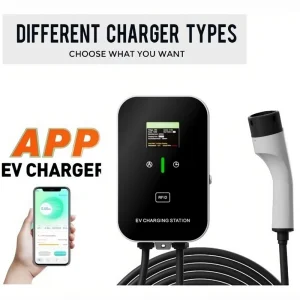
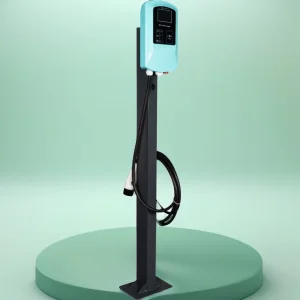
Browse our advanced portable fast chargers, smart adapters, app-controlled charging stations, and commercial solutions designed for high-uptime environments.
Deep-dive analysis answering common design, safety, and integration questions for bidirectional charging systems.
 Walnut Charger