High-efficiency, network-certified smart AC chargers designed for fleets, retail sites, workplaces, and public utility infrastructures.
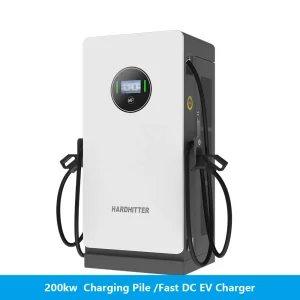
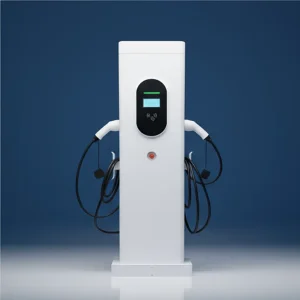
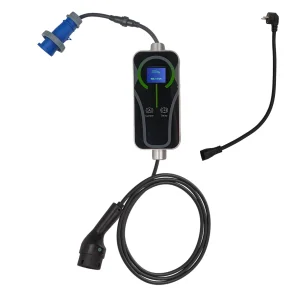
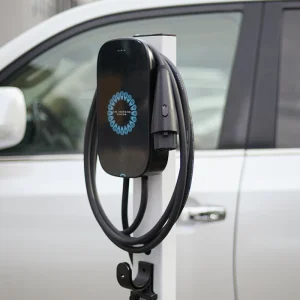
Mapping the transition from simple charging points to highly integrated, dynamic grid components that define smart cities.
The global push towards net-zero carbon goals has accelerated the demand for high-capacity, grid-resilient commercial charging infrastructure. Hardware alone is no longer the metric of success. The contemporary EV charging landscape requires hardware-to-software integration, offering dynamic control, smart load scheduling, and localized compliance compatibility.
Procurement directors and municipal planners face the critical challenge of selecting manufacturing partners who not only scale production but also manage complex grid safety standards, such as IEC 61851, UL 2594, and interoperable OCPP 1.6/2.0.1 protocols. Modern infrastructure is characterized by its capacity to adapt dynamically to localized grid capacities without triggering blackouts or causing degradation in equipment lifespan.
Decoupling the structural cost advantages, vertical component integration, and rapid deployment cycles of Chinese EVSE manufacturers.
By owning key sectors of the industrial supply chain—from copper refining to electronic components like IGBT switchgears and smart meter controls—factories streamline production with minimal material waste and zero delay cycles.
R&D cycles in Chinese manufacturing hubs run up to 4x faster than European counterparts, enabling rapid firmware configuration, modular layout changes, and swift implementation of local grid code amendments.
Leveraging scale allows factories to maintain top-tier laboratory verification testing (e.g., TUV Rheinland, DEKRA) while delivering highly competitive unit costs for tier-1 fleet management applications.
Integrating deep electrical expertise with IoT management systems to serve global commercial charging operators.
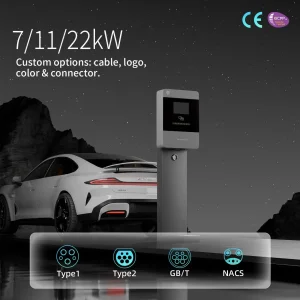
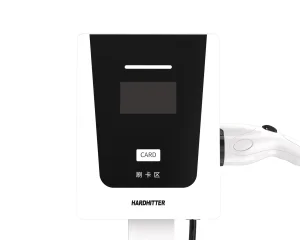
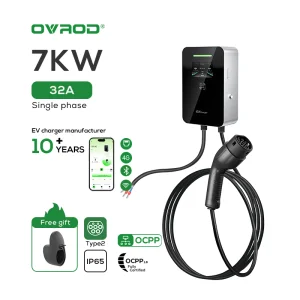
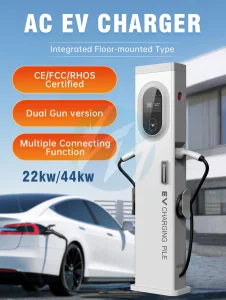
Foshan Walnut Charger Co., Ltd. is a leading manufacturer specializing in advanced AC EV charging solutions for both residential and commercial applications. With a focus on wall-mounted and floor-mounted chargers, the company provides a comprehensive range of smart charging products designed to meet the diverse needs of homeowners, businesses, and fleet operators.
The company’s product portfolio includes high-efficiency AC chargers equipped with intelligent power management systems, dual-port charging options, and real-time monitoring capabilities. By integrating cutting-edge technology, Foshan Walnut Charger ensures optimal charging performance, energy efficiency, and user-friendly operation for every installation.
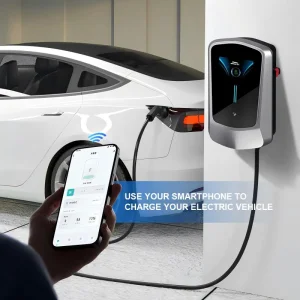
Committed to sustainable mobility, Foshan Walnut Charger emphasizes seamless integration of smart home and commercial energy systems. Its solutions support load balancing, remote management via mobile applications, and safety compliance with international standards, providing reliable and efficient charging for all electric vehicles.
With strong R&D capabilities, rigorous quality control, and a customer-centric approach, Foshan Walnut Charger has established itself as a trusted partner in the EV charging industry. The company’s mission is to deliver innovative, safe, and energy-efficient charging solutions that empower customers to embrace electric mobility while optimizing energy use and reducing costs.


Foshan Walnut Charger Co., Ltd. continuously invests in rigorous industrial testing procedures. Every unit undergoes automated aging validation, insulation resistivity assessment, high-voltage breakdown protection sweeps, and physical IP rating water-ingress validation.
Their engineering focus centers on localized grid challenges, optimizing wallboxes and floor-standing stations to handle voltage fluctuations, low-noise requirements, and temperature extremes. By implementing dual-compartment designs, their internal electronic parts remain fully protected from dust, humidity, and heat, ensuring a long operational lifetime.
A comparative overview of the critical regulatory requirements, connector designs, and protocol setups across global markets.
Deploying charging stations globally is not a one-size-fits-all endeavor. Different regions present distinct electrical topologies, plug configurations, and regulatory protocols. Understanding these requirements is essential to prevent costly retrofitting, legal liability, and network compatibility issues.
| Region | Primary Connectors | Grid Standards & Electrical Phase | Mandatory Certifications | Key Software & Protocol Expectations |
|---|---|---|---|---|
| Europe (EEA) | Type 2 (IEC 62196), CCS2 | 3-Phase 400V AC / TN-S & TN-C-S Grids | CE, RoHS, LVD, EMCD, MID (Metering) | OCPP 1.6/2.0.1, Dynamic Phase Switching |
| North America | NACS (SAE J3400), Type 1 (J1772) | Single-Phase 120V/248V, Split-Phase | UL 2594, FCC Part 15, Energy Star | OCPP 1.6J, CTEP (California Weights & Measures) |
| Asia Pacific | GB/T, Type 2, CHAdeMO | Single/3-Phase variant depending on country | CQC (China), PSE (Japan), KC (Korea) | OCPP 1.6, Customized Smart Fleet Platforms |
| Latin America | Type 2, CCS2, GB/T (Mixed) | Standard AC configurations | Variable, heavily reliant on CE/UL alignment | OCPP 1.6, Cloud-based billing integration |
Analyzing the production scope, key technological advantages, and industry focus of leading commercial EVSE manufacturers.
| Supplier Name | Core Focus Areas | Key Hardware/Software Features | OEM/ODM Capability | Key Target Markets |
|---|---|---|---|---|
| 1. Foshan Walnut Charger Co., Ltd. | Smart AC Commercial & Residential Wallboxes/Piles | Dynamic Load Balancing, Multi-port configuration, OCPP 1.6, remote app management | High customization capacity, quick-turn prototyping | Europe, APAC, Latin America |
| 2. ABB E-mobility | Heavy DC Charging Systems, Highway Corridor Networks | Liquid-cooled megawatt stations, massive software network integrations | Limited (primarily proprietary branding) | Global coverage |
| 3. Siemens eMobility | Integrated Industrial Smart Grid EVSE Systems | Direct medium voltage integration, building automation system pairing | Low (focuses on large project contracts) | Europe, North America |
| 4. Kempower | Modular, Dynamic Power Distribution DC Chargers | Satellite architecture, dynamically sharing power units | Custom visual wraps and minor firmwares | Nordics, Europe, North America |
| 5. Delta Electronics | Power Conversion, Bidirectional DC, High-Efficiency AC | Highly efficient power conversion modules, V2G (Vehicle-to-Grid) integration | Moderate (OEM production for third-party networks) | Global, industrial sectors |
| 6. Alfen | Substation-integrated Grid Storage & EV Charging | Smart grid interfaces, localized battery energy storage systems (BESS) integration | Low | Europe |
| 7. Tritium | Liquid-Cooled Outdoor DC Fast Chargers | Compact physical footprints, fan-free designs for harsh environments | Low | Australia, Europe, USA |
| 8. EVBox | Flexible Public & Workplace AC Networks | Modular base plates for rapid unit replacement, autostart configurations | Moderate | Europe, North America |
| 9. Sinexcel | High Power DC Module Customization | Modular power blocks, high power density matrix control | High (substantial white-label manufacturing) | Global, EV network owners |
| 10. Wallbox Chargers | Workplace Charging, Bi-directional Domestic/Commercial | Voice assistant integrations, compact design languages | Low | Europe, USA |
Targeted infrastructure layouts engineered for specific deployment sectors and grid constraints.
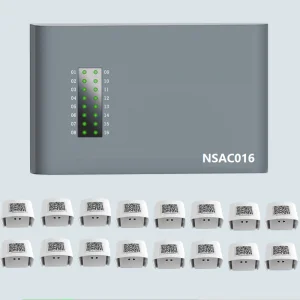
Workplace and multi-family residential projects face limited grid capacity constraints. Integrating smart AC chargers equipped with Dynamic Load Balancing (DLB) allows multiple vehicles to charge safely. These systems monitor real-time building usage and allocate remaining capacity across all active plugs, preventing peak-demand grid overcharges.
Logistics operations require highly predictable charging cycles. With OCPP-connected dual-port chargers, managers track usage patterns and schedule charging to coincide with off-peak utility pricing. High-power floor-standing systems allow fleet cabs and light commercial trucks to complete rapid turnarounds overnight.
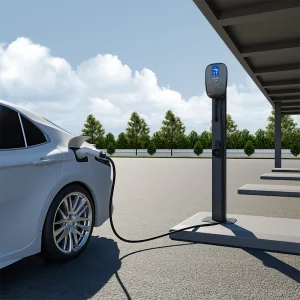
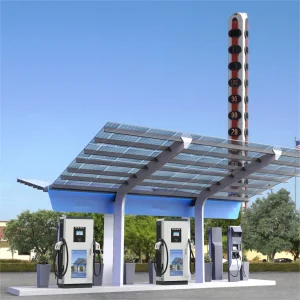
For retail spaces and open public parking, dynamic interfaces like RFID, mobile applications, and integration with local payment gateways are essential. High-protection IP65 hardware designs ensure consistent operation in open outdoor areas exposed to rain, wind, and broad temperature ranges.
Exploring the technological breakthroughs that will define the commercial EV charging infrastructure over the next decade.
1. Bi-Directional Charging & V2X Integration: Future installations will not only pull power from the grid but feed power back when energy demand peaks. This allows fleet depots to function as distributed energy storage sites, creating new revenue models through virtual power plants (VPPs).
2. Smart Auto-Authentication (ISO 15118 Plug & Charge): Transitioning away from RFID cards and mobile applications, ISO 15118 establishes a direct digital link between the vehicle and the charging station. Payment, authorization, and billing resolve automatically upon connector insertion, creating a secure experience for the end user.
3. Adaptive Phase Switching: During slow charging or low-current phases, smart AC chargers dynamically swap between 3-phase and single-phase charging modes. This ensures highly efficient operations and helps prevent battery degradation caused by low-current trickle periods.
Answers to technical and operational questions frequently asked by project developers and procurement engineers.
High-power modular EVSE, high-efficiency adapters, and smart communication gateways built for industrial scale.
 Walnut Charger