Top Trusted EV Charger Networks Manufacturers & Exporters

Powering Global Electric Mobility with High-Performance, Intelligent AC & DC Infrastructure Solutions Certified to International Standards

Featured E-Mobility Core Charging Systems

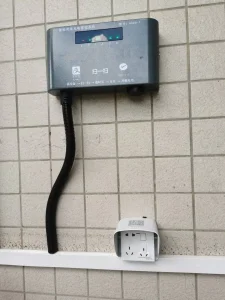
E-Scooter or E-Motorcycle Charger Station

E-Scooter or E-Motorcycle Charger Station for E-Bike Electric Bike and Bicycle

View Specifications
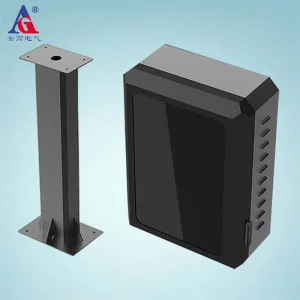
Outdoor Electric Vehicle Charger Protection Shell

Outdoor Electric Vehicle Charger Unit Protection New Energy Charging Pile Shell

View Specifications
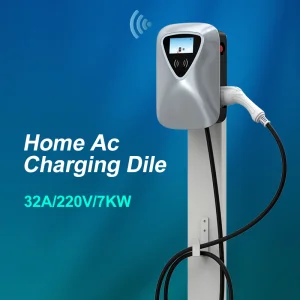
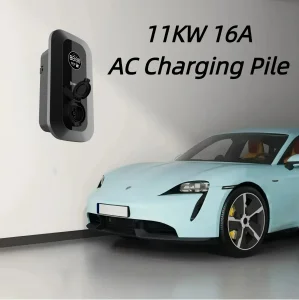
Guhe Wall Mounted 16A AC EV Charger 11kw

Guhe Wall Mounted 16A AC APP Control Car Charger Station Level 2 EV Charger 11kw Home EV Charger

View Specifications
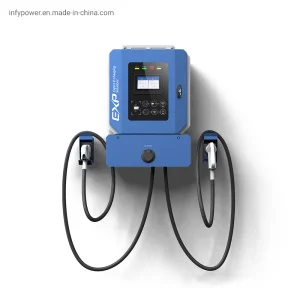
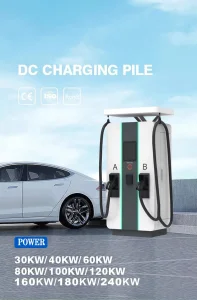
180kw China Dual Gun CCS2 DC Fast Charging Station

180kw China Hotsale Dual Gun Outdoor CCS2 Floor Mounted DC Fast Solar EV Charging Station

View Specifications
High-Power EV Charger 7kw 11kw 22kw

High-Power 7kw/11kw/22kw EV Charger for Type 1 & Type 2

View Specifications
40kw Commercial EV Charger for Fleet

40kw Commercial Electric Vehicle Charger for EV Fleet

View Specifications
Smart APP Control Wallbox EV AC Charger

Smart APP Control Wallbox EV AC Charger for Commercial Use with IP65 Ik10 Waterproof

View Specifications
Residential Load Balance Solution OEM Level 2 EV Charger

Residential Load Balance Solution OEM Level 2 EV Charger 22kw AC

View Specifications
Market Intelligence Report

EV Charging Infrastructure: Global Development Trends

Analyzing the technological shifts, protocol standards, and grid-integration architectures driving the future of international clean energy distribution.

The global electric vehicle charging landscape is experiencing a paradigm shift from simple electricity supply points to highly integrated Smart Grid Nodes. As EV adoption increases exponentially, manufacturers and exporters face rising technical benchmarks. Legacy networks are evolving to support advanced communication protocols like OCPP 1.6J and 2.0.1 (Open Charge Point Protocol), enabling seamless, remote hardware orchestration across diverse cloud backend providers.

Simultaneously, the integration of ISO 15118 (Plug & Charge) standardizes secure communication between the vehicle and charging station. This removes payment barriers, automating authentication and billing via the charging cable itself. In this competitive landscape, manufacturers must transition from standard mechanical assembly to system-level integration. Innovations such as V2G (Vehicle-to-Grid) bidirectional energy transfer, dynamic local phase-balancing, and ultra-high-density power modules are now industry baselines rather than premium additions.

From a global supply chain perspective, successful exporters must address diverse grid architectures. For example, North America uses 240V split-phase systems (Type 1 / SAE J1772), while Europe relies on 400V three-phase networks (Type 2 / IEC 62196). Mitigating grid harmonics and ensuring high power factor values (>0.99) are key requirements for enterprise-grade deployments.

Foshan Walnut Charger Corporate Operations and Charging Hardware
98.5%
Power Module Efficiency
OCPP
1.6J / 2.0.1 Compliant
IP65
Weatherproof Rating
Zero
Orphaned Network Downtime
Enterprise Sourcing Strategies

Navigating Procurement Barriers for Global EVSE Projects

Essential evaluation criteria for CPOs, engineering firms, fleet operators, and industrial distributors sourcing high-reliability charging infrastructure.

Grid Compatibility & Safety

Solutions must include integrated protection: Type A 30mA AC + DC 6mA RCD leakage protection, overcurrent, over/under-voltage, phase loss, and high-energy surge suppression (SPD Type II) as standard safety measures.

Total Cost of Ownership (TCO)

Beyond the initial unit cost, procurement agents must evaluate installation costs, remote firmware update capabilities (OTA), and field-serviceability. Modular power modules minimize mean time to repair (MTTR).

Future-Proof Interoperability

Hardware must run verified, open-standards firmware. This allows Charge Point Operators (CPOs) to swap backend systems without replacing hardware, avoiding vendor lock-in.

For B2B procurement managers, sourcing charging hardware involves balancing compliance standards and deployment environments. Commercial installations require high durability (IK10 impact resistance) and robust weatherproofing (IP55/IP65 ingress protection). When deploying in extreme climates, such as Nordic winter conditions or Middle Eastern desert heat, internal components must feature active thermal cooling and heating pathways. This prevents thermal derating, ensuring the system delivers full output power continuously at high ambient temperatures.

Manufacturer Focus

Foshan Walnut Charger Co., Ltd.: Engineering Next-Gen EVSE

Foshan Walnut Charger Co., Ltd. is a manufacturer specializing in advanced AC EV charging solutions for both residential and commercial applications.

Production line validation and automated quality control testing at Walnut Charger Factory

Foshan Walnut Charger Co., Ltd. is a leading manufacturer specializing in advanced AC EV charging solutions for both residential and commercial applications. With a focus on wall-mounted and floor-mounted chargers, the company provides a comprehensive range of smart charging products designed to meet the diverse needs of homeowners, businesses, and fleet operators.

The company’s product portfolio includes high-efficiency AC chargers equipped with intelligent power management systems, dual-port charging options, and real-time monitoring capabilities. By integrating cutting-edge technology, Foshan Walnut Charger ensures optimal charging performance, energy efficiency, and user-friendly operation for every installation.

Committed to sustainable mobility, Foshan Walnut Charger emphasizes seamless integration of smart home and commercial energy systems. Its solutions support load balancing, remote management via mobile applications, and safety compliance with international standards, providing reliable and efficient charging for all electric vehicles.

With strong R&D capabilities, rigorous quality control, and a customer-centric approach, Foshan Walnut Charger has established itself as a trusted partner in the EV charging industry. The company’s mission is to deliver innovative, safe, and energy-efficient charging solutions that empower customers to embrace electric mobility while optimizing energy use and reducing costs.

Integrated Architectures

Macro-Level Grid Integration & Energy Orchestration

How smart EV charging infrastructure balances grid demand, leverages local photovoltaic generation, and optimizes energy storage.

Dynamic Load Management (DLM) & Peak Shaving

At a macro level, deploying high-density charging networks can challenge local electrical distribution grids. Installing multiple 22kW AC chargers or 180kW DC fast-charging stations without management can overload local substations.

To address this, modern EV infrastructure uses Dynamic Load Management (DLM). By monitoring real-time power consumption at the building's main switchboard, charging networks dynamically adjust their output currents. This keeps overall building demand within safe operating limits, avoiding peak demand surcharges and high infrastructure upgrades.

Solar-to-EV Coupling (PV Charging Ecosystems)

Integrating solar photovoltaics (PV) and battery energy storage systems (BESS) directly with EV charging infrastructure is key for commercial sustainability. Dynamic solar-tracking algorithms route excess solar generation straight to connected EVs instead of exporting it back to the grid at lower tariffs. This maximizes self-consumption rates and helps businesses meet zero-carbon targets.

Key Architectural Integration Features:

  • Local Phase Balancing: Evaluates three-phase imbalances dynamically and switches charging currents to the phase with the most headroom, preventing localized phase degradation.
  • API-Driven Smart Grid API: Open API integration with municipal Grid Operators to allow automatic curtailment during demand response calls.
  • Multi-Tenant Hierarchical Prioritization: Allocates faster charging speeds to fleet vehicles with upcoming departures, while lower priority vehicles charge overnight.
  • Integrated Billing Systems: Supports major standard protocols like Adyen, Stripe, and direct RFID card reader integrations for commercial monitzation.
Technical Roadmap

Technological Roadmap & Future Outlook

Where EVSE technology is headed: from Megawatt Charging Systems (MCS) to AI-enabled predictive maintenance.

Next-Gen Bidirectional V2X

The future moves past standard unidirectional charging. Vehicle-to-Home (V2H) and Vehicle-to-Grid (V2G) standardizations based on ISO 15118-20 enable EV batteries to feed power back during peak demand, turning EVs into distributed grid assets.

Predictive Maintenance AI

IoT telemetry continuously monitors power dissipation curves, contactor temperatures, and relay mechanical wear. AI-based anomaly detection identifies potential hardware degradation before a failure occurs, reducing downtime.

High-Power MCS

While AC solutions dominate residential and workspace settings, long-haul transport requires Megawatt Charging Systems (MCS). Exporters are designing platforms to support liquid-cooled connectors running up to 1250V and 3000A.

Technical FAQ

Expert Q&A: Solving EVSE Technical Engineering Challenges

Answers to key technical, compliance, and integration questions for commercial and industrial EVSE deployments.
Q1: How does OCPP 1.6J differ from standard protocols, and why is it essential for export? +
A: OCPP 1.6J (JSON format over WebSockets) enables bidirectional communication between EV chargers and Central Management Systems (CMS). Unlike proprietary systems, OCPP allows charge point operators to monitor status, start or stop transactions, update firmware via OTA, and adjust current limits remotely. This open standard is required for most municipal and commercial tenders worldwide, ensuring long-term software flexibility.
Q2: What is the purpose of the 6mA DC leakage protection inside AC chargers? +
A: Standard Type A RCDs only detect AC leakage. EVs can generate DC residual current faults from their onboard chargers. If DC leakage exceeds 6mA, it can saturate the Type A RCD magnetic core, preventing it from tripping. Integrating a dedicated 6mA DC residual detection device (RDC-DD) allows installers to use a standard, cost-effective Type A breaker at the distribution board, reducing installation costs while maintaining compliance with IEC 61851-1 safety standards.
Q3: How do environmental conditions (e.g., IP65 and IK10) affect charger durability? +
A: IP65 indicates high dust-tight performance and resistance to low-pressure water jets from any direction. IK10 is the highest mechanical impact resistance rating under international standards, ensuring the enclosure can withstand up to 20 joules of impact energy. This is crucial for public and commercial parking lots to protect hardware against vandalism, vehicular bumps, and harsh weather.
Q4: What is the significance of the Type 2 (IEC 62196) plug standard compared to Type 1? +
A: Type 1 (SAE J1772) is a single-phase connector common in North America and Japan, limited to single-phase charging up to 7.4kW. Type 2 (IEC 62196) supports three-phase power up to 22kW, which is standard across European and global grids. This three-phase capability allows for faster AC charging times for compatible onboard vehicle systems.
Q5: Why is Dynamic Load Balancing (DLB) crucial for multi-family residential projects? +
A: Residential buildings often have limited electrical supply capacity. When multiple tenants charge their EVs simultaneously, the combined demand can exceed the building's main breaker limit. Dynamic Load Balancing (DLB) continuously measures building load and adjusts current limits to connected chargers. This avoids building power failures, protects local grids, and removes the need for expensive utility transformer upgrades.
Q6: How do RFID systems improve secure commercial charging? +
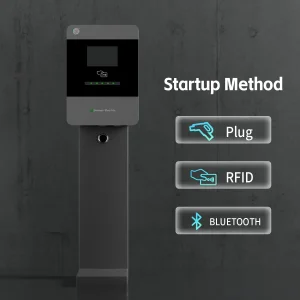
A: RFID (Radio Frequency Identification) cards allow operators to control access and track usage. Users tap their card to authenticate before charging. This is ideal for commercial parking, workplaces, and multi-tenant residential settings, helping operators track individual energy consumption and bill users accurately.
Q7: What is the benefit of a 180kw CCS2 DC fast charger over typical AC wallboxes? +
A: AC wallboxes rely on the vehicle's onboard converter, which typically limits charging to 7.4kW–22kW. DC fast chargers bypass the onboard charger and feed electricity directly to the vehicle's high-voltage battery. A 180kW CCS2 DC fast charging station can charge a typical EV battery from 10% to 80% in under 30 minutes, making it suitable for highway corridors, logistics hubs, and fleet depots.

Advanced Commercial & Residential Exporter Range

Promotional Dual-Port RFID AC EV Charger

Promotional Dual-Port RFID AC EV Charger for Commercial Use

View Specifications
Ovord APP WiFi OCPP 7 Kw AC Fast Wallbox

Ovord APP WiFi Ocpp 7 Kw AC Fast Wallbox Level 2 Wall Box Car Charging Station Type 2 Home 7kw EV Charger for Byd Shark

View Specifications
DC Fast 30kw Wall Mount EV Charger

DC Fast 30kw Wall Mount EV Charger for Residential and Parking Area AC 22kw Option Electric Vehicle Recharging Station Point

View Specifications
Portable Wallbox EV Charger 7kw 11kw 22kw

Hot-Selling Portable Wallbox Level2 Byd 7kw 22kw 11kw Type2 32A/16A Single/Three-Phase Evs Charging Station Electric Car AC EV Charger with 5m Cable

View Specifications
Advanced Wall-Mounted EV Charging Solution

Advanced Wall-Mounted EV Charging Solution Supporting Eco-Friendly and Rapid Charging for Residential 7kw AC Systems

View Specifications
7kw Home Use AC EV Charger

7kw Home Use AC EV Charger Wall Mounted Type2 Type1 Guns IP54 CE RoHS TUV Level 2 Smart Car Charging Station Fast Charger

View Specifications
Weatherproof 11kw AC EV Charger

Weatherproof 11kw AC EV Charger for Outdoor Parking with Surge Protection

View Specifications
High-Power Fast EV Charging Solutions 30kw-240kw

High-Power Solutions for Fast EV Charging DC 30kw-240kw

View Specifications