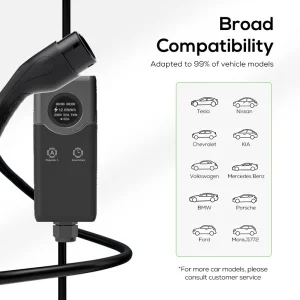
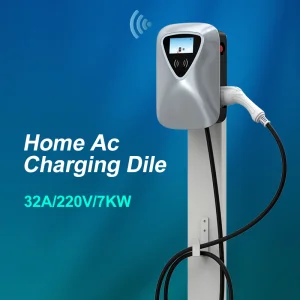
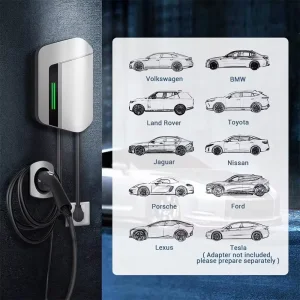
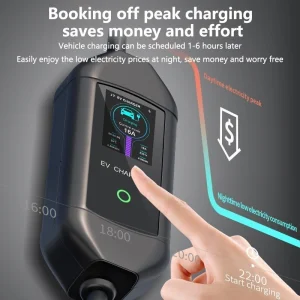
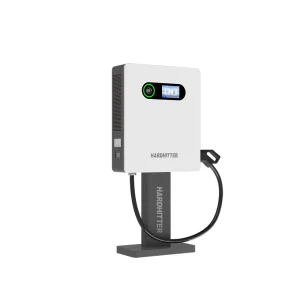
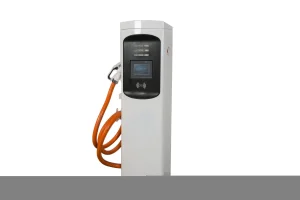
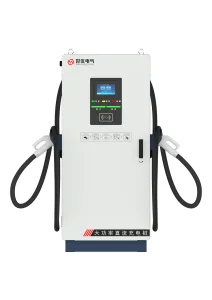
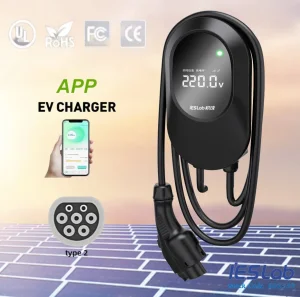
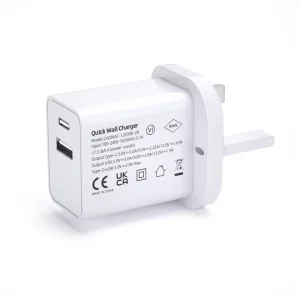
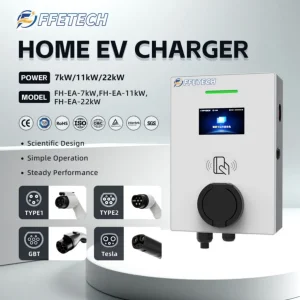
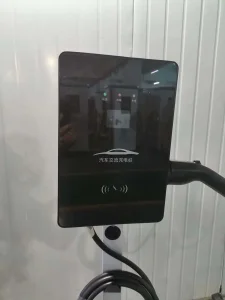
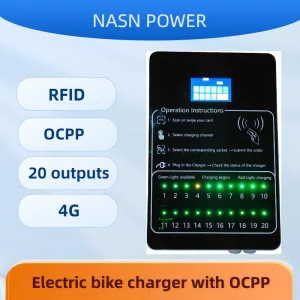
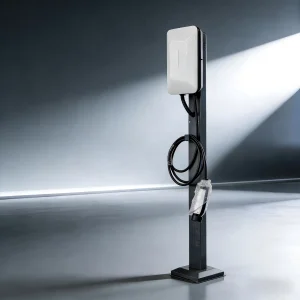
Explore our core product lines, featuring smart portable units, integrated wallboxes, and robust solar-balanced charging stations.
Partnering with global industries to deliver standardized, smart, and safe electric vehicle power supplies.
Foshan Walnut Charger Co., Ltd. is a leading manufacturer specializing in advanced AC EV charging solutions for both residential and commercial applications. With a focus on wall-mounted and floor-mounted chargers, the company provides a comprehensive range of smart charging products designed to meet the diverse needs of homeowners, businesses, and fleet operators.
The company’s product portfolio includes high-efficiency AC chargers equipped with intelligent power management systems, dual-port charging options, and real-time monitoring capabilities. By integrating cutting-edge technology, Foshan Walnut Charger ensures optimal charging performance, energy efficiency, and user-friendly operation for every installation.
Committed to sustainable mobility, Foshan Walnut Charger emphasizes seamless integration of smart home and commercial energy systems. Its solutions support load balancing, remote management via mobile applications, and safety compliance with international standards, providing reliable and efficient charging for all electric vehicles.
With strong R&D capabilities, rigorous quality control, and a customer-centric approach, Foshan Walnut Charger has established itself as a trusted partner in the EV charging industry. The company’s mission is to deliver innovative, safe, and energy-efficient charging solutions that empower customers to embrace electric mobility while optimizing energy use and reducing costs.

A comprehensive analysis of deployment challenges, infrastructure requirements, and manufacturing supply chains.
As logistics complexes, heavy-duty transit networks, and municipal service units undergo historical electrification upgrades, global stakeholders are discovering that standard charging outlets are entirely insufficient. Commercial fleets require ruggedized, intelligent, and highly scalable OEM charging networks that can minimize vehicle downtime and mitigate grid overloads.
The global shift toward zero-emission transport is no longer just a regulatory compliance check; it is an operational imperative. From North America to Continental Europe and the Asia-Pacific region, fleet operators are phasing out internal combustion engine (ICE) utility vans, delivery trucks, and transit vehicles in favor of battery electric vehicles (BEVs). According to recent industry telemetry, heavy-duty and light-duty fleet charging requirements differ fundamentally from residential setups. Commercial operations call for high-density, smart AC charging points (ranging from 7.2kW to 22kW) for depot overnight parking, coupled with ultra-fast DC charging blocks (ranging from 120kW to over 320kW) to facilitate rapid mid-shift top-ups.
However, scaling fleet operations presents unique hurdles. Managing a parking terminal with 100 electric vans charging concurrently requires a high-level orchestration of electrical resources. Without dynamic load-balancing technologies, such operations can cause localized utility grid overloads, resulting in substantial peak-demand surcharges. Walnut Charger addresses these specific bottlenecks by incorporating real-time telemetry, Modbus TCP connectivity, and Open Charge Point Protocol (OCPP) 1.6J and 2.0.1 compatibility directly into our hardware platforms, allowing for granular control over energy distribution.
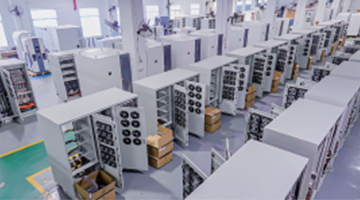
The Pearl River Delta—specifically Foshan—stands as the epicenter of EVSE (Electric Vehicle Supply Equipment) development. The unparalleled efficiency of China's component and assembly factories is anchored in vertical supply-chain integration. At Foshan Walnut Charger Co., Ltd., we control the complete manufacturing pipeline: from raw material sourcing (such as heat-resistant cover glass, industrial-grade ABS, and high-performance copper contacts) to surface-mount technology (SMT) PCB assembly and complete system testing.
This localized supply-chain architecture yields significant operational benefits for global OEM buyers:
Ready for secure vehicle-to-grid authentication and Plug & Charge standard deployment.
Distribute power intelligently across multiple chargers to prevent depot overload and minimize demand fees.
Our solutions feature IK10 vandal resistance and IP54/IP65 ratings, ensuring long-term outdoor reliability.
A major pitfall in global EVSE deployment is ignoring regional environmental and regulatory requirements. Our OEM solutions are pre-engineered to adapt seamlessly to localized electrical standards:
When procurement managers negotiate supply contracts, they look for customizable firmware and hardware options. Standard generic chargers fail to align with proprietary fleet management software. Walnut Charger fills this gap by offering robust API integrations, white-labeled hardware designs, and customizable firmware architectures. Whether your system uses a local OCPP server, a public cloud network, or integrated microgrids utilizing on-site solar arrays and battery energy storage systems (BESS), our controllers can be modified to support your specific communications protocol.
Furthermore, our mechanical engineering team can customize the structural elements. This includes using specialized heat-resistant cover glass for touchscreens to prevent yellowing or cracking under high solar radiation, and incorporating corporate branding directly onto the powder-coated steel or polycarbonate shells.
Expert insights addressing key technical, compliance, and custom manufacturing questions.
Q1: How does Foshan Walnut Charger handle dynamic load balancing across industrial fleet depots?
Our smart charging stations incorporate local and cloud-based load balancing mechanisms via OCPP 1.6J/2.0.1. By utilizing smart energy meters at the main distribution board, the chargers dynamically monitor real-time building loads. If the total power threshold is approached, the chargers automatically adjust their output currents (e.g., from 32A down to 16A or 10A) across all connected active EV charging sessions, protecting the building's electrical system without interrupting service.
Q2: Can your AC and DC charging stations integrate with solar arrays (PV) and battery storage?
Yes. Many of our models, such as the "AC 22kw EV Charger Wallbox with Load Balance Solar," are pre-configured to communicate with external hybrid solar inverters and battery energy storage systems (BESS) via Modbus RTU/TCP or dry contacts. This allows operators to prioritize charging using zero-cost solar power, discharge battery storage during peak utility rate hours, and fall back on grid power during off-peak times.
Q3: What international safety certifications do Walnut Charger products carry?
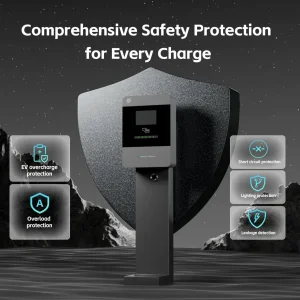
Our chargers are designed and certified to comply with CE, RoHS, TUV, and IP54/IP65 ratings, ensuring they meet rigorous safety and environmental standards worldwide. We also incorporate comprehensive safety protections directly into our hardware, including Over-Current Protection, Over-Voltage Protection, Under-Voltage Protection, Ground Fault Protection, Residual Current Protection (Type A 30mA + 6mA DC), and real-time over-temperature monitoring.
Q4: Do you provide white-label software, or must we use your proprietary application?
We offer full flexibility. Our hardware utilizes the universal OCPP 1.6J protocol (upgradable to OCPP 2.0.1), which means our chargers can connect to any third-party fleet management or billing software that supports standard OCPP. For customers who do not have their own platform, we provide a complete white-label mobile app and cloud-based management portal that can be fully customized with your corporate branding.
Q5: What are the standard lead times for custom OEM/ODM manufacturing batches?
For standard models with customized branding (such as custom logo printing and enclosure colors), lead times are typically 2 to 3 weeks. For complex ODM projects that require custom tooling, PCBA adjustments, or new enclosure designs, the initial development and prototyping phase takes 4 to 6 weeks, followed by a 30-day mass production cycle depending on the order volume.
Q6: How do your portable EV chargers handle varying grid qualities in different countries?
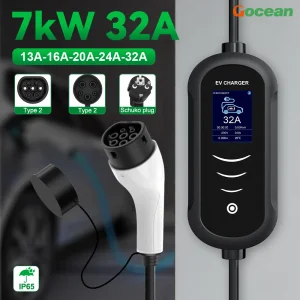
Our portable AC chargers feature intelligent auto-sensing technology that automatically detects the input voltage (from 90V to 264V AC, or 380V to 450V AC for 3-phase units) and grid frequency. They also allow the user or operator to manually adjust the current limits (e.g., 8A, 10A, 13A, 16A, 32A) using a physical selection switch or mobile app, ensuring stable operation even when connected to legacy or unstable power grids.
Q7: What is the advantage of using heat-resistant cover glass on charging stations?
Outdoor commercial chargers are exposed to intense UV rays and high temperatures, which can cause standard plastic touchscreens to degrade, scratch, or turn yellow. We offer high-durability, tempered, heat-resistant cover glass for our interactive charging screens. This glass maintains optical clarity under direct sunlight, resists vandalism (IK10 rated), and prevents touch sensitivity issues caused by rain, dust, or static electricity.
Q8: Do you offer support for high-power DC fast-charging stations, and what are their specs?
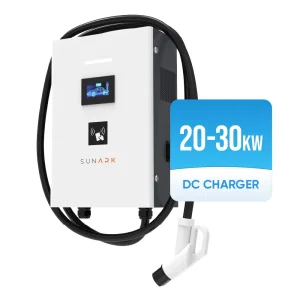
Yes, we manufacture advanced commercial AC and DC systems, including our Sunark series, which supports outputs from 20kW/30kW up to ultra-fast 320kW DC charging configurations. These systems feature CCS1, CCS2, or GB/T connectors, making them ideal for high-throughput depots that need to charge heavy-duty commercial vehicles quickly.
Q9: How do you guarantee product reliability during shipping and long-term operation?
Every product batch undergoes rigorous environmental stress testing. This includes high-humidity exposure, thermal cycling tests (from -30°C to +55°C), full-load burn-in trials, and vibration tests to simulate transport conditions. Our components are housed in heavy-duty, impact-resistant enclosures, resulting in a system with a very low field-failure rate and an extended service life.
Q10: What are the terms of your product warranty and support services?
We stand behind our manufacturing quality by offering a standard 24-month warranty on all AC charging stations and portable chargers, with optional extensions up to 5 years. Our engineering team provides dedicated remote technical support, troubleshooting, and over-the-air (OTA) firmware updates to keep your charging networks running smoothly and securely.
Explore our commercial-grade solutions, including advertising charging stations, high-power DC systems, and specialized micromobility chargers.
 Walnut Charger